...

Category: Gallbladder

  • Your guide to Gallbladder Cancer, Everything You Need to Know

    Your guide to Gallbladder Cancer, Everything You Need to Know

    PancreaCare by
    Advitya Healthcares

    Covering: Oesophageal  |  Stomach  |  Liver  |  Gallbladder  |  Bile Duct
    Pancreatic  |  Small Bowel  |  Colon  |  Rectal  |  Anal  |  GIST  |  NETs

    Warning Signs: When to See a Doctor

    Red Flag Symptoms — Never Ignore These    
    Unexplained weight loss or loss of appetite   Difficulty swallowing or pain when swallowing   Persistent indigestion, heartburn, or abdominal pain   Vomiting blood, or vomit that looks like coffee grounds   Black, tarry, or bloody stools   New jaundice — yellowing of skin or whites of the eyes   Dark urine and pale/clay-coloured stools   A change in bowel habits lasting more than 3 weeks   Unexplained new anaemia (low blood count)   New-onset diabetes after age 50, especially with weight loss   A lump or swelling in the abdomen   If you have any of these — please make an appointment with your GP today. Early detection genuinely saves lives.

    Gallbladder Cancer

    Advitya Healthcares

    What Is It?

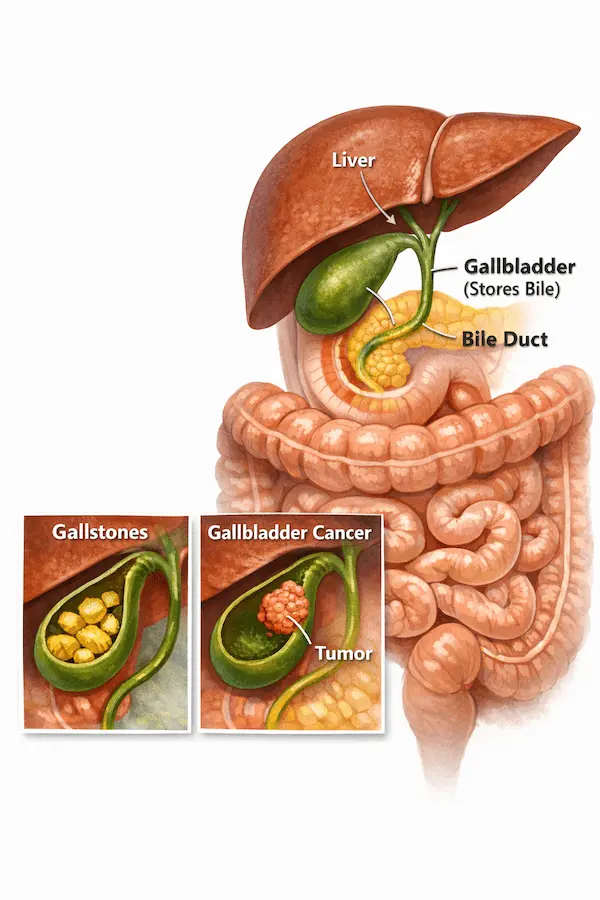
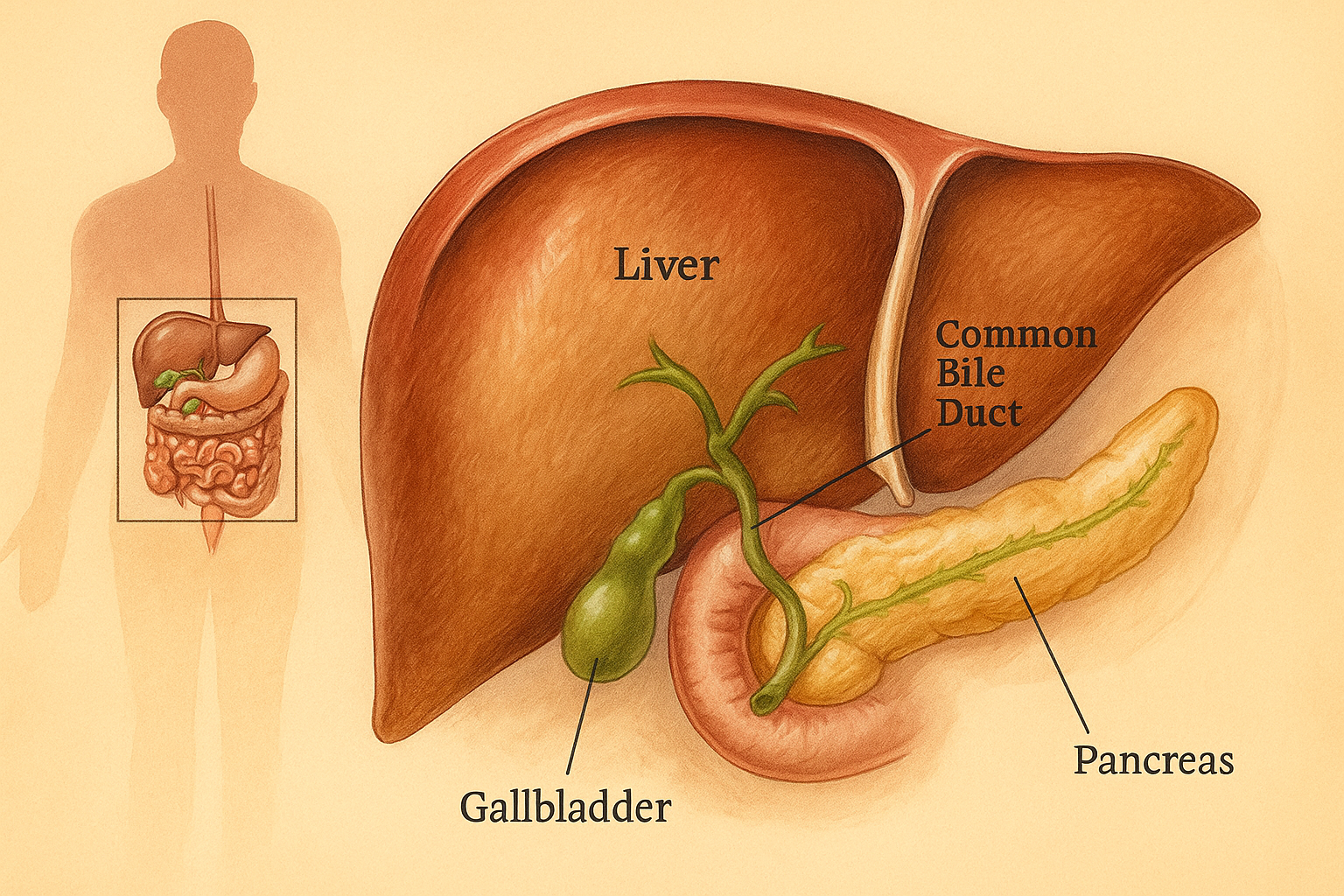
    The gallbladder is a small pear-shaped pouch tucked beneath the liver. Its job is to store bile — a digestive fluid made by the liver — and release it into the small intestine after meals to help digest fats.

    Gallbladder cancer is not common, but it’s important to know about because it’s often linked to gallstones, which are very common. It tends to be found at a later stage because it rarely causes distinct symptoms early on.

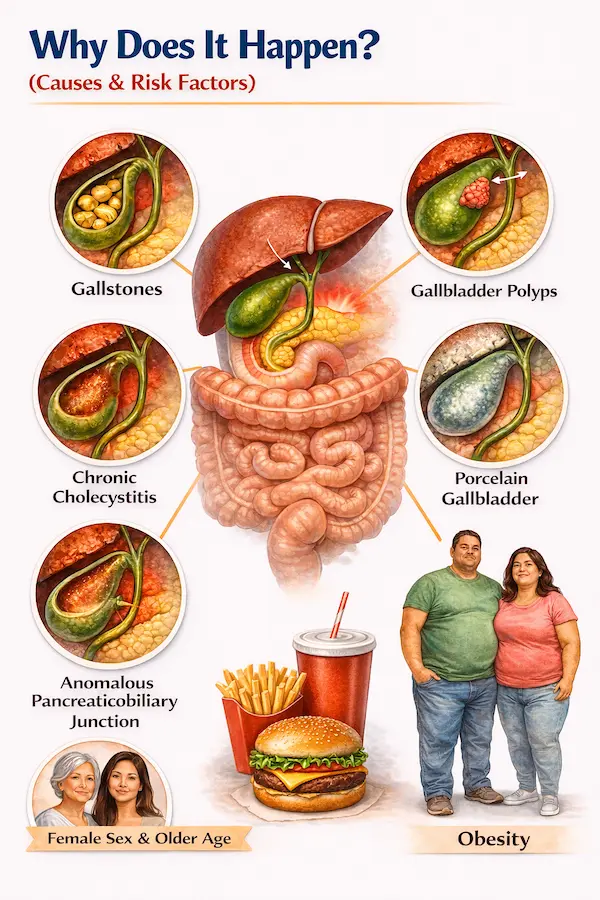
    Why Does It Happen? (Causes & Risk Factors)
    Advitya healthcares

    The common thread in gallbladder cancer is chronic inflammation and irritation of the gallbladder wall:

    • Gallstones (cholelithiasis) — especially large stones causing repeated episodes of inflammation
    • Chronic cholecystitis (long-standing gallbladder inflammation)
    • Gallbladder polyps — particularly those larger than 1 cm
    • Porcelain gallbladder (calcification of the gallbladder wall from chronic inflammation)
    • Anomalous pancreaticobiliary junction (a structural abnormality where bile duct joins the pancreatic duct abnormally)
    • Female sex and older age
    • Obesity and certain ethnic backgrounds (higher rates in some South American and South Asian populations)

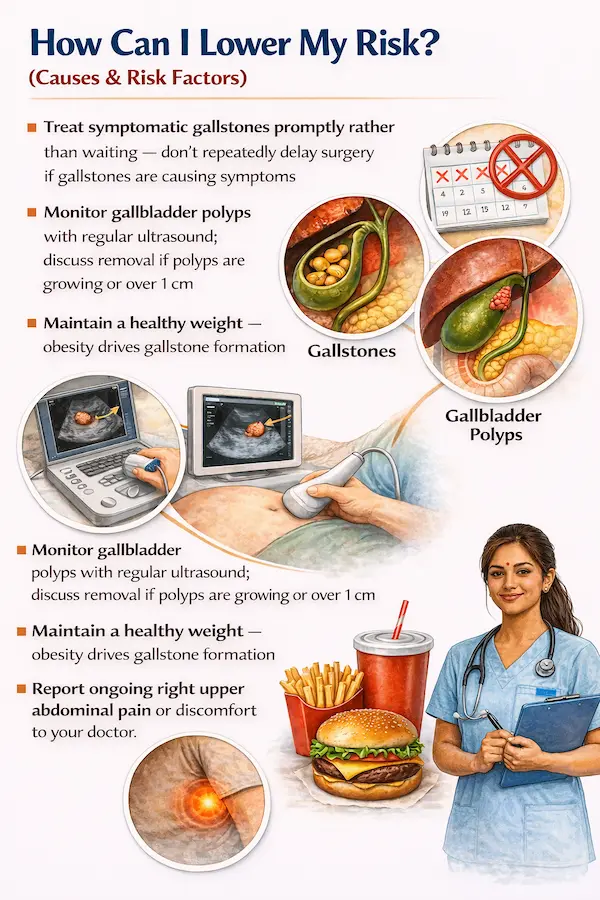
    How Can I Lower My Risk?
    Advitya healthcares

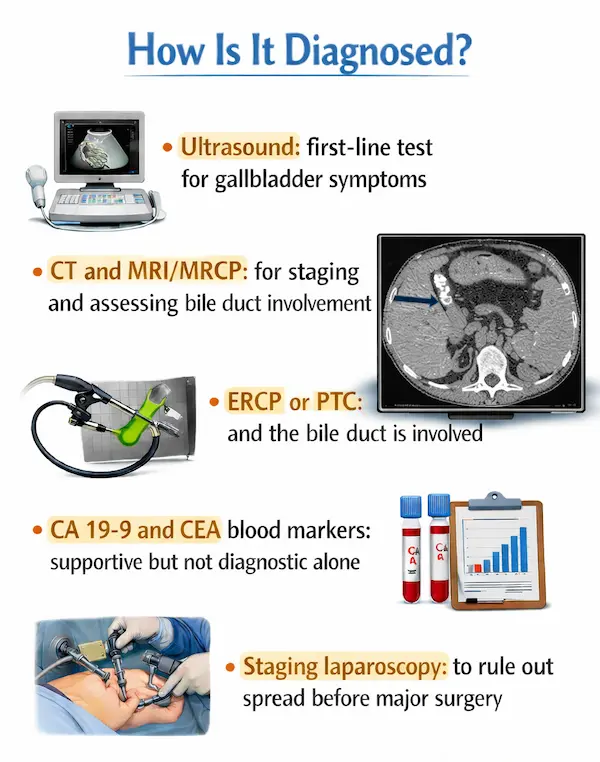
    How Is It Diagnosed?

    Gallbladder cancer is often suspected on imaging done for other reasons, or when gallbladder removal (cholecystectomy) reveals unexpected cancer:
    Advitya healthcares

    How Is It Treated?

    Surgery offers the only chance of cure; the extent depends on how far the cancer has spread:

    • Simple cholecystectomy: removal of the gallbladder alone — sufficient for very early incidental cancers
    • Extended cholecystectomy: removal of the gallbladder plus a margin of liver and nearby lymph nodes — for most operable cancers
    • Bile duct resection: if the bile duct is involved
    • Chemotherapy (gemcitabine + cisplatin or capecitabine) after surgery or for advanced disease
    • Stent placement: to relieve jaundice caused by bile duct blockage in advanced cases
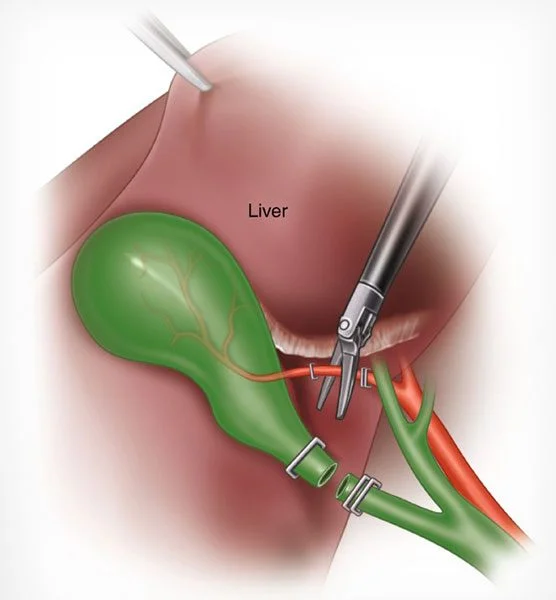
    The Surgery: Extended Cholecystectomy For most operable gallbladder cancers, surgery involves removing the gallbladder, a wedge of liver tissue immediately adjacent to it, and lymph nodes in the nearby region. If the bile duct is involved, that section of bile duct is also removed and the bowel is reconnected (biliary reconstruction). The goal is complete removal of all cancer with clear margins. Hospital stay is typically 5-10 days depending on complexity.

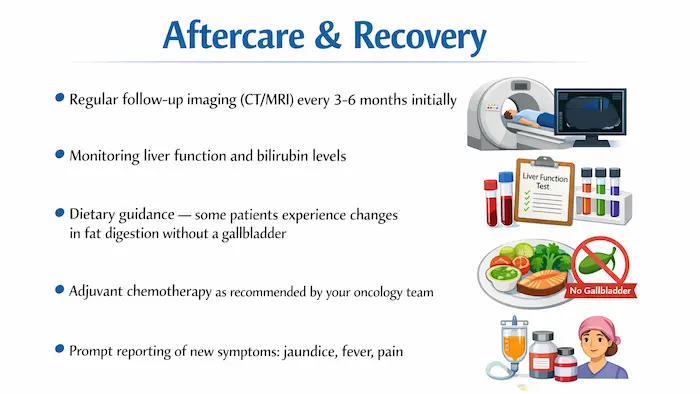
    Aftercare & Recovery

    Advitya Healthcares
  • Bile Duct Cancer (Cholangiocarcinoma)

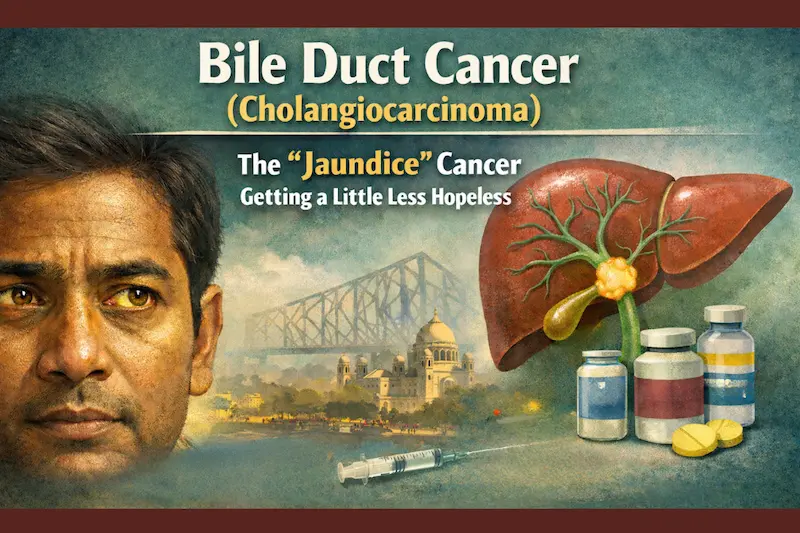
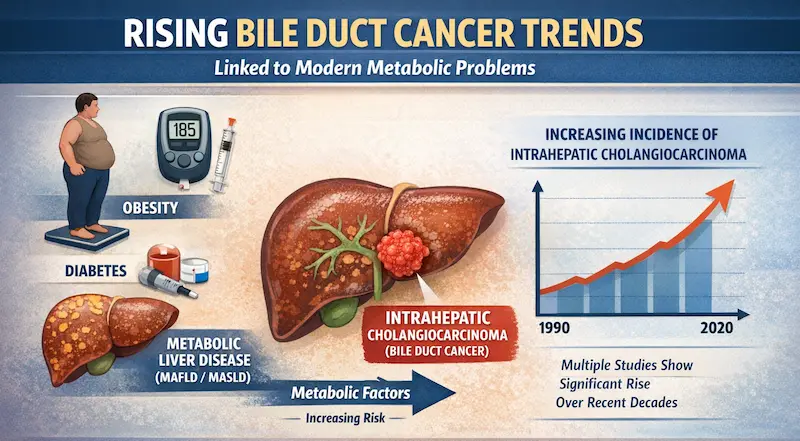
    Bile Duct Cancer (Cholangiocarcinoma)


    First: what are bile ducts, and why does “blockage” matter?

    The whole story of alcohol damage (9)

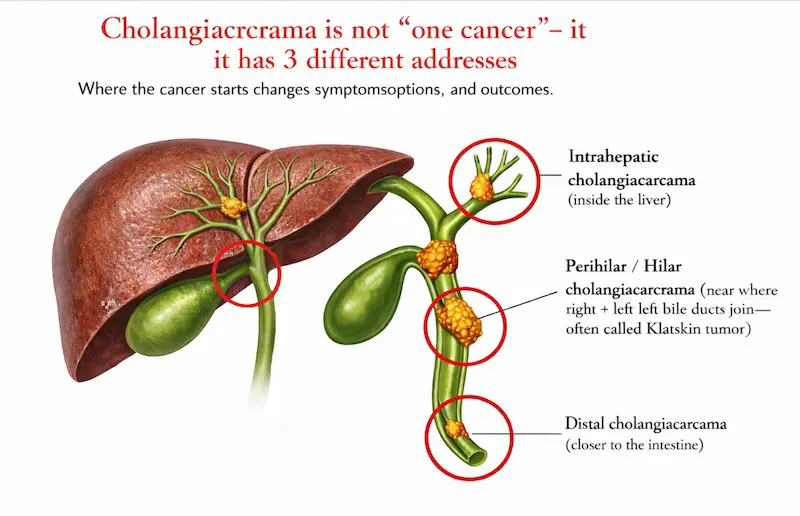
    Cholangiocarcinoma is not “one cancer”—it has 3 different addresses

    The whole story of alcohol damage (7)

    Why bile duct cancer is often missed (especially early)


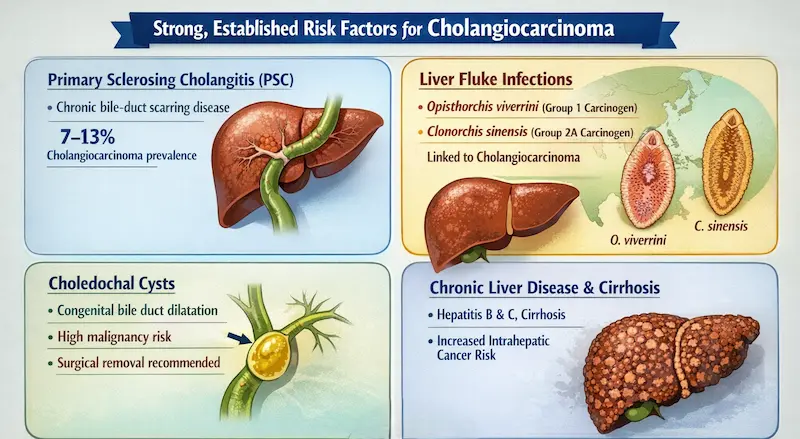
    “What causes it?” — risk factors that are real (not WhatsApp myths)

    ChatGPT Image Feb 12, 2026, 12 07 45 PM
    ChatGPT Image Feb 12, 2026, 12 23 59 PM

    Kolkata-friendly diagnostic roadmap: how doctors actually confirm
    (step-by-step)

    Step A: Basic labs

    Step B: Imaging that shows the plumbing + the cause

    Step C: Tissue confirmation (biopsy/cytology) — the tricky part


    Treatment: what’s possible today (and what has genuinely changed recently)

    T

    A) If the tumor is resectable (localized)

    B) Special case: selected perihilar cases and liver transplant pathways

    C) If the cancer is advanced/unresectable (the “world is changing” zone)

    1) Chemo backbone: Gemcitabine + Cisplatin

    2) The big recent change: Immunotherapy + chemo is now FDA-approved first-line

    3) The precision era: “test the tumor, don’t guess”


    Targeted therapy is expanding (and one newer approval matters)


    Myth vs Fact
    (quick Kolkata reality check)


    If you’re in Kolkata: what to do if jaundice appears


    Take-home message (the one line you should remember)


  • Gallbladder Cancer vs. Gallstones

    Gallbladder Cancer vs. Gallstones

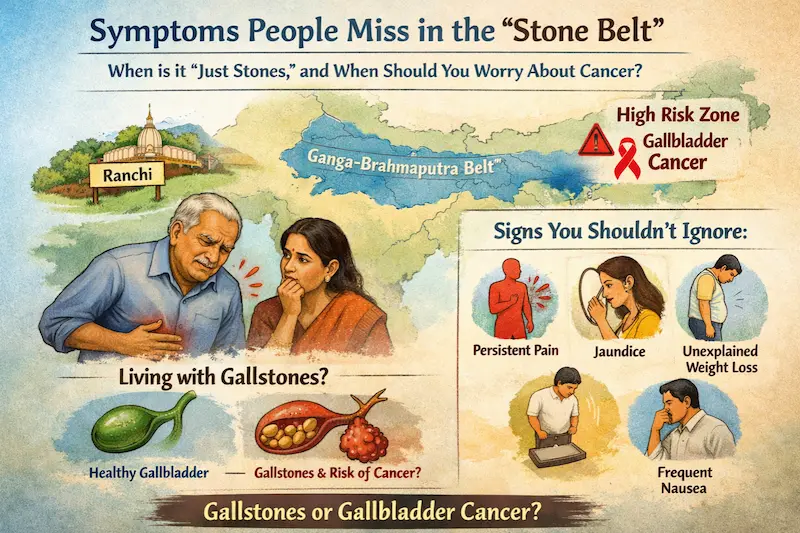
    Symptoms People Miss in the
    “Stone Belt”


    First truth: Gallstones are common. Gallbladder cancer is not.


    The danger link: Large, long-standing stones → chronic irritation


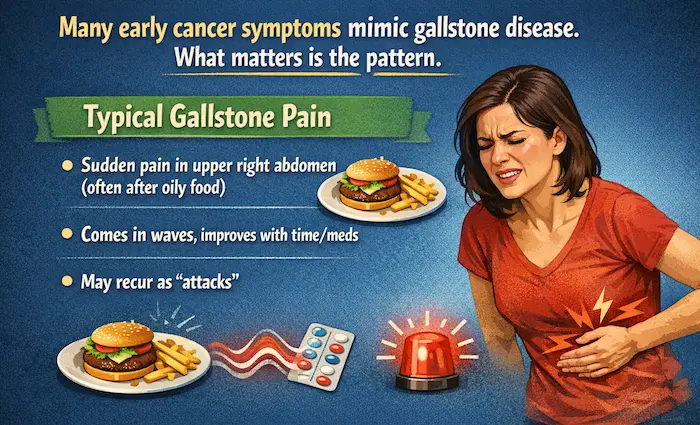
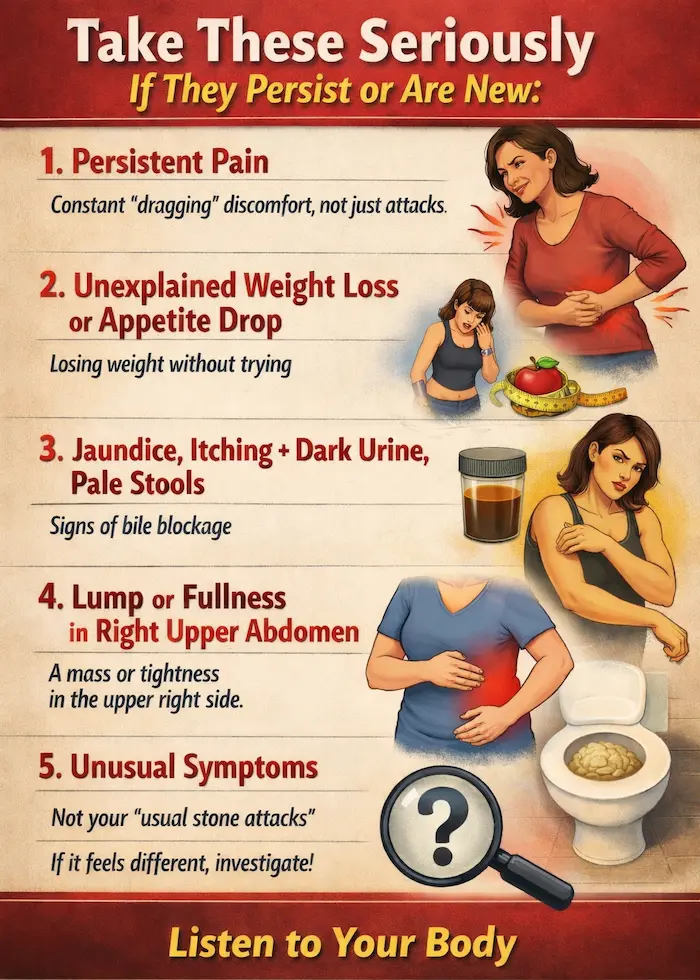
    “Stones” vs “Cancer”: the symptom pattern that separates them

    ChatGPT Image Feb 2, 2026, 03 45 20 PM
    ChatGPT Image Feb 2, 2026, 03 49 10 PM

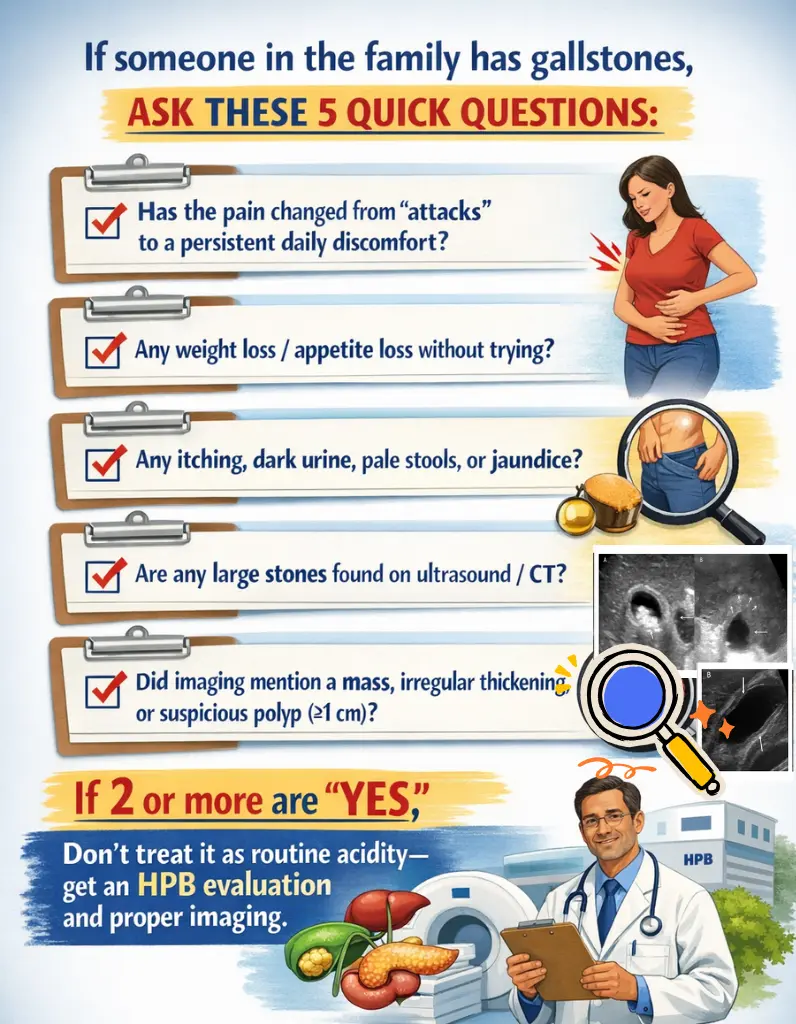
    The clinic checklist that raises suspicion

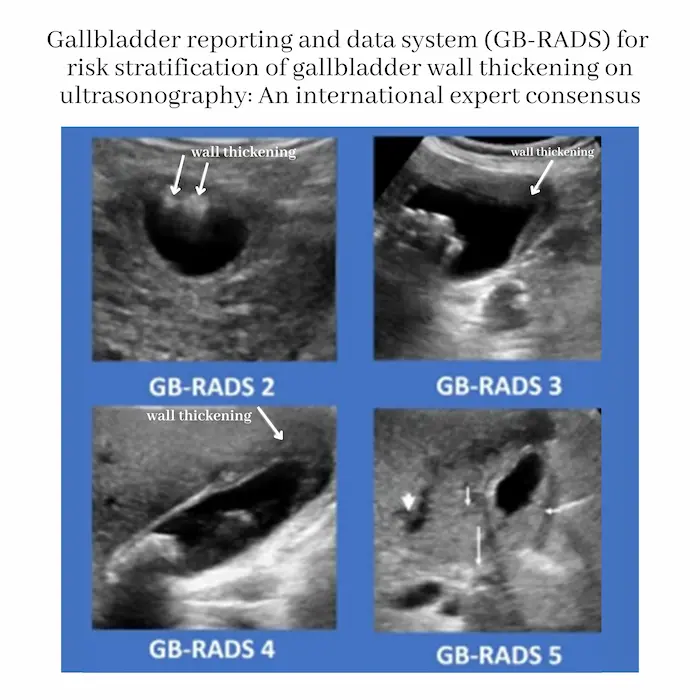
    Gallbladder reporting and data system (GB RADS) for risk stratification of gallbladder wall thickening on ultrasonography An international expert consensus (1)
    Tt

    High-risk “Stone Belt” situations where you shouldn’t delay surgery/workup

    T (1)

    The key surgical point (your message is correct — here’s the precise version)


    What’s genuinely new right now


    Action checklist

  • Abdominal Pain After a Heavy Meal? It Could Be Gallbladder Stones – Here is Everything You Need to Know

    Abdominal Pain After a Heavy Meal? It Could Be Gallbladder Stones – Here is Everything You Need to Know

    Introduction: The Silent Trouble in Your Abdomen

    Imagine this: You have just enjoyed a hearty, delicious meal with your family. Perhaps it was a festive dinner or a wedding feast, rich with the spicy and oily flavours we love here in Jharkhand. But instead of feeling satisfied, you are suddenly struck by a sharp, gripping pain in your upper right abdomen. You might brush it off as “gas” or “acidity,” popping a generic pill and hoping it passes. But if this scene feels all too familiar, your body might be trying to tell you something more serious.

    Gallbladder stones (cholelithiasis) are becoming increasingly common in cities like Ranchi and Bokaro in Jharkhand, mainly due to changing lifestyles and dietary habits. Yet, despite their prevalence, there is a cloud of confusion surrounding them. Many patients delay treatment due to fear, misinformation, or the hassle of travelling to metropolitan cities for surgery.

    At PancreaCare by Advitya Healthcares, we believe that world-class treatment should be available right at your doorstep. Whether you are in Morabadi, Bariatu, or travelling from Bokaro, you do not need to suffer in silence. Let’s break down exactly what gallbladder stones are, why surgery is often necessary, and debunk the myths that might be holding you back from a pain-free life.

    What Are Gallbladder Stones?

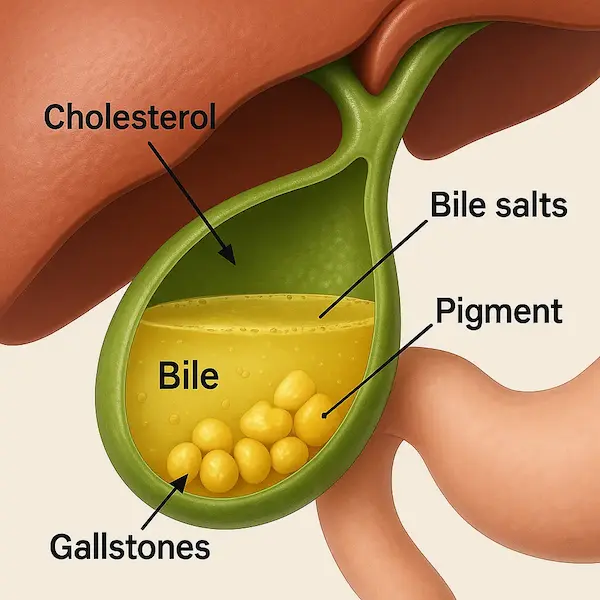
    The gallbladder is a small, pear-shaped organ located just beneath your liver. Its main job is to store bile, a digestive fluid produced by the liver that helps break down fats. Sometimes, the substances in the bile—specifically cholesterol and bilirubin—harden and form pebble-like deposits. These are gallbladder stones.

    They can range in size from a grain of sand to a golf ball. Some people develop just one large stone, while others may have hundreds of tiny ones.

    Why do they form?

    While the exact cause is not always clear, doctors agree that your risk increases if:

     * Your bile contains too much cholesterol or bilirubin.

     * Your gallbladder doesn’t empty correctly or often enough.

     * You consume a diet high in fat and low in fibre.

    Recognizing the Symptoms: When to See a Doctor

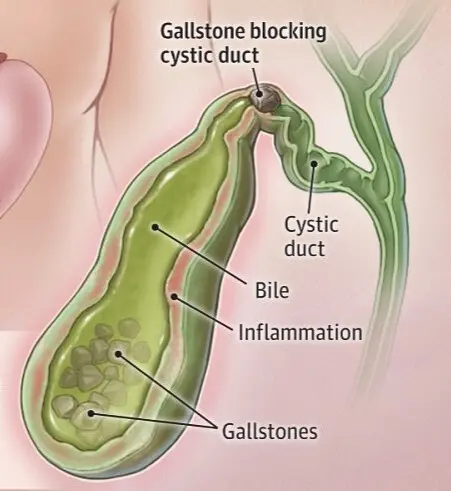
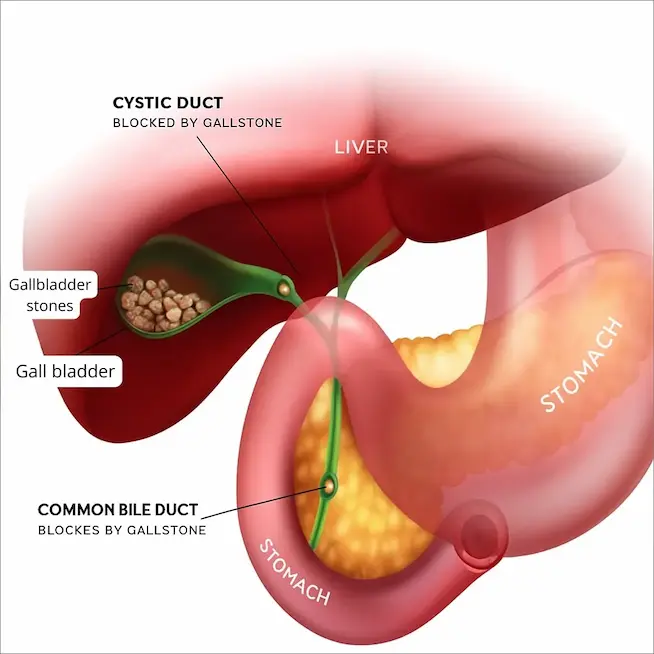
    One of the trickiest aspects of gallstones is that many people have them without knowing it. These are called “silent stones.” However, when a stone blocks a bile duct, the symptoms can be sudden and severe.

    Watch out for these warning signs:

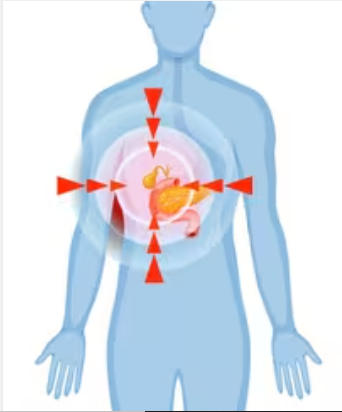
     * Sudden, intensifying pain: Usually in the upper right portion of your abdomen or the centre of your abdomen, just below the breastbone.

     * Referred pain: Pain that radiates to your right shoulder or between your shoulder blades.

     * Nausea and vomiting: Often accompany the pain.

     * Digestive issues: Bloating, indigestion, and intolerance to fatty foods.

    ChatGPT Image Nov 13, 2025, 05 58 43 PM

    If you notice yellowing of your skin or eyes (jaundice) or have a high fever with chills, this constitutes a medical emergency. It suggests the stone has caused an infection or completely blocked the bile duct.

    The Gold Standard Treatment: Laparoscopic Cholecystectomy

    If your stones are causing symptoms, surgery is the only permanent cure. The medical term for gallbladder removal is Cholecystectomy.

    In the past, this meant open surgery with a large incision and a long recovery. Today, at PancreaCare, we specialise in Laparoscopic Cholecystectomy (Keyhole Surgery).

    How it works:

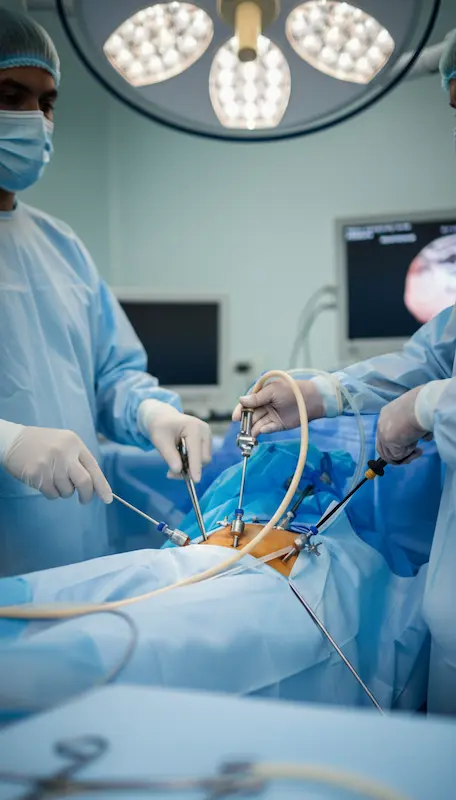
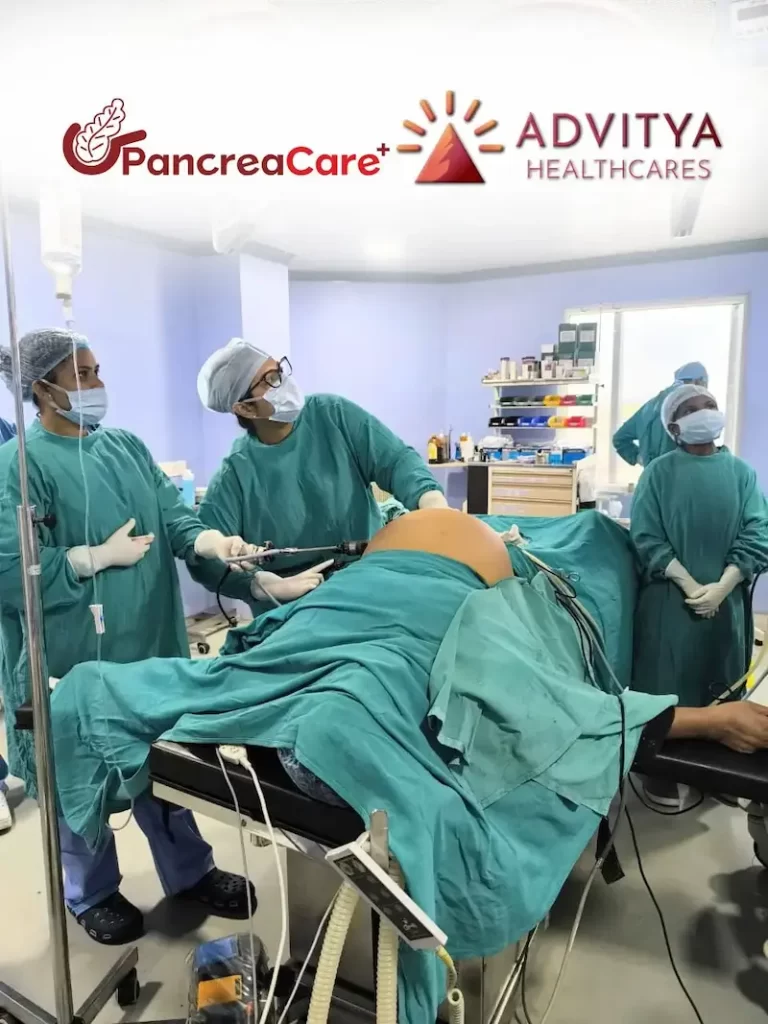
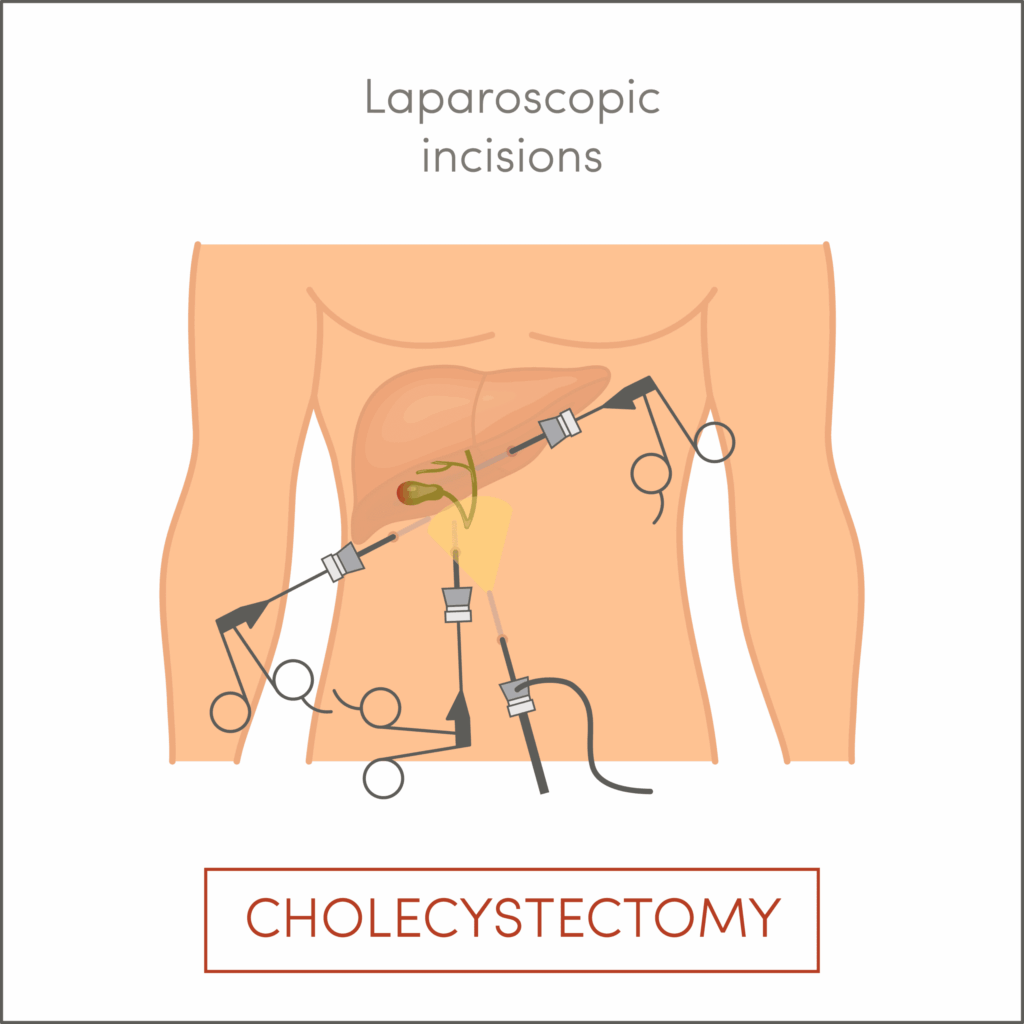
    Instead of a large cut, the surgeon makes 3 to 4 tiny incisions (less than 1 cm) in the abdomen. A laparoscope (a thin tube with a camera) is inserted, allowing the surgeon to see inside your body on a high-definition monitor. The gallbladder is then carefully removed through one of the small incisions.

    IMG 20251114

    Benefits of Laparoscopic Surgery:

     * Minimal Pain: Significantly less post-operative pain compared to open surgery.

     * Quick Recovery: Most patients are discharged within 24 to 48 hours and can return to normal activities within a week.

     * Cosmetic Advantage: The tiny scars fade over time and are barely visible.

     * Safety: It is one of the most commonly performed and safest surgeries in the world when done by experts.

    Busting Common Myths About Gallbladder Surgery

    There is a lot of “advice” floating around in WhatsApp groups and neighbourhood chats in Ranchi and Bokaro. Let’s set the record straight with medical facts.

    Myth 1: “I can flush out gallstones by drinking oil, apple juice, or herbal mixtures.”

    > Fact: This is a dangerous myth. Gallstones are solid, hard deposits. Drinking oil or juices will not dissolve them. In fact, consuming large amounts of oil to “flush” the system can trigger a severe gallbladder attack or even pancreatitis (inflammation of the pancreas), which is life-threatening.

    Myth 2: “Only the stones need to be removed, not the whole gallbladder.”

    > Fact: Unlike kidney stones, we cannot simply remove gallstones and leave the organ. If we leave the gallbladder, the underlying issue (imbalanced bile) remains, and stones will almost certainly form again quickly. Removing the gallbladder is the only permanent cure.

    Myth 3: “I won’t be able to digest food or eat normal meals after surgery.”

    > Fact: Your liver produces bile, not the gallbladder. The gallbladder just stores it. After surgery, the liver continues to make bile, which drips continuously into your digestive system. You can absolutely eat a normal, healthy diet. You might need to limit very fatty foods for a few weeks while your body adjusts, but you will not have long-term digestive handicaps.

    Myth 4: “Surgery is risky for older patients.”

    > Fact: On the contrary, delaying surgery in older patients can be riskier. An untreated gallbladder can burst or cause severe infection, leading to complex emergency surgeries. Planned (elective) laparoscopic surgery is very safe for elderly patients when performed by specialists like the team at PancreaCare.

    Myth 5: “Laser surgery is different from Laparoscopic surgery.”

    > Fact: Many people in Jharkhand use the term “Laser” operation colloquially for Laparoscopic (Keyhole) surgery. True laser is rarely used for removing the gallbladder itself. The minimally invasive “keyhole” technique is the standard of care you are looking for.

    Why Choose PancreaCare by Advitya Healthcares?

    For years, families in Ranchi, Bokaro, and surrounding districts felt they had to travel to Delhi, Mumbai, or Vellore for complex stomach and liver surgeries. PancreaCare By Advitya Healthcares was born to change that narrative.

    PancreaCare is not just a clinic; it is a centre of excellence dedicated to Gastrointestinal (GI) and Hepato-Pancreato-Biliary (HPB) surgeries.

    Here is why we are the trusted choice in Jharkhand:

     * Specialist Expertise: We are not just general surgeons; we are super-specialists in the digestive system. Our team handles everything from routine gallbladder stones to complex pancreatic cancers with metropolitan-level precision.

     * Advanced Technology: We utilise the latest laparoscopic 4K imaging and surgical equipment, ensuring safer procedures and faster healing for our patients.

     * Local Accessibility: We have brought expert care closer to you. With convenient locations in Ranchi (Morabadi and Bariatu Road) and partnerships in Khunti, you receive premium healthcare without the stress and cost of travelling to a metro city.

     * Patient-Centric Approach: We understand that surgery can be scary. Our team is known for empathetic counselling, explaining every step of the procedure to the patient and their family in simple terms.

     * Affordable Excellence: We believe high-quality healthcare should be accessible. We offer transparent pricing and work with various insurance providers to make your treatment stress-free.

    Untitled design (3)

    Conclusion

    Do not ignore that recurring pain in your abdomen. Living with gallbladder stones is like living with a ticking time bomb that could lead to infection or jaundice at any moment.

    If you reside in Ranchi, Bokaro, Khunti, or anywhere in Jharkhand, expert help is just a phone call away. You do not have to live with pain or rely on unverified home remedies. Trust the specialists who understand your body best.

    Take the Next Step for Your Health:

    Are you or a loved one experiencing symptoms of gallbladder stones? Book a consultation with PancreaCare by Advitya Healthcares today.

     * Visit us in Ranchi, Jharkhand & Bokaro

     * Call us or WhatsApp for an appointment:

    Untitled (200 x 200 px) (50 x 50 px) (2) +91 9211221551

    Untitled (200 x 200 px) (50 x 50 px) (2) +91 9211221552

    Untitled (200 x 200 px) (50 x 50 px) (2) +91 9211221553

    Untitled (200 x 200 px) (50 x 50 px) (2) +91 9211221554

     * Website:   https://advityahealthcares.com/

    PancreaCare by Advitya Healthcares – bringing world-class surgical care home to Jharkhand.

  • Gallbladder Stones

    Gallbladder Stones

    What Is the Gallbladder?

    Think of your liver as a factory. This factory makes a special liquid called bile which helps digest (break down) fats in your food.

    Now, this bile needs a storage place. That storage place is the gallbladder — a small pouch sitting under the liver.

    📦 The gallbladder is just like a storage tank. It doesn’t make bile, it only stores it. When you eat food, the gallbladder squeezes and sends bile into the intestine to help digest fats.

    What Are Gallbladder Stones?

    Sometimes, the bile stored inside the gallbladder becomes too thick or too rich in cholesterol. Slowly, it starts forming hard lumps — these are called gallstones.

    These stones can be:
    As small as sand
    Or as big as a marble

    Some people never know they have stones. Others may get pain and health problems because of them.


    Why Do Gallstones Form?

    Gallstones form when there is:

    Imagine keeping milk in a pot without stirring. After some time, a cream layer forms. Similarly, bile sitting for too long in the gallbladder can form stones.


    What Problems Can Gallstones Cause?

    7e269190 94df 4471 8c15 0e0b9cb91461
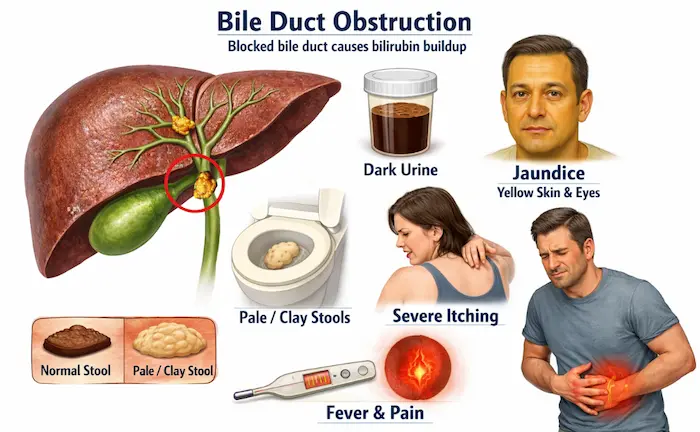
    • Bile duct blockage (Choledocholithiasis): Severe pain with jaundice and dark urine.
    Image 1
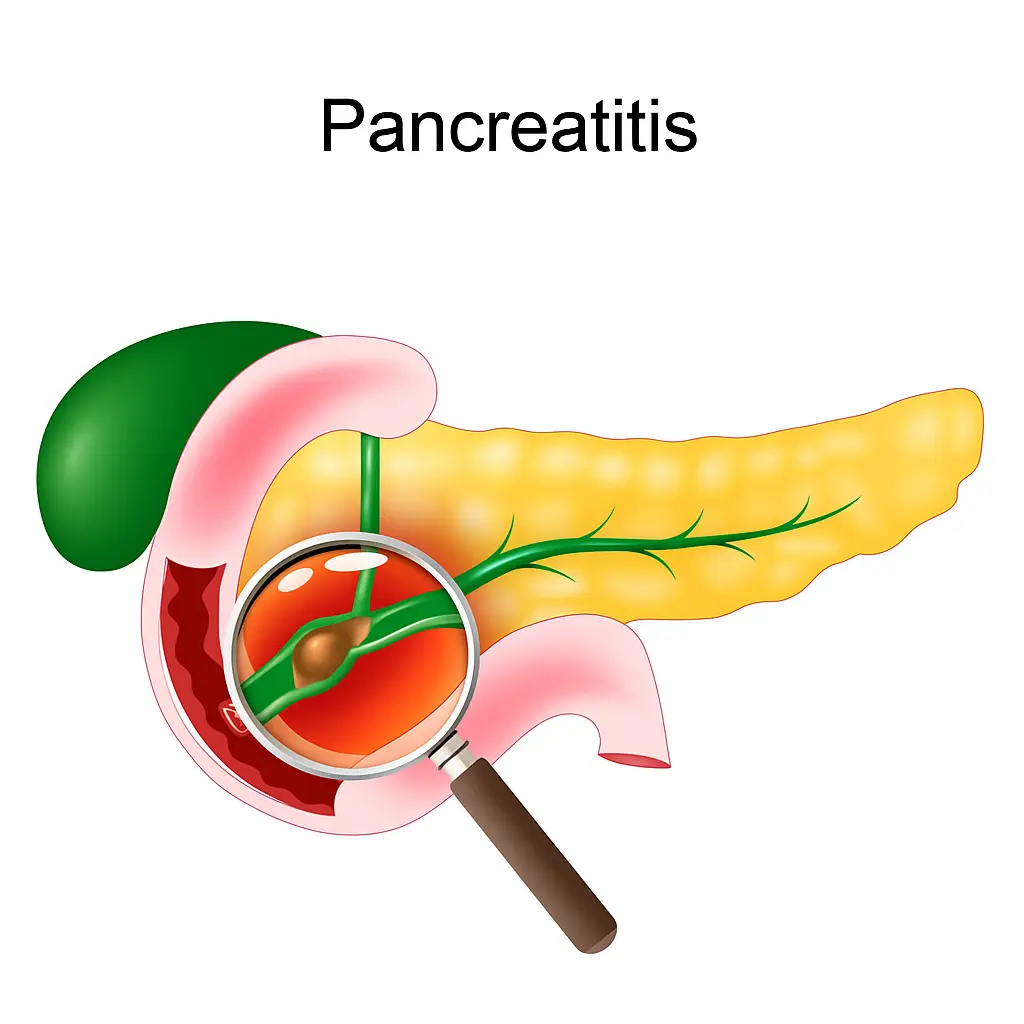
    • Pancreatitis: If a stone blocks the pancreatic duct, it can cause dangerous inflammation of the pancreas.
    Chatgpt image sep 6, 2025, 06 35 45 pm
    • Gallstone attack & rare severe complications: Sudden, intense pain (often after fatty/oily meals). In very rare cases, stones can lead to life-threatening issues like gallbladder ruptur
    Image

    Not everyone with gallstones has symptoms. Many people live with them unknowingly.
    But when gallstones block the flow of bile, they can cause problems.
    Most gallstones are harmless, but when they cause symptoms, medical attention is necessary.

    Common symptoms

    This pain is sometimes called a gallbladder attack.


    Who Gets Gallstones More Often?


    How Do Doctors Find Gallstones?

    9c0bb605 d070 434b 941f 90f4e87a7c6d

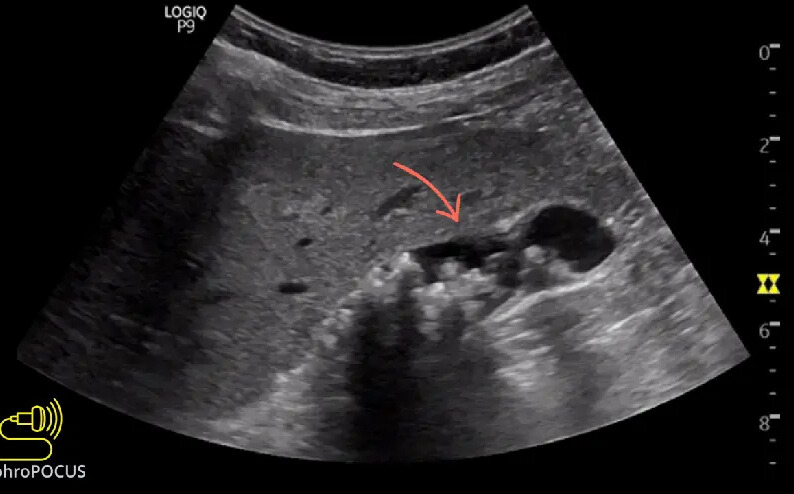
    Doctors usually do an ultrasound (a safe, simple test) to see stones.

    Other tests may include:


    How Is Surgery Done?

    Cholecystectomy laparascopic incisions

    Why the Gallbladder Is Removed Instead of Just the Stones?

    Gallbladder surgery image

    Can You Live Without a Gallbladder?

    The answer is YES !!!

    The liver, not the gallbladder, is responsible for producing bile. The gallbladder merely serves as a storage reservoir. After surgery, bile continues to flow directly from the liver into the intestine through the bile duct, ensuring that digestion is not interrupted.
    In practical terms, the liver functions as the factory, the gallbladder as the storage tank, and the bile duct as the pipeline. Even if the storage tank is removed, the pipeline remains intact and bile continues to reach the intestine.
    Most patients recover within a few weeks and return to normal digestion. A small proportion, around 5–10%, may experience temporary symptoms such as bloating, gas, or mild loose motions, which typically resolve with time.

    How to Prevent Gallstones?

    Chatgpt image sep 6, 2025, 06 49 55 pm

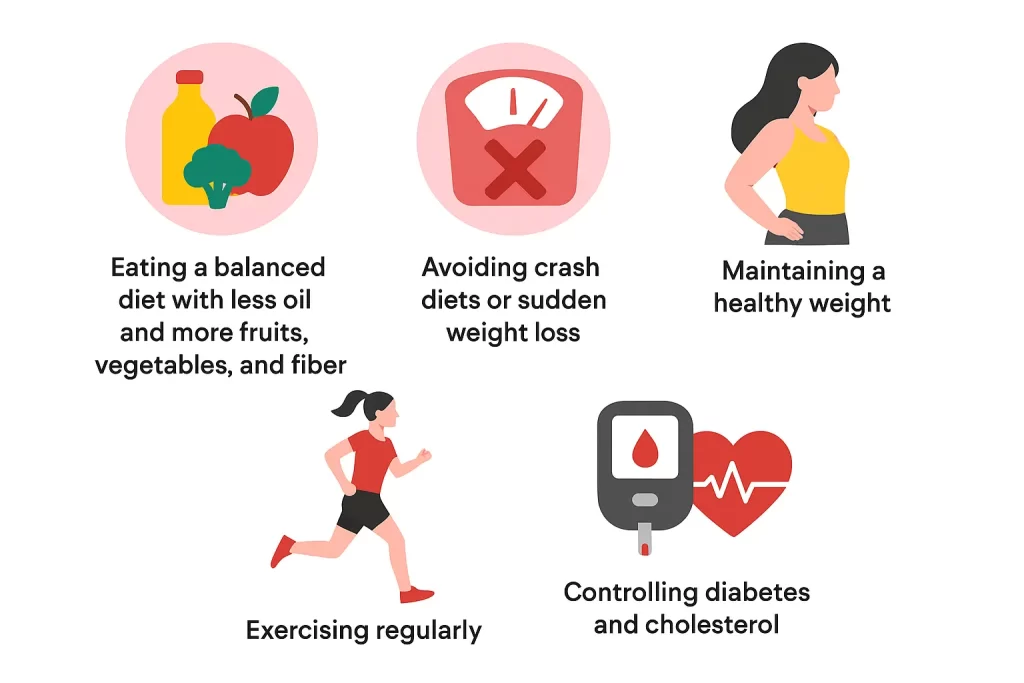
    You can reduce the risk by:

    – Eating a balanced diet with less oil and more fruits, vegetables, and fiber
    – Avoiding crash diets or sudden weight loss
    – Maintaining a healthy weight
    – Exercising regularly
    – Controlling diabetes and cholesterol

    Key Takeaways

    Gallstones are common, especially in India.

    Not all gallstones need treatment — only when they cause problems.

    If surgery is needed, removing the gallbladder is safe and the body adapts well.

    You can live a completely normal, healthy life without a gallbladder.

  • Gallbladder Cancer

    Gallbladder Cancer

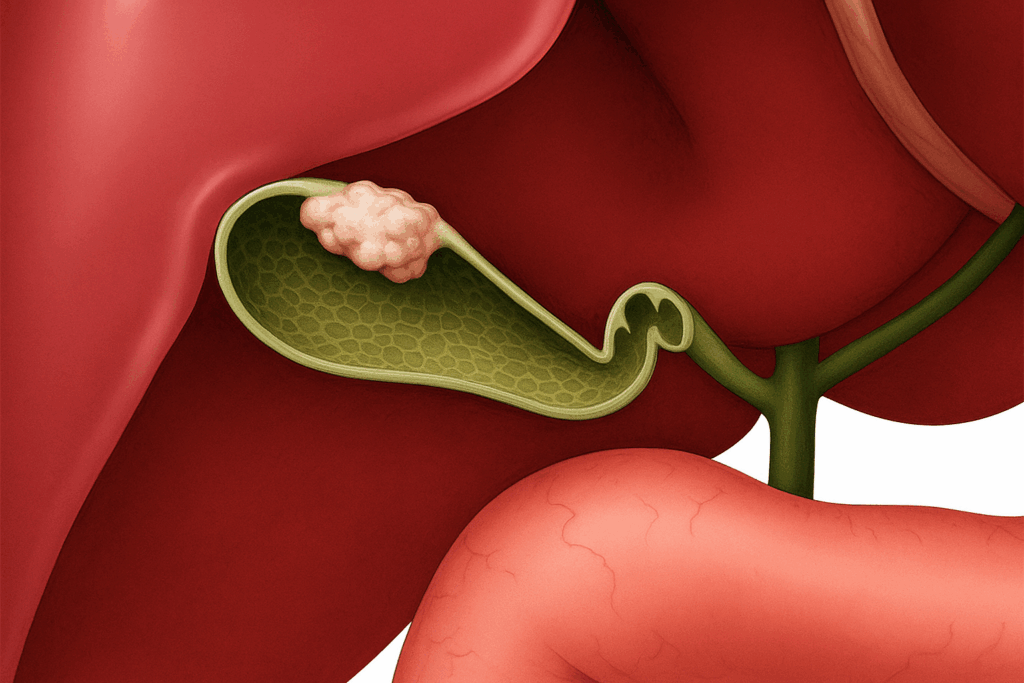
    Gallbladder cancer is a rare but serious disease that begins in the gallbladder — a small, pear-shaped organ located beneath your liver. The gallbladder’s main job is to store bile, a fluid that helps digest fats. Because the gallbladder is tucked away deep inside the body, cancer here can often go unnoticed until it is more advanced.


    Why Early Detection Is Challenging

    Chatgpt image jul 25, 2025, 12 38 33 pm

    Gallbladder cancer often doesn’t cause clear symptoms in its early stages. When symptoms do appear, they can be mistaken for other digestive issues, such as gallstones or infections. This can delay diagnosis and treatment.

    At the cellular level, cancer develops when normal cells lose their control signals, multiply uncontrollably, and form a lump or mass. These abnormal cells can invade nearby tissues and spread to other organs — a process called metastasis.


    Common Symptoms

    While having these symptoms does not always mean cancer, it’s important to discuss them with your healthcare provider if they persist:

    • Persistent abdominal pain in the right upper quadrant (often dull)
    • Jaundice (yellowing of the skin or eyes)
    • Nausea or vomiting
    • Loss of appetite and unexplained weight loss
    • Fever or general fatigue

    In some cases, symptoms occur when the tumor presses on the bile duct or liver.


    What has been found to be associated with gall bladder cancer?

    Certain factors may increase the risk of gallbladder cancer, including:

    • Gallstones — especially large stones present for many years that can damage the gallbladder wall
    • Chronic gallbladder inflammation
    • Typhoid can persist in asymptomatic long-term carriers.
    • Being female (women are affected more often than men in India)
    • Older age (most cases occur in people over 65)
    • Family history of gallbladder disease
    • Certain ethnic or geographic populations (Native American, Hispanic, and some Indian regions)

    How It’s Diagnosed

    If gallbladder cancer is suspected, your doctor may recommend:

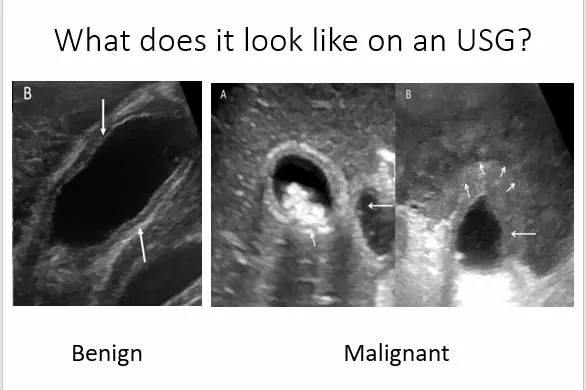
    • Ultrasound — first-line imaging to detect abnormalities
    • CT scan or MRI — to assess wall thickening, unhealthy appearance, or lumps, and to check if nearby lymph nodes or the liver are involved
    • Blood tests — to evaluate liver function
    • Biopsy — to confirm the presence of cancer cells

    No imaging test (CT, MRI, PET) is 100% accurate in differentiating between cancerous and non-cancerous thickening. This is why, in some instances, surgical removal of the gallbladder is advised for confirmation.

    If facilities are available, the removed gallbladder can be examined during surgery via a frozen section test. If cancer is confirmed, the surgeon may remove part of the liver and surrounding lymph nodes as part of definitive treatment.


    Treatment Options

    Treatment depends on the stage of the disease and overall health:

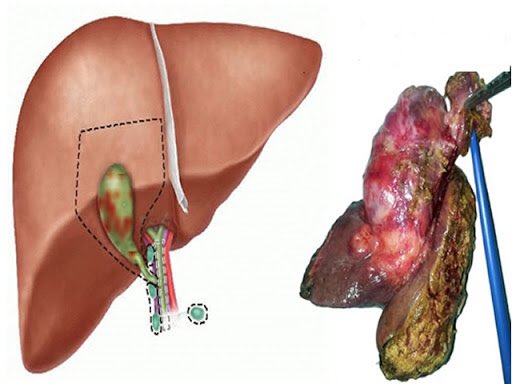
    • Surgery — Primary treatment for early-stage disease. This may include removal of the gallbladder, part of the liver, and nearby lymph nodes. For gallbladder cancer that has not spread beyond the gallbladder and nearby tissues, surgery offers the best chance for cure. The standard procedure for most patients with resectable disease beyond very early stage is a radical cholecystectomy.

    What Does a Radical Cholecystectomy Include?

    Ec use4xgaa3tki
    1. Removal of the gallbladder
    2. Liver resection — The surgeon removes part of the liver where the gallbladder is attached, usually:
      • Segments IVb and V (about 2–3 cm depth of liver tissue)
      • This ensures removal of any microscopic cancer spread into the liver bed.
    3. Lymph node removal (lymphadenectomy)
      • Nodes in the hepatoduodenal ligament (around the bile duct, hepatic artery, and portal vein) are removed.
      • Guidelines recommend at least 6 lymph nodes be retrieved for accurate staging.
    4. Bile duct removal
      • Not routinely performed.
      • Done only if cancer directly invades the bile duct or is too close to achieve a safe margin without removal.
    5. Chemotherapy —. Chemotherapy uses medicines to kill cancer cells or stop them from growing. In gallbladder cancer, it is used in different settings:

    Adjuvant Chemotherapy (After Surgery) – Given for 3–6 months after radical cholecystectomy (stage II or higher, or with high-risk features) to kill hidden cancer cells and lower recurrence risk. Standard is capecitabine for 6 months (BILCAP trial); gemcitabine + cisplatin may be used if not suitable.

    Neoadjuvant Chemotherapy (Before Surgery) – Used in selected borderline or locally advanced cases to shrink the tumor and make surgery possible. Common regimens include gemcitabine + cisplatin.

    Sometimes, gallbladder cancer is discovered unexpectedly after surgery for gallstones. If it’s detected early, no further treatment may be needed. If more advanced, a second surgery may be recommended.


    Incidental Gallbladder Cancer (IGBC): What You Should Know

    What is Incidental Gallbladder Cancer?

    Incidental Gallbladder Cancer (IGBC) is gallbladder cancer that is discovered unexpectedly—usually after a gallbladder removal surgery (cholecystectomy) that was performed for another reason, such as gallstones or inflammation (cholecystitis).
    The diagnosis is often made when the removed gallbladder is examined under a microscope by a pathologist.


    Why does it happen?

    Gallbladder cancer is uncommon, and in its early stages, it rarely causes symptoms different from gallstones.
    Because of this, cancer may go unnoticed until surgery is done for what seems like a benign problem.
    Risk factors include:

    • Long-standing gallstones
    • Gallbladder polyps (especially >1 cm)
    • Chronic gallbladder inflammation (porcelain gallbladder)
    • Certain genetic and environmental factors

    What happens after the diagnosis?

    If IGBC is detected, your doctor will review:

    • Stage of cancer (how deep it has invaded the gallbladder wall and whether it has spread)
    • Margins (whether cancer cells are present at the edge of the removed tissue)
    • Lymph node status (if available)

    Further treatment may include:

    • Additional surgery (radical cholecystectomy with liver wedge resection and lymph node removal) – often advised if the cancer is stage T1b or higher.
    • Imaging scans (CT/MRI) to check for spread.
    • Oncology referral for chemotherapy if the disease is advanced or surgery is not possible.

    Why is timely action important?

    Gallbladder cancer can spread quickly to the liver and surrounding areas.
    If IGBC is detected early and treated appropriately, the chances of long-term survival improve significantly.
    Delaying evaluation or treatment can allow the disease to progress, limiting treatment options.


    Key Takeaways for Patients

    • IGBC is often found unexpectedly after gallbladder surgery.
    • Early-stage IGBC can often be treated successfully with timely surgery.
    • Always review your gallbladder histopathology report after surgery.
    • If IGBC is reported, consult a hepatobiliary or gastrointestinal cancer surgeon promptly.

    Living With and Beyond Gallbladder Cancer

    A gallbladder cancer diagnosis can feel overwhelming, but advances in surgical techniques, chemotherapy, and supportive care have improved outcomes. Early detection, timely surgery, and close follow-up care remain key to improving survival and quality of life.

Seraphinite AcceleratorOptimized by Seraphinite Accelerator
Turns on site high speed to be attractive for people and search engines.