Category: Tumor

  • Your guide to Pancreatic Cancer, Everything You Need to Know

    Your guide to Pancreatic Cancer, Everything You Need to Know

    PancreaCare by
    Advitya Healthcares

    Covering: Oesophageal  |  Stomach  |  Liver  |  Gallbladder  |  Bile Duct
    Pancreatic  |  Small Bowel  |  Colon  |  Rectal  |  Anal  |  GIST  |  NETs

    Warning Signs: When to See a Doctor

    Red Flag Symptoms — Never Ignore These    
    Unexplained weight loss or loss of appetite   Difficulty swallowing or pain when swallowing   Persistent indigestion, heartburn, or abdominal pain   Vomiting blood, or vomit that looks like coffee grounds   Black, tarry, or bloody stools   New jaundice — yellowing of skin or whites of the eyes   Dark urine and pale/clay-coloured stools   A change in bowel habits lasting more than 3 weeks   Unexplained new anaemia (low blood count)   New-onset diabetes after age 50, especially with weight loss   A lump or swelling in the abdomen   If you have any of these — please make an appointment with your GP today. Early detection genuinely saves lives.

    Pancreatic Cancer

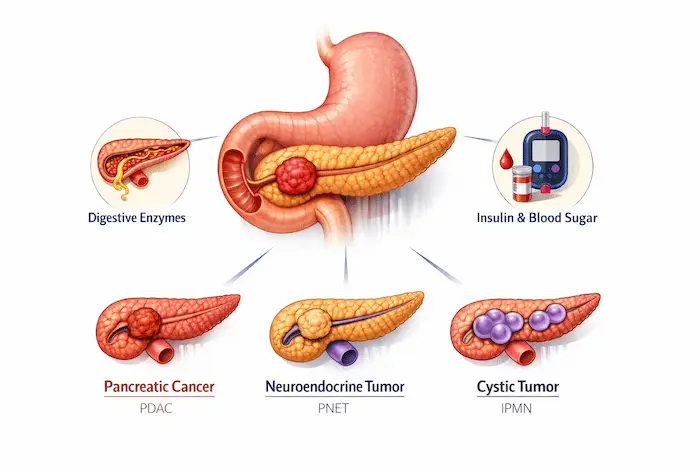
    What Is It?

    advitya healthcares

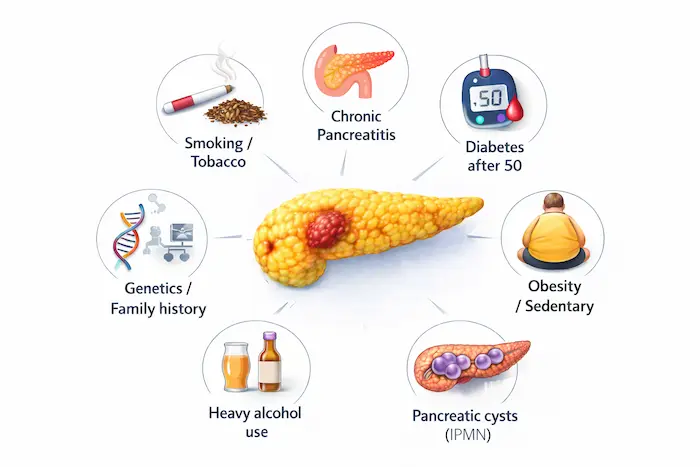
    Why Does It Happen? (Causes & Risk Factors)
    advitya healthcares

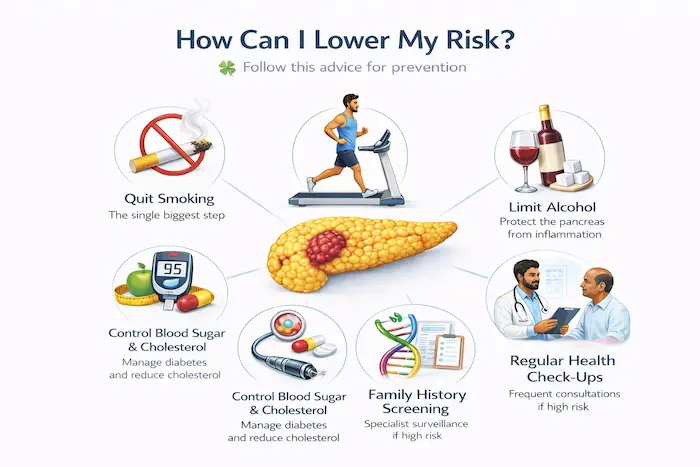
    How Can I Lower My Risk?

    advitya healthcares

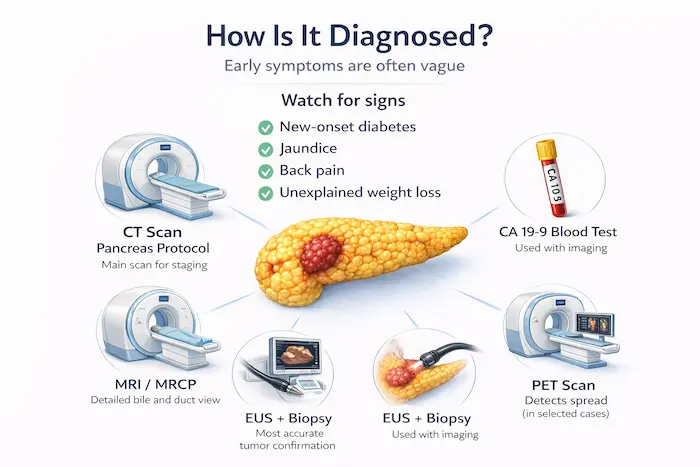
    How Is It Diagnosed?

    advitya healthcares

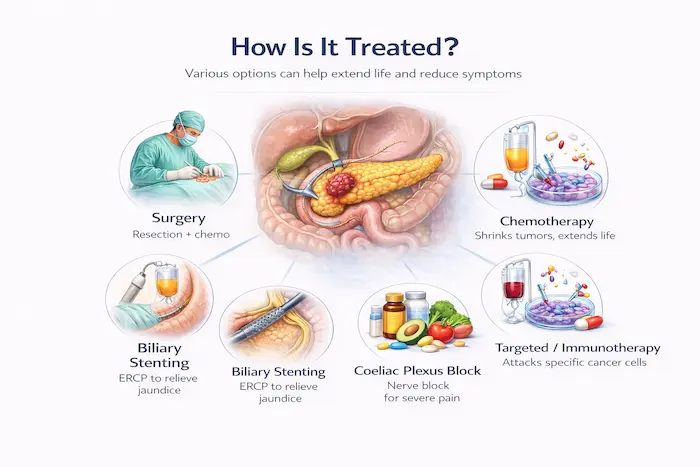
    How Is It Treated?

    advitya healthcares
    The Surgery: Whipple Procedure (Pancreaticoduodenectomy) The Whipple is one of the most complex abdominal operations performed. It is used for cancers in the head of the pancreas. What is removed: the head of the pancreas, the first part of the small bowel (duodenum), the lower bile duct, the gallbladder, and sometimes part of the stomach. Three reconnections are then made: the remaining pancreas to the bowel (pancreaticojejunostomy), the bile duct to the bowel (hepaticojejunostomy), and the stomach to the bowel (gastrojejunostomy). Distal pancreatectomy: for cancers in the body or tail — removes the left side of the pancreas, often with the spleen. Total pancreatectomy: removes the entire pancreas — used in selected cases; results in insulin-dependent diabetes. Hospital stay: 7-14 days. Recovery: 6-8 weeks.

    Aftercare & Recovery

    advitya healthcares
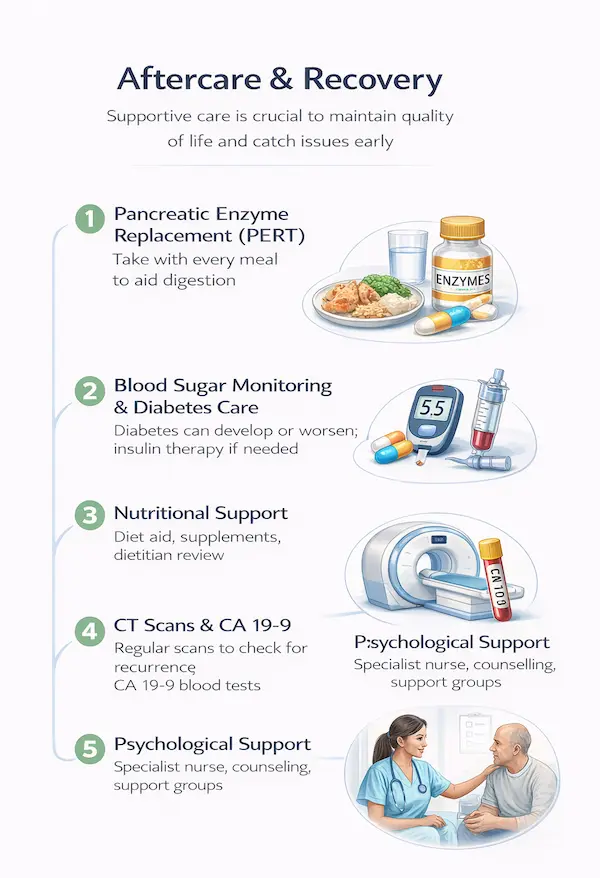
    Enzyme supplements are not optional after pancreatic surgery — without them, food passes through undigested, causing weight loss, fatty stools, and fatigue. Take them with every meal and snack, every time.
  • Your guide to Gallbladder Cancer, Everything You Need to Know

    Your guide to Gallbladder Cancer, Everything You Need to Know

    PancreaCare by
    Advitya Healthcares

    Covering: Oesophageal  |  Stomach  |  Liver  |  Gallbladder  |  Bile Duct
    Pancreatic  |  Small Bowel  |  Colon  |  Rectal  |  Anal  |  GIST  |  NETs

    Warning Signs: When to See a Doctor

    Red Flag Symptoms — Never Ignore These    
    Unexplained weight loss or loss of appetite   Difficulty swallowing or pain when swallowing   Persistent indigestion, heartburn, or abdominal pain   Vomiting blood, or vomit that looks like coffee grounds   Black, tarry, or bloody stools   New jaundice — yellowing of skin or whites of the eyes   Dark urine and pale/clay-coloured stools   A change in bowel habits lasting more than 3 weeks   Unexplained new anaemia (low blood count)   New-onset diabetes after age 50, especially with weight loss   A lump or swelling in the abdomen   If you have any of these — please make an appointment with your GP today. Early detection genuinely saves lives.

    Gallbladder Cancer

    Advitya Healthcares

    What Is It?

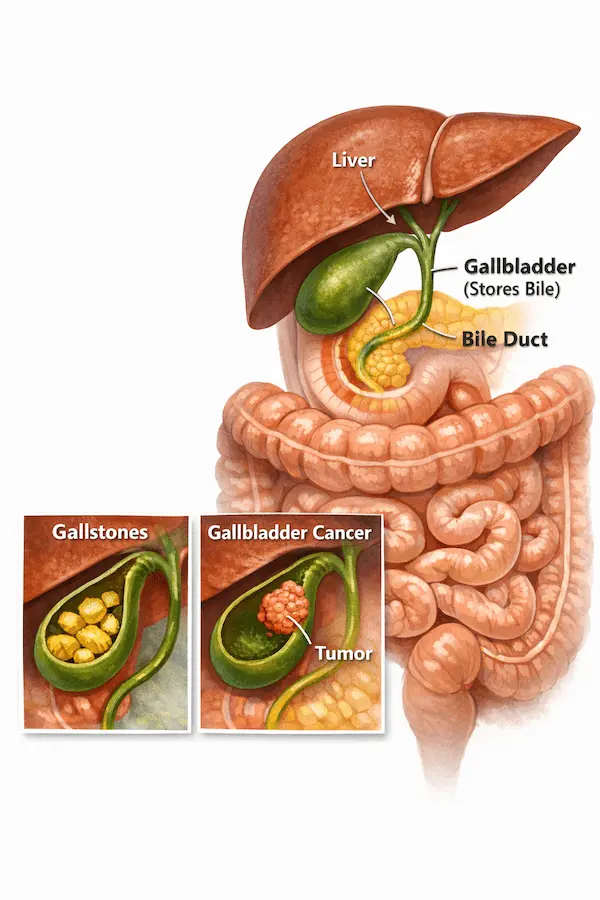
    The gallbladder is a small pear-shaped pouch tucked beneath the liver. Its job is to store bile — a digestive fluid made by the liver — and release it into the small intestine after meals to help digest fats.

    Gallbladder cancer is not common, but it’s important to know about because it’s often linked to gallstones, which are very common. It tends to be found at a later stage because it rarely causes distinct symptoms early on.

    Why Does It Happen? (Causes & Risk Factors)

    Advitya healthcares

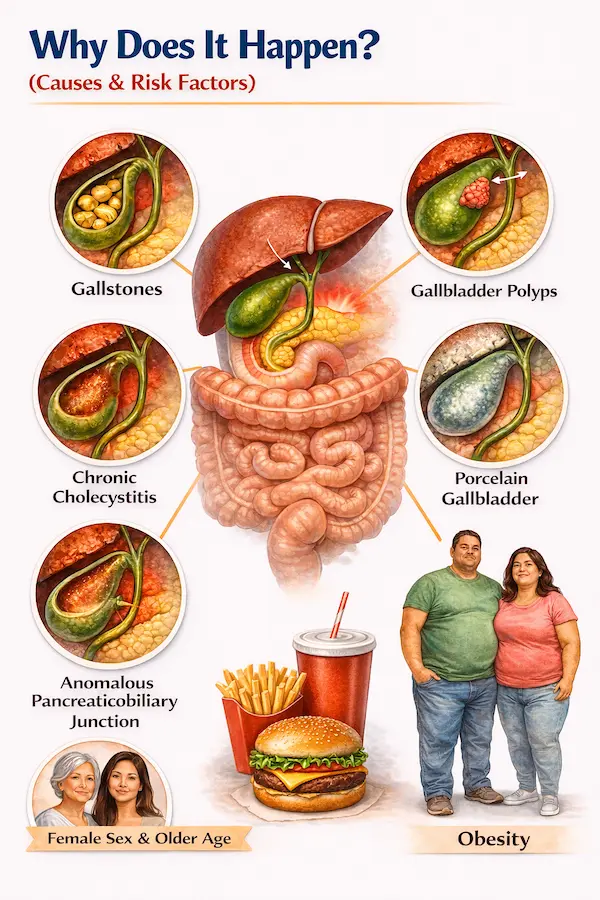
    The common thread in gallbladder cancer is chronic inflammation and irritation of the gallbladder wall:

    • Gallstones (cholelithiasis) — especially large stones causing repeated episodes of inflammation
    • Chronic cholecystitis (long-standing gallbladder inflammation)
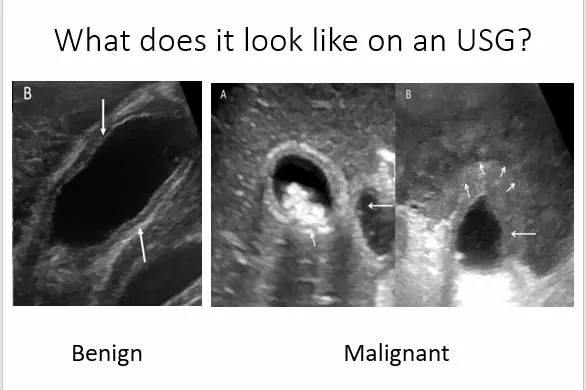
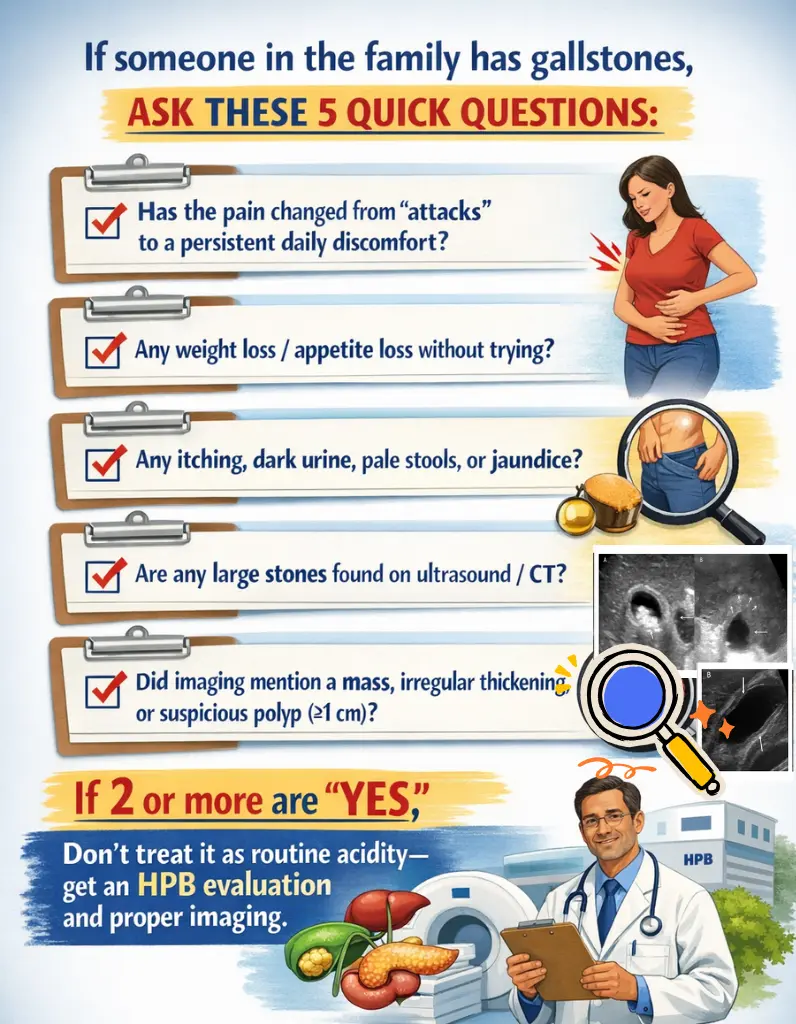
    • Gallbladder polyps — particularly those larger than 1 cm
    • Porcelain gallbladder (calcification of the gallbladder wall from chronic inflammation)
    • Anomalous pancreaticobiliary junction (a structural abnormality where bile duct joins the pancreatic duct abnormally)
    • Female sex and older age
    • Obesity and certain ethnic backgrounds (higher rates in some South American and South Asian populations)

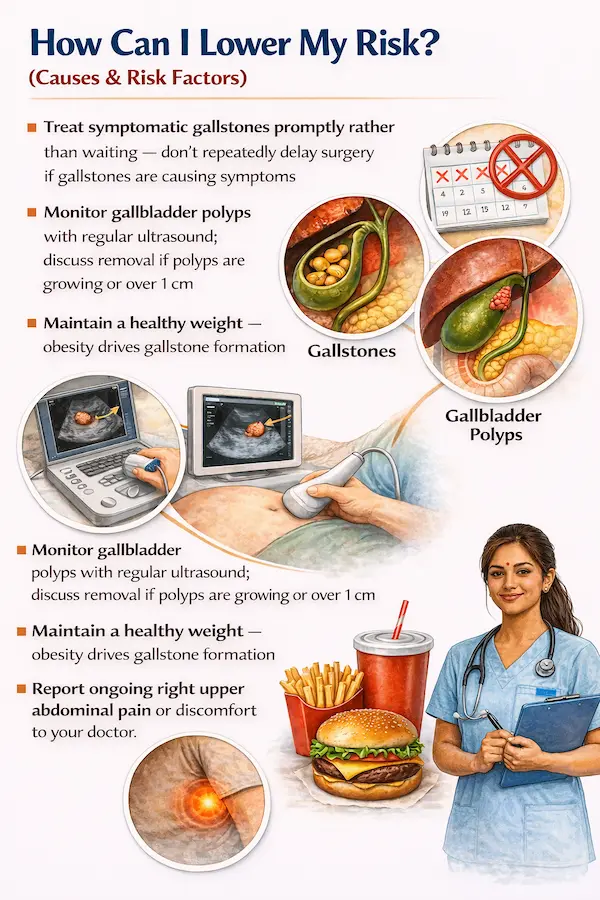
    How Can I Lower My Risk?

    Advitya healthcares

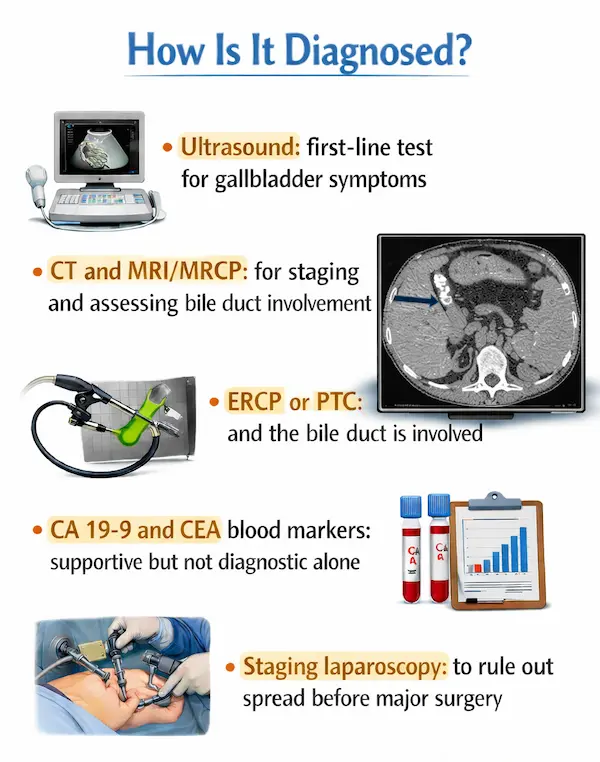
    How Is It Diagnosed?

    Gallbladder cancer is often suspected on imaging done for other reasons, or when gallbladder removal (cholecystectomy) reveals unexpected cancer:

    Advitya healthcares

    How Is It Treated?

    Surgery offers the only chance of cure; the extent depends on how far the cancer has spread:

    • Simple cholecystectomy: removal of the gallbladder alone — sufficient for very early incidental cancers
    • Extended cholecystectomy: removal of the gallbladder plus a margin of liver and nearby lymph nodes — for most operable cancers
    • Bile duct resection: if the bile duct is involved
    • Chemotherapy (gemcitabine + cisplatin or capecitabine) after surgery or for advanced disease
    • Stent placement: to relieve jaundice caused by bile duct blockage in advanced cases
    The Surgery: Extended Cholecystectomy For most operable gallbladder cancers, surgery involves removing the gallbladder, a wedge of liver tissue immediately adjacent to it, and lymph nodes in the nearby region. If the bile duct is involved, that section of bile duct is also removed and the bowel is reconnected (biliary reconstruction). The goal is complete removal of all cancer with clear margins. Hospital stay is typically 5-10 days depending on complexity.

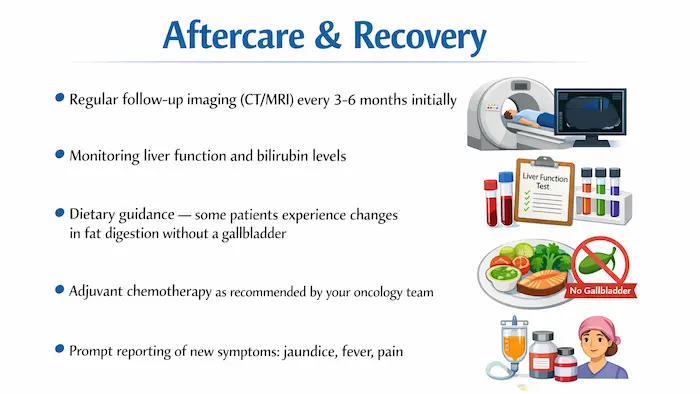
    Aftercare & Recovery

    Advitya Healthcares
  • Your guide to Liver Cancer, Everything You Need to Know

    Your guide to Liver Cancer, Everything You Need to Know

    PancreaCare by
    Advitya Healthcares

    Covering: Oesophageal  |  Stomach  |  Liver  |  Gallbladder  |  Bile Duct
    Pancreatic  |  Small Bowel  |  Colon  |  Rectal  |  Anal  |  GIST  |  NETs

    Warning Signs: When to See a Doctor

    Red Flag Symptoms — Never Ignore These    
    Unexplained weight loss or loss of appetite   Difficulty swallowing or pain when swallowing   Persistent indigestion, heartburn, or abdominal pain   Vomiting blood, or vomit that looks like coffee grounds   Black, tarry, or bloody stools   New jaundice — yellowing of skin or whites of the eyes   Dark urine and pale/clay-coloured stools   A change in bowel habits lasting more than 3 weeks   Unexplained new anaemia (low blood count)   New-onset diabetes after age 50, especially with weight loss   A lump or swelling in the abdomen   If you have any of these — please make an appointment with your GP today. Early detection genuinely saves lives.

    Liver Cancer (Hepatocellular Carcinoma)

    What Is It?

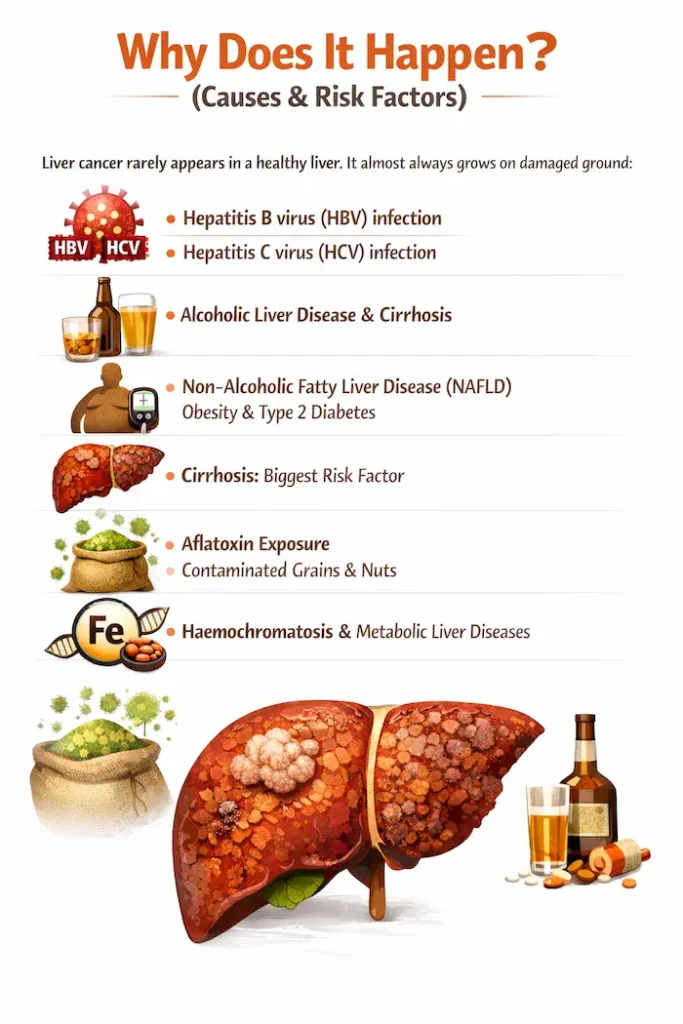
    Why Does It Happen? (Causes & Risk Factors)

    advitya healthcares

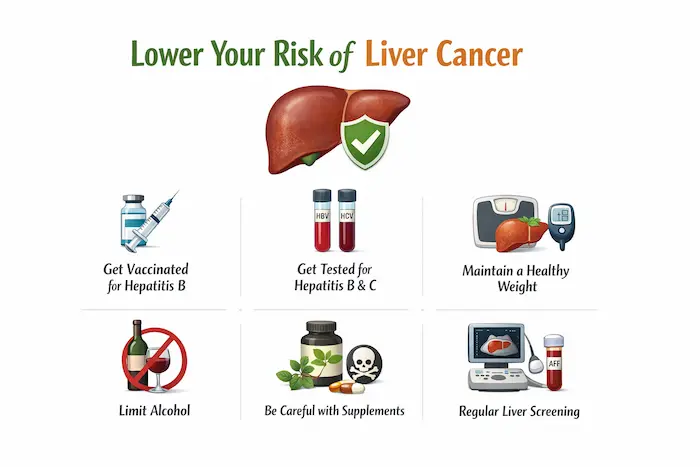
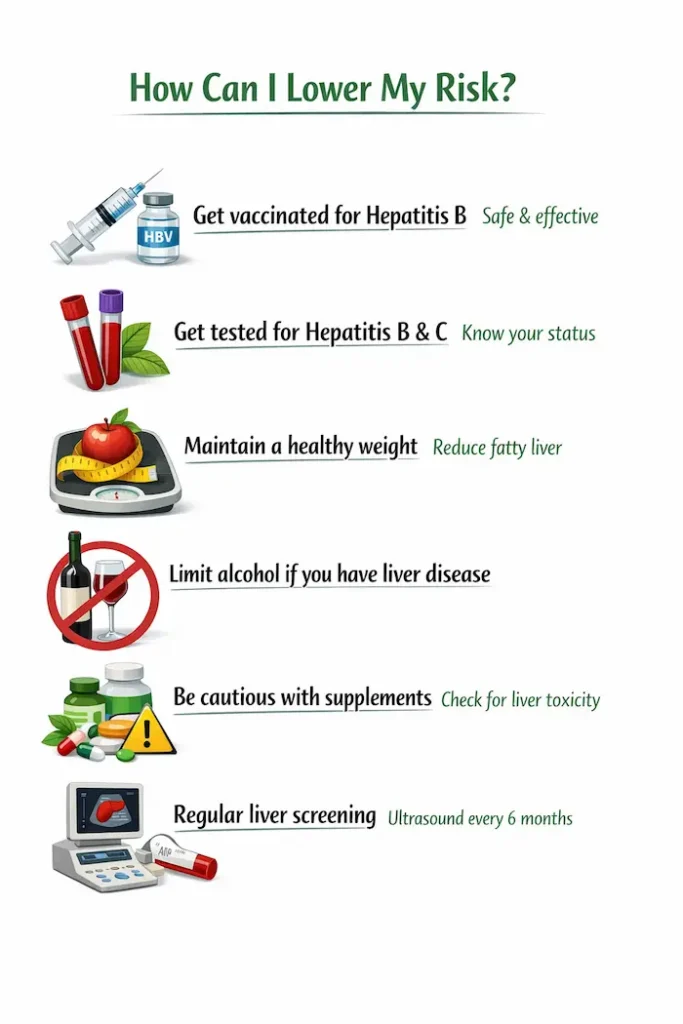
    How Can I Lower My Risk?

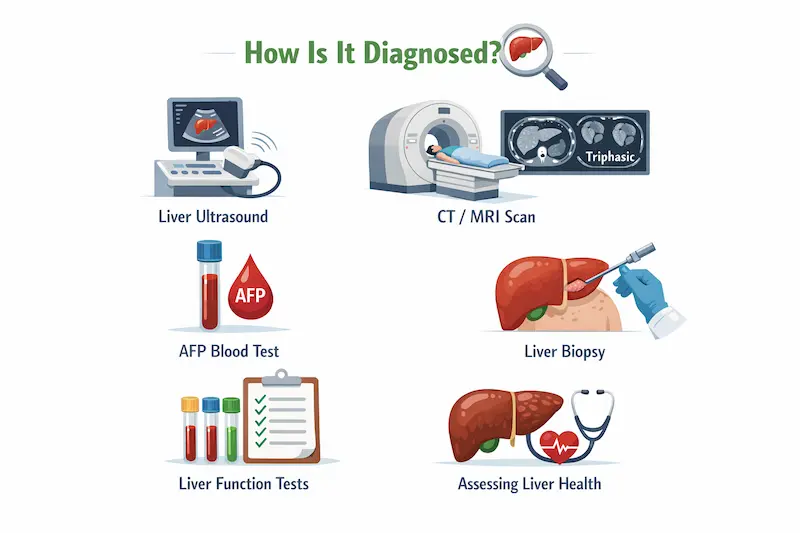
    How Is It Diagnosed?

    How Is It Treated?

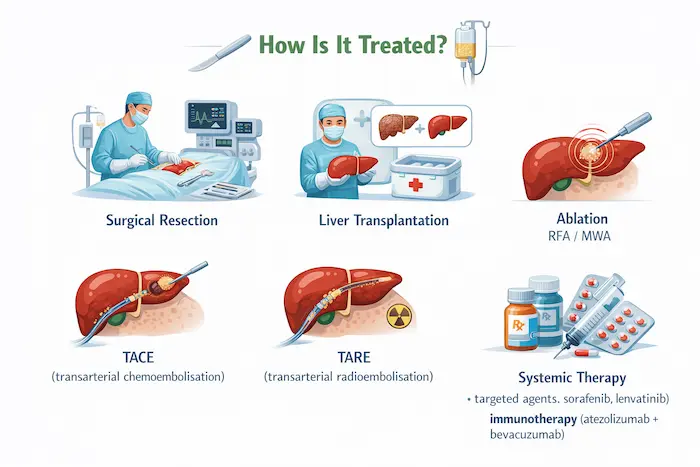
    The Surgery: Liver Resection (Hepatectomy) A hepatectomy removes the tumour along with a margin of healthy liver tissue. The liver has a unique ability to regenerate — up to 70% can be safely removed in a healthy liver. In cirrhotic livers, the extent of surgery is carefully limited based on liver reserve. The operation can be done open or laparoscopically (keyhole). Hospital stay is typically 4-7 days. Liver Transplantation: Both the cancerous liver and the diseased underlying liver are removed and replaced with a healthy donor liver — offering the best long-term outcomes for eligible patients.

    Aftercare & Recovery

  • Your guide to Stomach Cancer, Everything You Need to Know

    Your guide to Stomach Cancer, Everything You Need to Know

    PancreaCare by
    Advitya Healthcares

    Covering: Oesophageal  |  Stomach  |  Liver  |  Gallbladder  |  Bile Duct
    Pancreatic  |  Small Bowel  |  Colon  |  Rectal  |  Anal  |  GIST  |  NETs

    Warning Signs: When to See a Doctor

    Red Flag Symptoms — Never Ignore These    
    Unexplained weight loss or loss of appetite   Difficulty swallowing or pain when swallowing   Persistent indigestion, heartburn, or abdominal pain   Vomiting blood, or vomit that looks like coffee grounds   Black, tarry, or bloody stools   New jaundice — yellowing of skin or whites of the eyes   Dark urine and pale/clay-coloured stools   A change in bowel habits lasting more than 3 weeks   Unexplained new anaemia (low blood count)   New-onset diabetes after age 50, especially with weight loss   A lump or swelling in the abdomen   If you have any of these — please make an appointment with your GP today. Early detection genuinely saves lives.

    Stomach Cancer – Gastric Cancer

    What Is It?

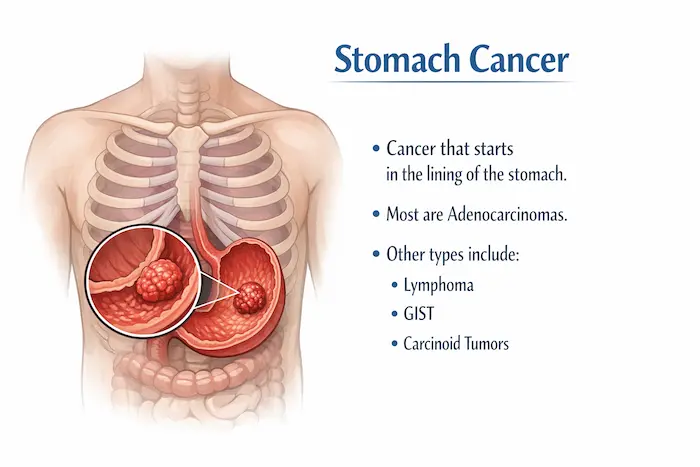
    stomach cancer

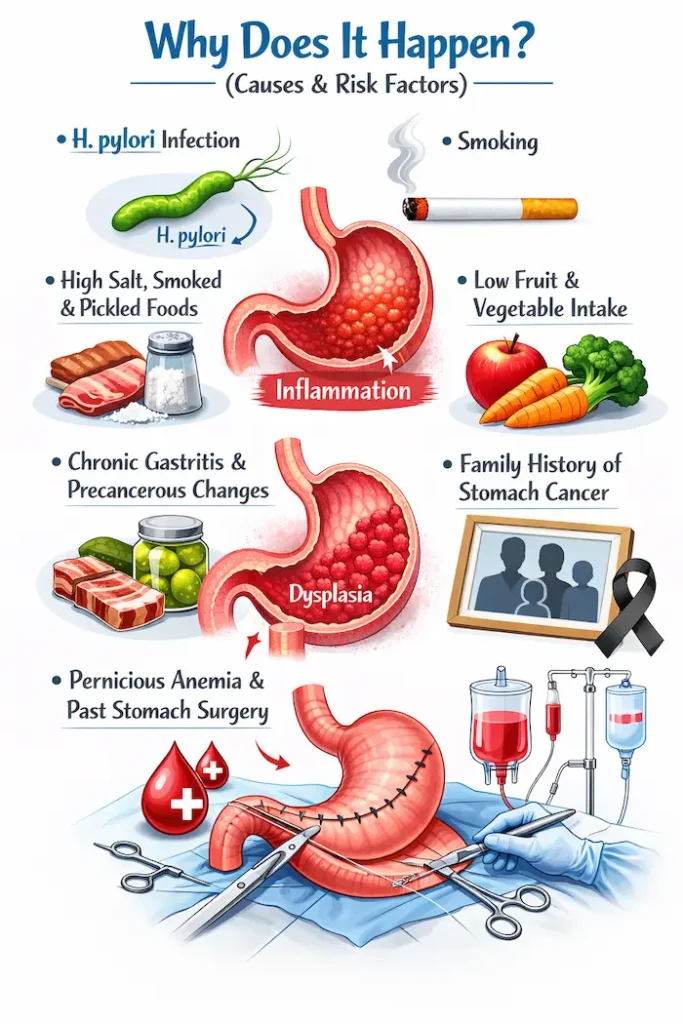
    Why Does It Happen? (Causes & Risk Factors)

    stomach cancer

    How Can I Lower My Risk?

    stomach cancer

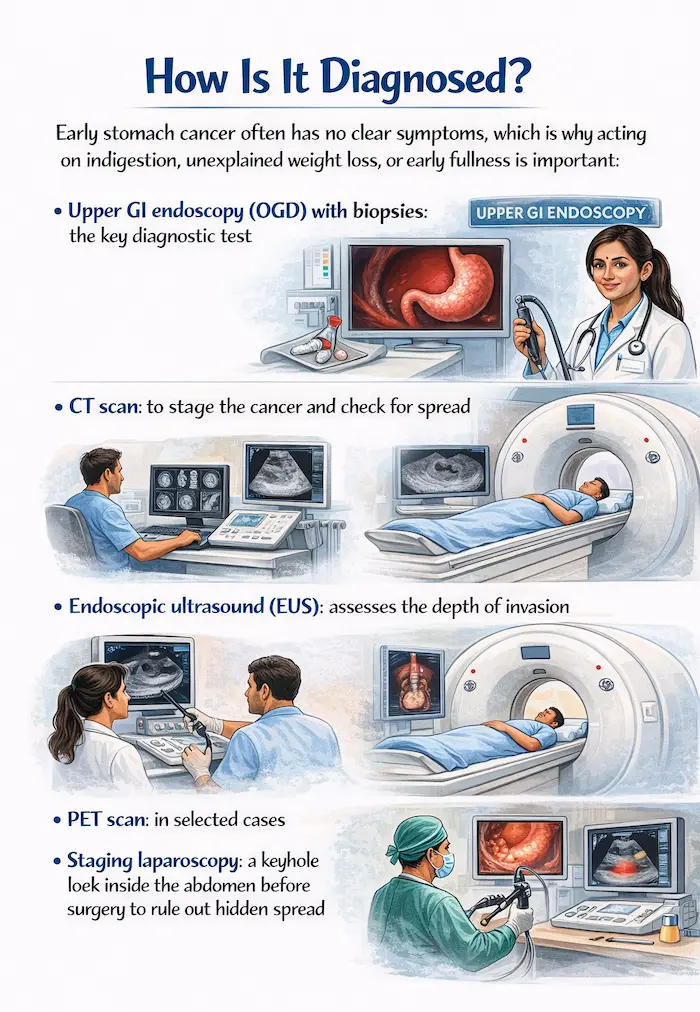
    How Is It Diagnosed?

    how is tomach cancer diagnosed

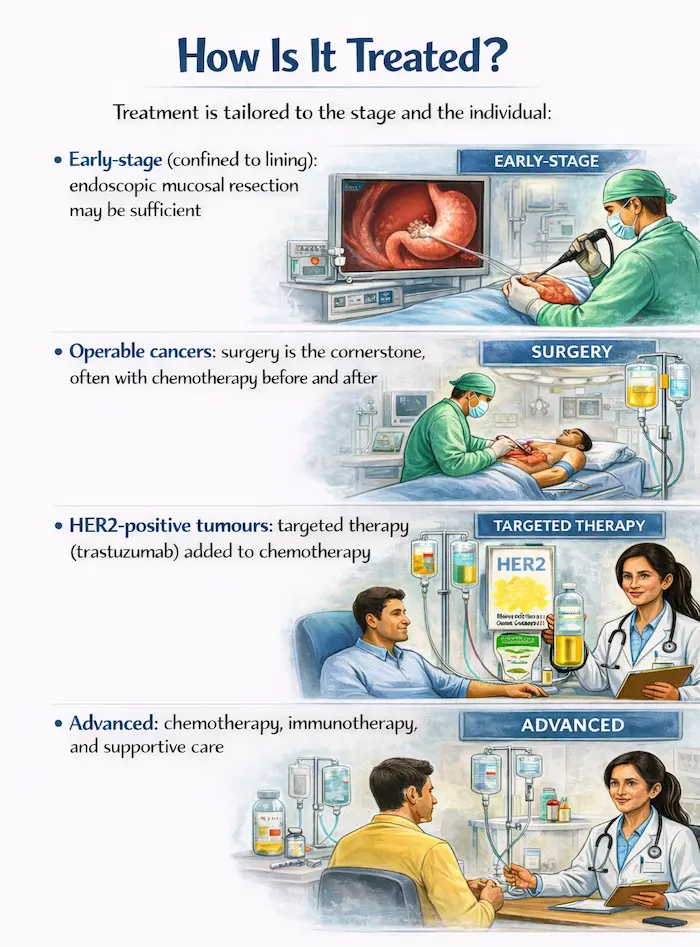
    How Is It Treated?

    how is stomach cancer treated at advitya healthcares
    The Surgery: Gastrectomy A gastrectomy removes part (partial) or all (total) of the stomach, along with nearby lymph nodes. Partial gastrectomy: removes the lower part of the stomach; the remainder is reconnected to the small bowel. Total gastrectomy: the entire stomach is removed; the oesophagus is connected directly to the small bowel. Both operations are typically done by keyhole surgery where possible. The operation takes 3-6 hours. Hospital stay is around 7-10 days.

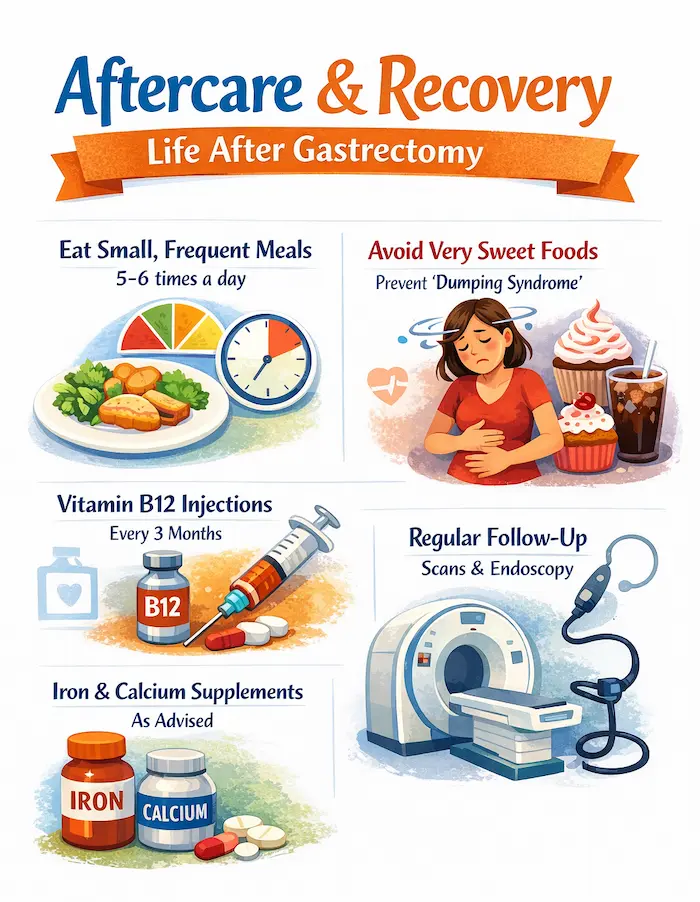
    Aftercare & Recovery

    after care for stomach cancer
    Dumping syndrome — feeling flushed, sweaty, or unwell soon after eating — is common after stomach surgery but usually improves with dietary changes. Your dietitian will guide you through what to eat and what to avoid.
  • Your guide to  Oesophageal Cancer, Everything You Need to Know

    Your guide to Oesophageal Cancer, Everything You Need to Know

    PancreaCare by
    Advitya Healthcares

    Covering: Oesophageal  |  Stomach  |  Liver  |  Gallbladder  |  Bile Duct
    Pancreatic  |  Small Bowel  |  Colon  |  Rectal  |  Anal  |  GIST  |  NETs

    Warning Signs: When to See a Doctor

    Red Flag Symptoms — Never Ignore These    
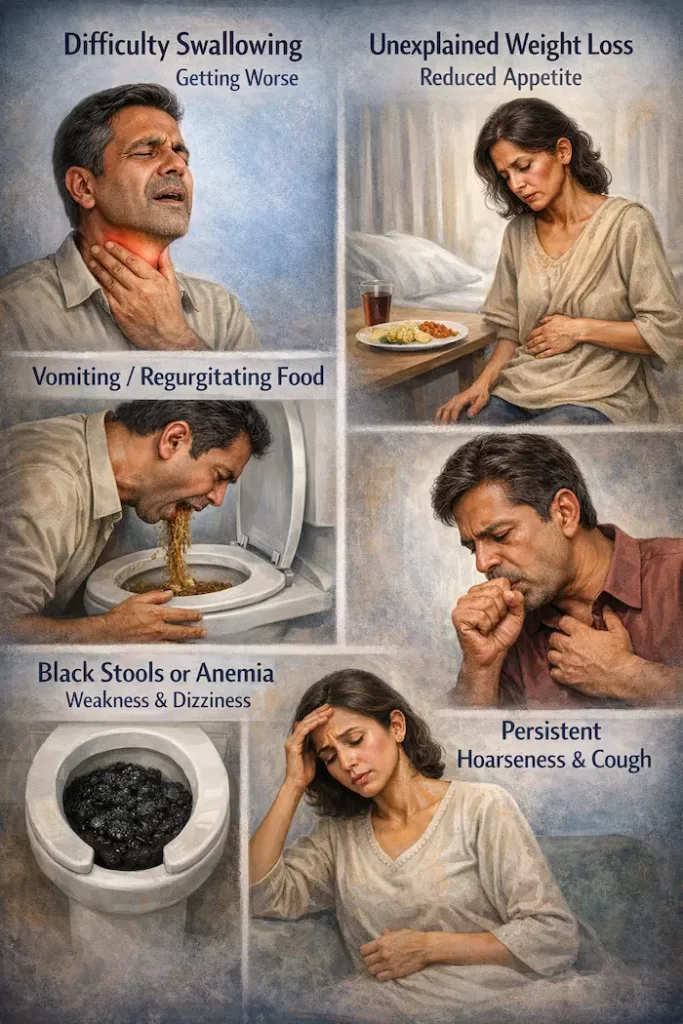
    Unexplained weight loss or loss of appetite   Difficulty swallowing or pain when swallowing   Persistent indigestion, heartburn, or abdominal pain   Vomiting blood, or vomit that looks like coffee grounds   Black, tarry, or bloody stools   New jaundice — yellowing of skin or whites of the eyes   Dark urine and pale/clay-coloured stools   A change in bowel habits lasting more than 3 weeks   Unexplained new anaemia (low blood count)   New-onset diabetes after age 50, especially with weight loss   A lump or swelling in the abdomen   If you have any of these — please make an appointment with your GP today. Early detection genuinely saves lives.

    1. Oesophageal Cancer

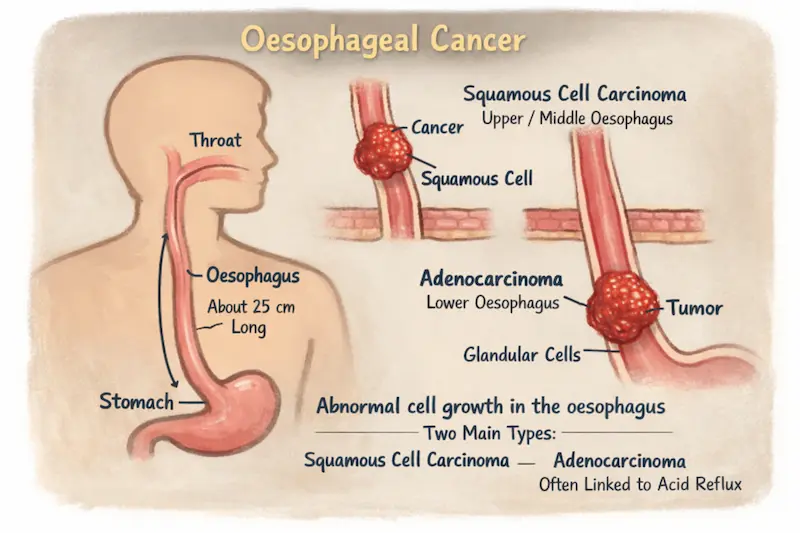
    ChatGPT Image Feb 21, 2026, 05 02 04 PM

    What Is It?

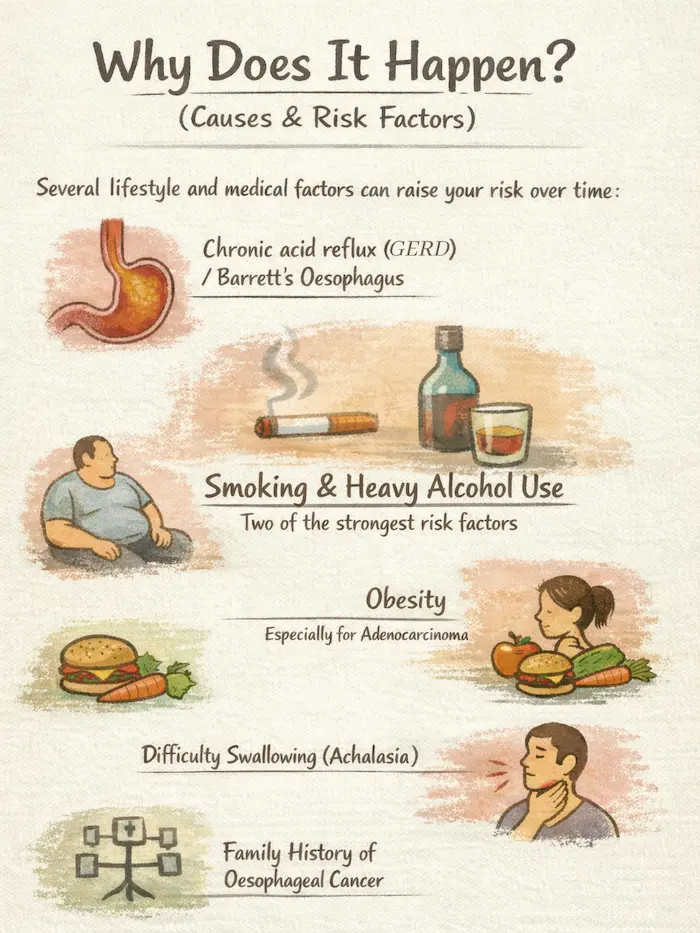
    Why Does It Happen?
    (Causes & Risk Factors)

    GERD

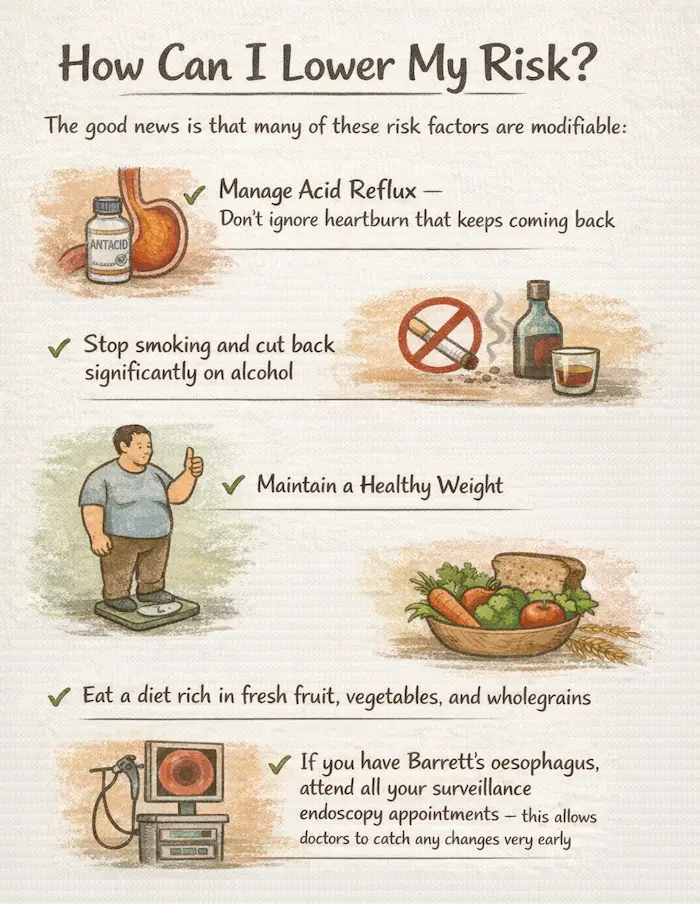
    How Can I Lower My Risk?

    ChatGPT Image Feb 21, 2026, 05 13 36 PM
    Barrett’s Oesophagus: Know Your Status If you’ve had long-standing acid reflux, ask your GP about a check for Barrett’s oesophagus. This pre-cancerous change can be monitored closely and treated before cancer develops — it’s a genuine opportunity to stop cancer in its tracks.

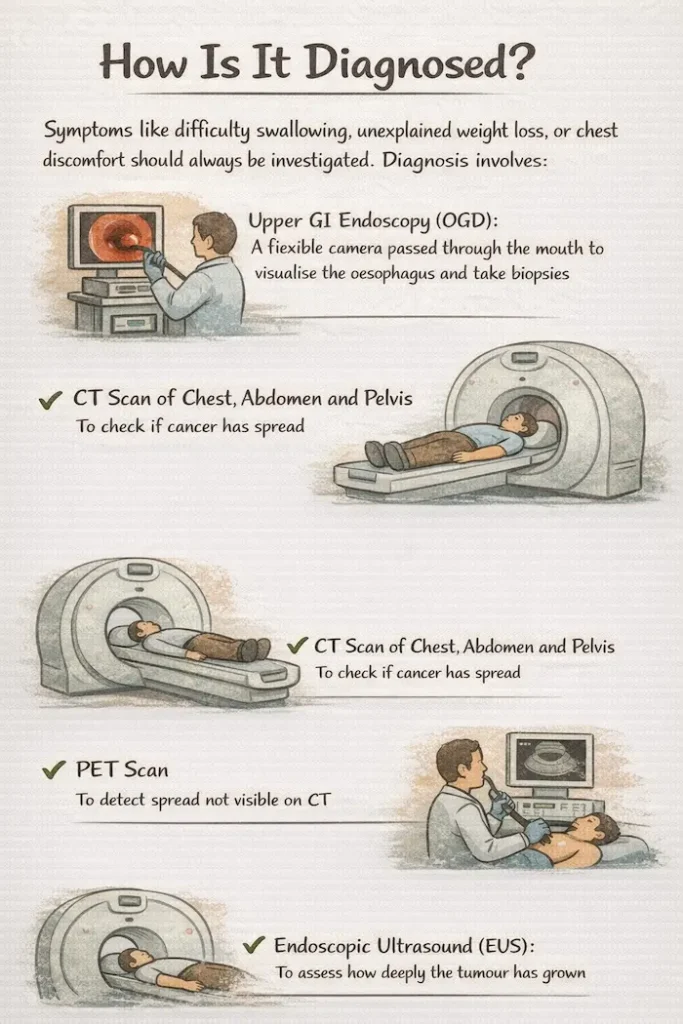
    How Is It Diagnosed?

    ChatGPT Image Feb 21, 2026, 05 21 31 PM

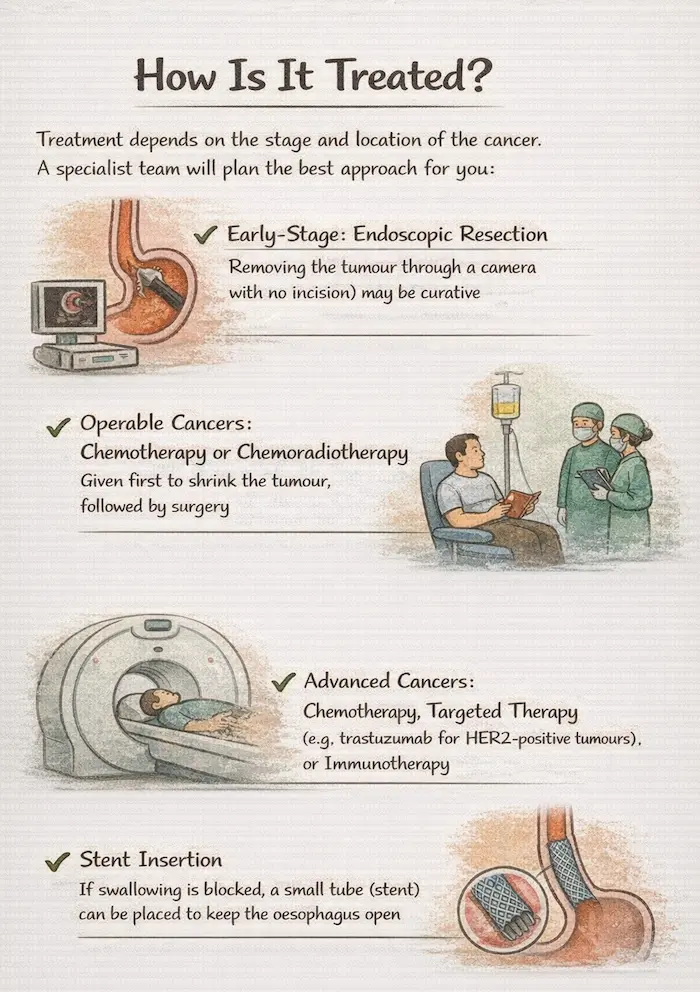
    How Is It Treated?

    ChatGPT Image Feb 21, 2026, 05 23 43 PM
    The Surgery: Oesophagectomy An oesophagectomy removes the affected part of the oesophagus and sometimes the top of the stomach, along with nearby lymph nodes. The stomach is then pulled up into the chest or neck and reconnected — essentially becoming the new oesophagus. It is a major operation typically done using keyhole (minimally invasive) techniques where possible. Most patients stay in hospital for 7-14 days. Recovery at home takes several weeks, with gradual return to eating.

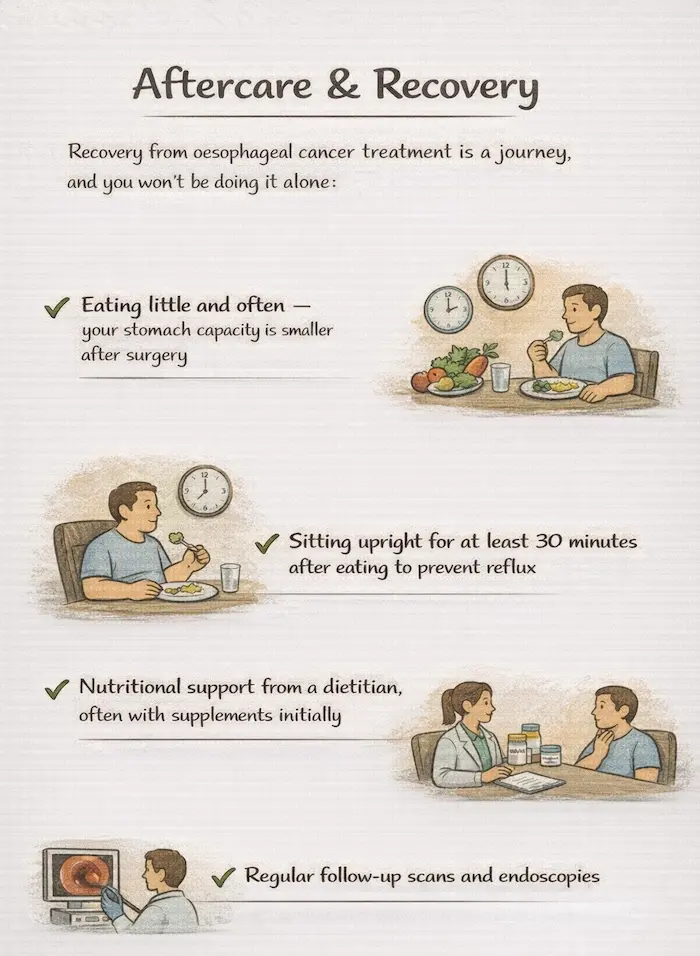
    Aftercare & Recovery

    ChatGPT Image Feb 21, 2026, 05 25 46 PM

    Recovery from oesophageal cancer treatment is a journey, and you won’t be doing it alone:

    • Eating little and often — your stomach capacity is smaller after surgery
    • Sitting upright for at least 30 minutes after eating to prevent reflux
    • Nutritional support from a dietitian, often with supplements initially
    • Regular follow-up scans and endoscopies
    • Speech and swallowing therapy if needed
    Many people are surprised by how well they adapt after oesophageal surgery. A specialist dietitian and a structured rehab plan make an enormous difference — don’t hesitate to ask for support.
  • Bile Duct Cancer (Cholangiocarcinoma)

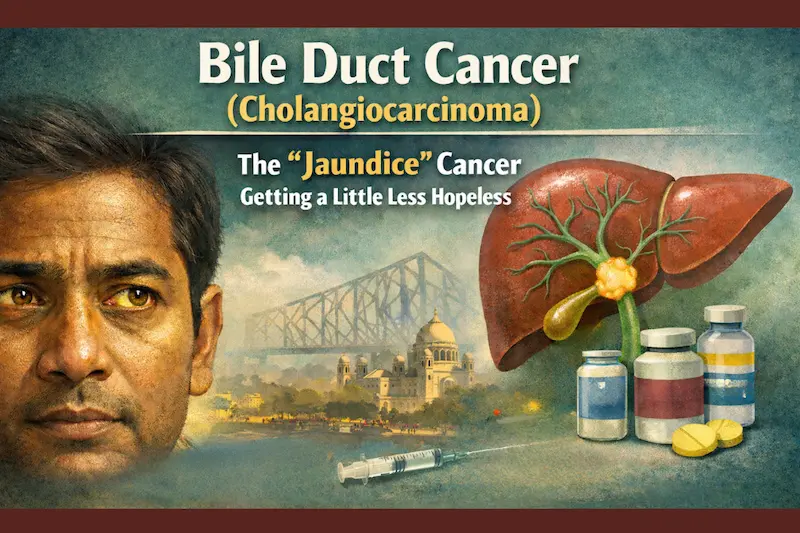
    Bile Duct Cancer (Cholangiocarcinoma)


    First: what are bile ducts, and why does “blockage” matter?

    The whole story of alcohol damage (9)

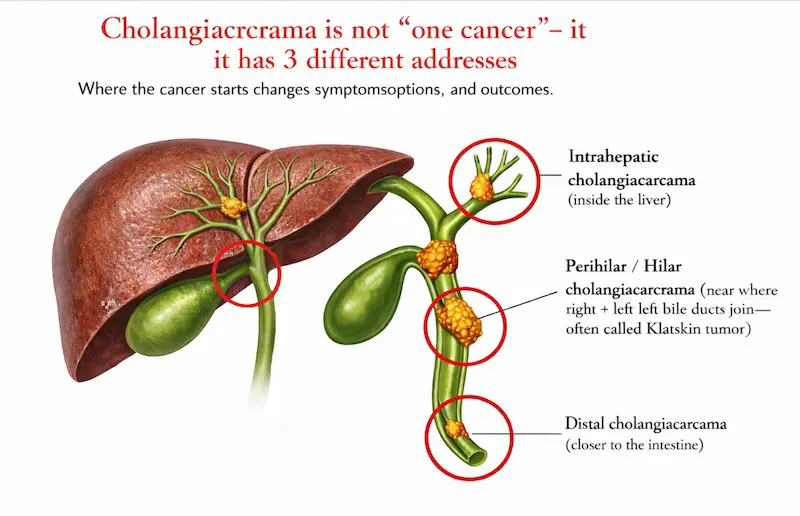
    Cholangiocarcinoma is not “one cancer”—it has 3 different addresses

    The whole story of alcohol damage (7)

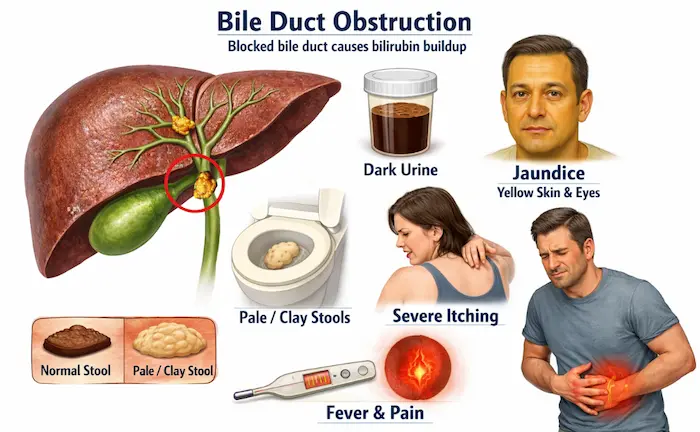
    Why bile duct cancer is often missed (especially early)


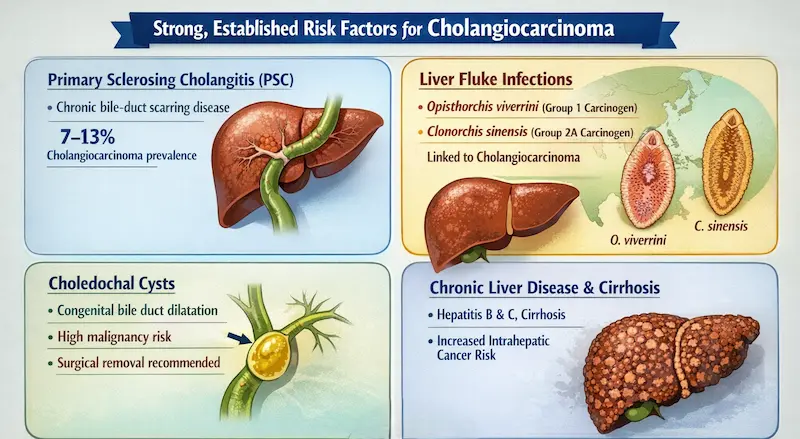
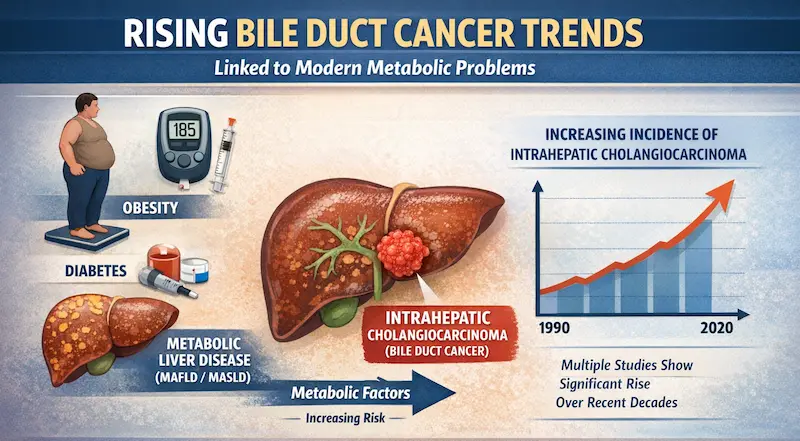
    “What causes it?” — risk factors that are real (not WhatsApp myths)

    ChatGPT Image Feb 12, 2026, 12 07 45 PM
    ChatGPT Image Feb 12, 2026, 12 23 59 PM

    Kolkata-friendly diagnostic roadmap: how doctors actually confirm
    (step-by-step)

    Step A: Basic labs

    Step B: Imaging that shows the plumbing + the cause

    Step C: Tissue confirmation (biopsy/cytology) — the tricky part


    Treatment: what’s possible today (and what has genuinely changed recently)

    T

    A) If the tumor is resectable (localized)

    B) Special case: selected perihilar cases and liver transplant pathways

    C) If the cancer is advanced/unresectable (the “world is changing” zone)

    1) Chemo backbone: Gemcitabine + Cisplatin

    2) The big recent change: Immunotherapy + chemo is now FDA-approved first-line

    3) The precision era: “test the tumor, don’t guess”


    Targeted therapy is expanding (and one newer approval matters)


    Myth vs Fact
    (quick Kolkata reality check)


    If you’re in Kolkata: what to do if jaundice appears


    Take-home message (the one line you should remember)


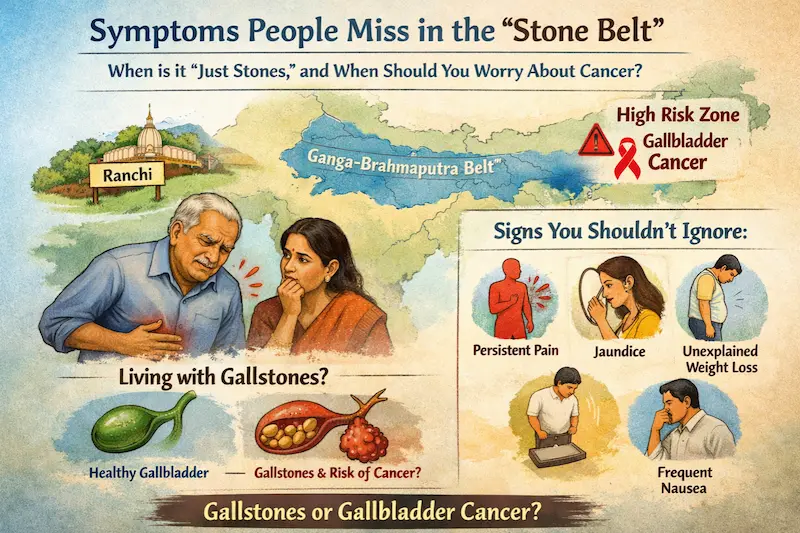
  • Gallbladder Cancer vs. Gallstones

    Gallbladder Cancer vs. Gallstones

    Symptoms People Miss in the
    “Stone Belt”


    First truth: Gallstones are common. Gallbladder cancer is not.


    The danger link: Large, long-standing stones → chronic irritation


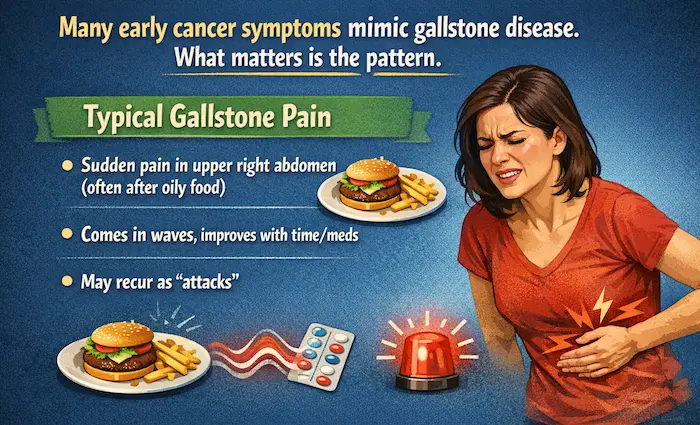
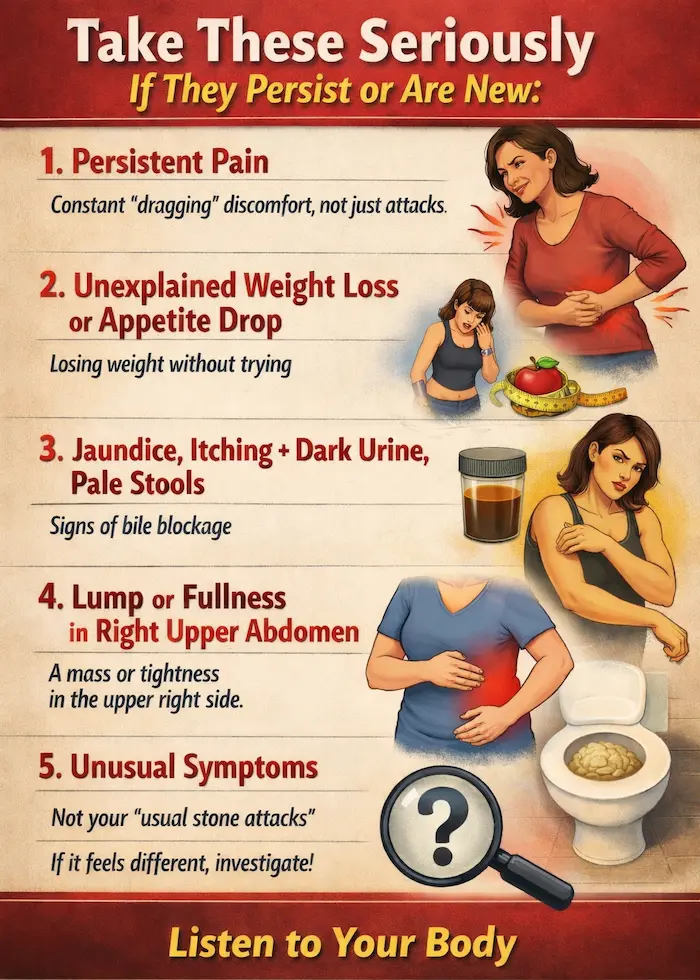
    “Stones” vs “Cancer”: the symptom pattern that separates them

    ChatGPT Image Feb 2, 2026, 03 45 20 PM
    ChatGPT Image Feb 2, 2026, 03 49 10 PM

    The clinic checklist that raises suspicion

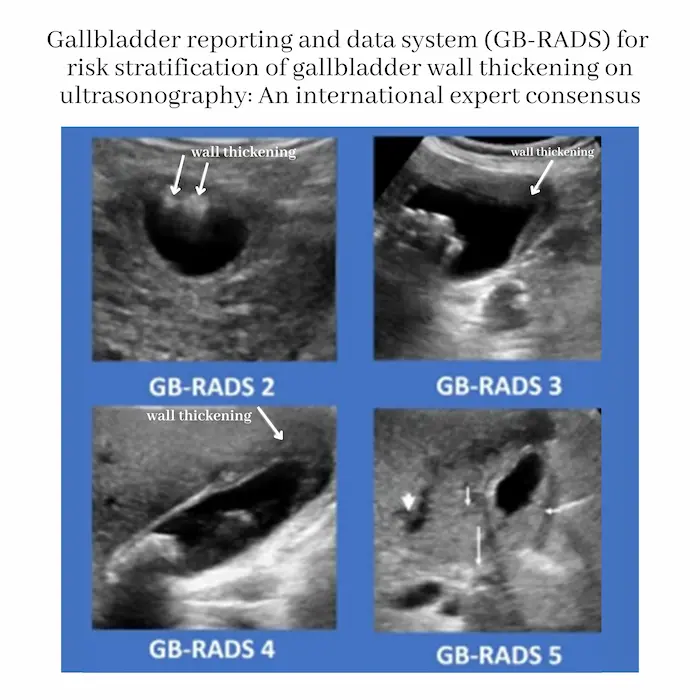
    Gallbladder reporting and data system (GB RADS) for risk stratification of gallbladder wall thickening on ultrasonography An international expert consensus (1)
    Tt

    High-risk “Stone Belt” situations where you shouldn’t delay surgery/workup

    T (1)

    The key surgical point (your message is correct — here’s the precise version)


    What’s genuinely new right now


    Action checklist

  • Food Pipe (Esophageal) Cancer

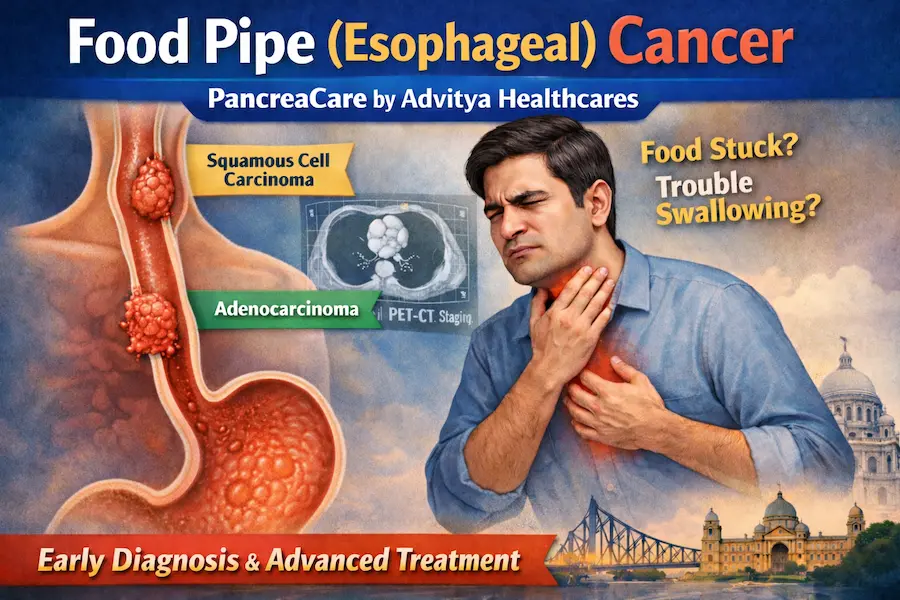
    Food Pipe (Esophageal) Cancer


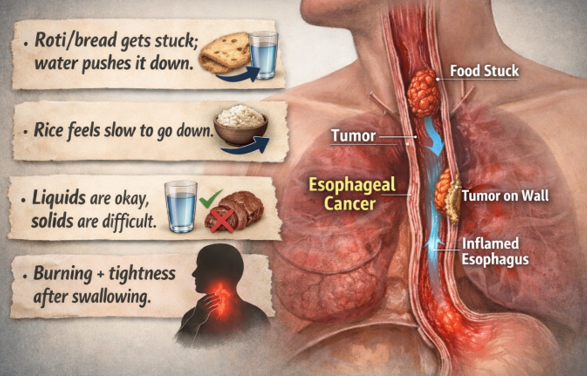
    The symptom that deserves respect: “food is sticking”

    Capture
    ChatGPT Image Jan 30, 2026, 03 42 33 PM

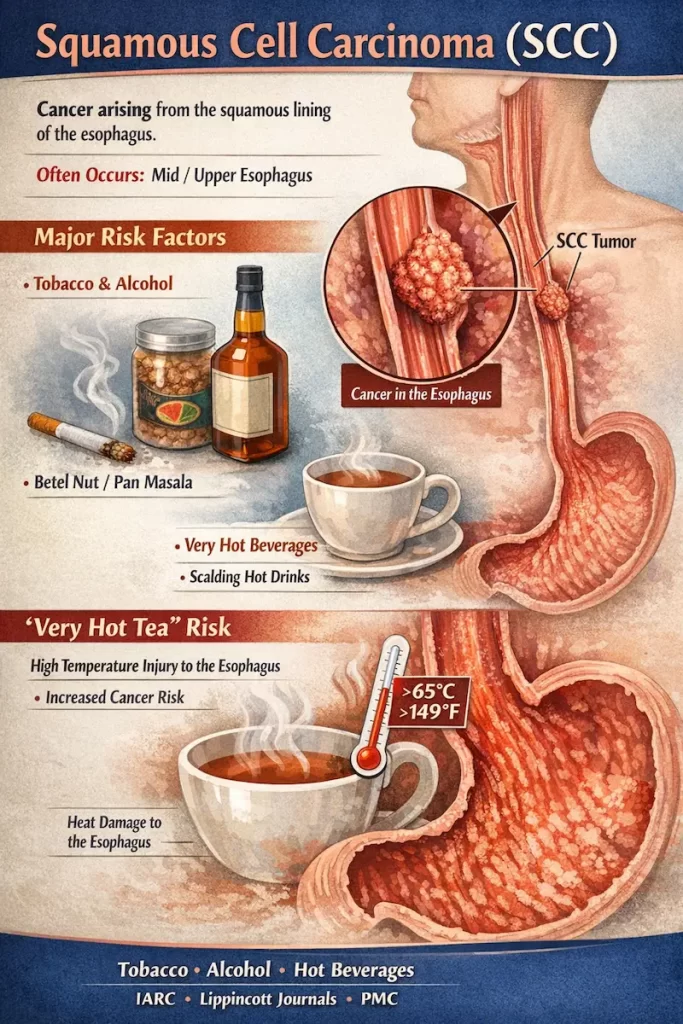
    Two main cancers of the food pipe: SCC vs Adenocarcinoma

    ChatGPT Image Jan 30, 2026, 04 02 20 PM

    ChatGPT Image Jan 30, 2026, 04 05 05 PM

    The “right” diagnosis roadmap
    (not guesswork)


    Treatment (what patients should understand before fear takes over)


    Kolkata risk checklist


  • Colon Cancer Surgery 101: Laparoscopic vs Open Colectomy, Lymph Nodes & Recovery Timeline

    Colon Cancer Surgery 101: Laparoscopic vs Open Colectomy, Lymph Nodes & Recovery Timeline

    Colon Cancer Surgery 101: Laparoscopic vs Open Colectomy, Lymph Nodes & Recovery Timeline

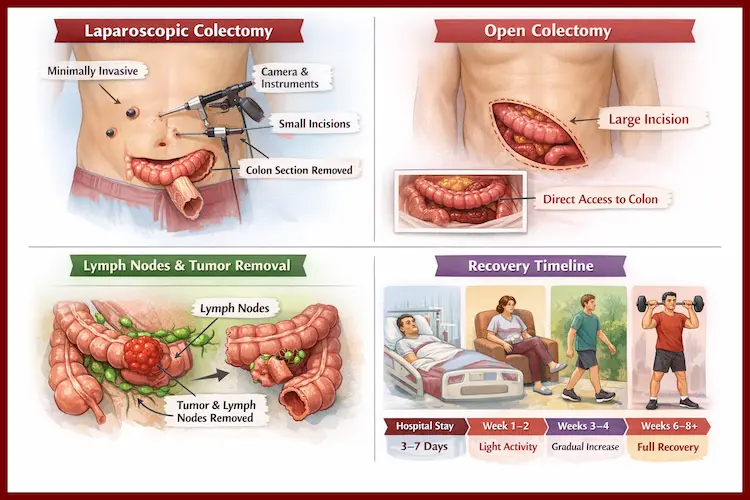
    Hearing the words “colon cancer surgery” can feel overwhelming—especially when you’re trying to understand what exactly will be removed, how the operation is done, and how long recovery takes. This guide breaks the process down in plain language: the two main surgical approaches (laparoscopic vs open colectomy), why lymph nodes are a big deal, and what recovery typically looks like week by week.

    Important note: This blog is for general education and doesn’t replace medical advice. Your plan depends on tumor location, stage, fitness for surgery, and your surgeon’s assessment.


    What is a colectomy (and why it’s done for colon cancer)?

    A colectomy means removing a section of the colon (large intestine). In colon cancer, surgery aims to remove:

    1. The tumor-bearing segment of colon with safe margins, and
    2. The lymph nodes and blood supply connected to that segment (because cancer cells can travel there).

    This “tumor + drainage area” removal is what makes colon cancer surgery different from simply cutting out a small spot—it’s designed to be oncologically complete.

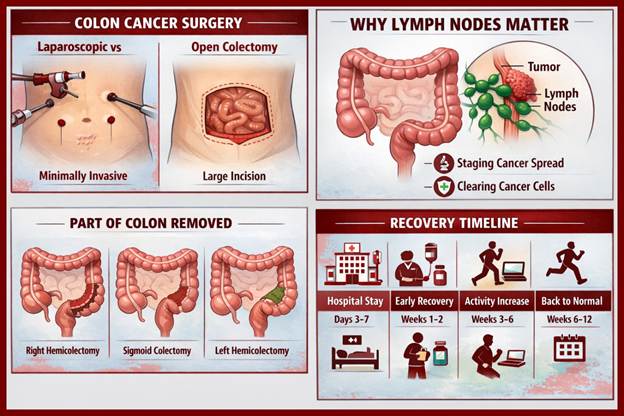
    Depending on tumor location, the surgery might be called:

    • Right hemicolectomy (right side of colon)
    • Left hemicolectomy (left side)
    • Sigmoid colectomy (lower left colon)
    • Extended resections (if the tumor is near a junction or larger in spread)

    After removing the diseased part, the surgeon usually reconnects the bowel ends, called an anastomosis.


    Laparoscopic vs Open Colectomy: What’s the difference?

    ChatGPT Image Jan 24, 2026, 01 44 41 PM

    1) Laparoscopic colectomy (minimally invasive)

    How it’s done: Several small cuts are made. A camera and instruments are inserted to perform the surgery inside the abdomen. The removed colon segment is taken out through a slightly larger incision.

    Common benefits (when appropriate):

    • Less pain after surgery (often)
    • Smaller scars
    • Faster return of bowel function in many cases
    • Shorter hospital stay for many patients
    • Earlier mobility and return to normal activities

    Potential limitations:

    • Not always suitable if there’s a large tumor, extensive adhesions from past surgery, severe obesity, perforation, bowel obstruction, or locally advanced disease stuck to nearby organs.
    • Sometimes surgeons begin laparoscopically and convert to open for safety—this is a medical decision, not a failure.

    2) Open colectomy

    How it’s done: One larger incision is made to access the colon directly.

    When it may be preferred or necessary:

    • Emergency situations (perforation, severe obstruction, uncontrolled bleeding)
    • Very advanced or bulky tumors
    • Complex anatomy or dense scar tissue
    • Need for multi-organ removal or more extensive reconstruction

    Is laparoscopic “as good as” open for cancer?

    For many patients with resectable colon cancer, laparoscopic surgery can achieve similar cancer outcomes when performed by experienced teams using proper oncologic techniques. The most important factor isn’t the number of incisions—it’s whether the operation achieves a complete cancer removal with proper margins and lymph node clearance.


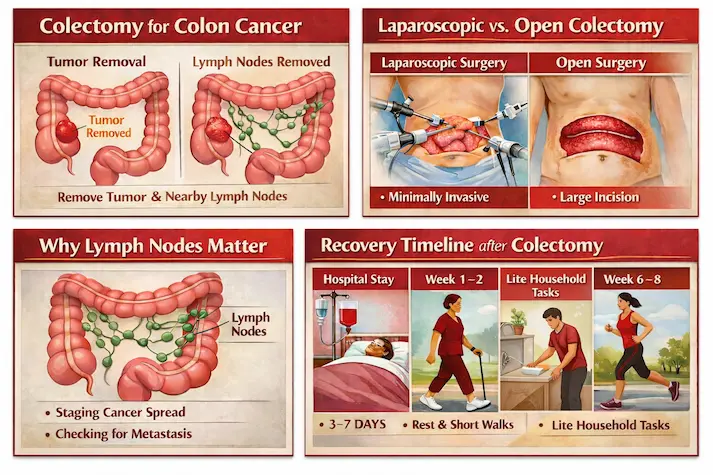
    Why lymph nodes matter (a lot)

    Image

    What are lymph nodes?

    Lymph nodes are small, bean-shaped filters that are part of the immune system. Cancer cells can travel from a colon tumor into nearby lymph nodes.

    Why do surgeons remove them?

    Lymph node removal serves two major purposes:

    1. Accurate staging
      After surgery, a pathologist examines the colon specimen and the lymph nodes. If cancer is found in nodes, it typically indicates a higher stage (often Stage III), which can change treatment recommendations (like chemotherapy).
    2. Better cancer clearance
      Removing nodes in the drainage area reduces the chance of leaving behind microscopic disease.

    How many lymph nodes should be examined?

    Clinicians often aim for an adequate lymph node yield to stage the disease reliably. (You may hear benchmarks like “at least 12 nodes” discussed in many settings.) What matters most is that the surgeon removes the correct tissue package and the pathology evaluation is thorough—some patients naturally have fewer visible nodes, and prior treatments or individual anatomy can affect counts.

    Tip: Ask for your final pathology report details: tumor size, grade, margins, lymphovascular invasion, number of nodes examined, and number positive.


    Recovery timeline: What to expect (realistic milestones)

    Recovery varies based on age, fitness, nutrition, other illnesses (diabetes, heart/lung issues), the surgery type, and whether complications occur. Many hospitals follow ERAS principles (Enhanced Recovery After Surgery) to speed safe recovery.

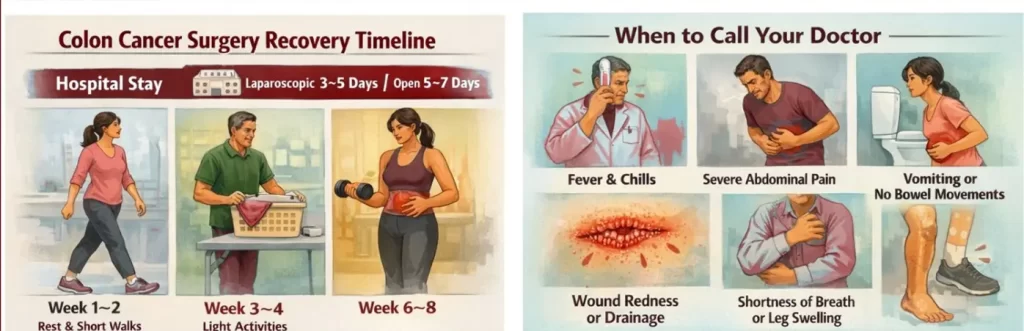
    Hospital phase (Day 0 to Day 5–7)

    Day 0 (surgery day)

    • Pain control begins (often with multimodal meds)
    • Early sips of fluids may start, depending on your case
    • You may be encouraged to sit up the same day

    Day 1–2

    • Walking (multiple short walks) is strongly encouraged
    • Diet may advance from liquids to soft foods based on bowel function
    • Most patients have IV fluids reduced as oral intake improves

    Day 2–4

    • Passing gas is a key sign bowel function is returning
    • Some patients have a bowel movement before discharge, others after
    • Drains (if placed) may be removed
    • Discharge planning begins when pain is controlled on oral meds, you’re walking, eating, and stable

    Typical hospital stay (approximate):

    • Laparoscopic: often ~3–5 days
    • Open: often ~5–7 days
      (These ranges vary widely across patients and hospitals.)

    Home recovery (Week 1–2)

    • Expect fatigue and reduced stamina
    • Short daily walks help prevent clots and improve bowel function
    • Appetite may be low; small frequent meals often work better
    • Bowel habits can be irregular (looser stools, urgency, or constipation)

    Wound care: Keep incisions clean and dry; follow surgeon instructions. Mild bruising or pulling sensations can be normal, but worsening redness, pus, or fever isn’t.

    Weeks 3–4

    • Many patients increase walking distance and return to light household tasks
    • Pain usually decreases significantly
    • Desk work may be possible for some, depending on job demands

    Weeks 4–6

    • A common checkpoint for returning to broader daily activities
    • Lifting restrictions often continue (frequently no heavy lifting until cleared)
    • Open surgery patients may need longer before full comfort returns

    Weeks 6–12

    • Gradual return toward normal stamina
    • If chemotherapy is recommended (often based on stage/pathology), planning or initiation may occur after surgical recovery—timing depends on healing and medical readiness.
    Picture1

    Common concerns (and when to seek urgent help)

    Call your surgical team urgently if you have:

    • Fever, chills, or worsening abdominal pain
    • Persistent vomiting or inability to keep fluids down
    • Increasing redness, swelling, discharge, or opening of the wound
    • No gas/stool with significant bloating and pain
    • Heavy rectal bleeding
    • Chest pain, shortness of breath, or calf swelling (possible clot)

    Smart questions to ask your surgeon

    • Am I a candidate for laparoscopic surgery? If not, why?
    • What type of colectomy will I have (right/left/sigmoid)?
    • Will you reconnect the bowel the same day? What are the risks of leak?
    • How many lymph nodes do you typically retrieve and examine?
    • What will determine my final stage?
    • When can I eat normally, drive, work, exercise, and lift weights?
    • What symptoms should trigger an emergency call?

    Final thought

    The “best” colon cancer surgery is the one that safely removes the cancer completely, stages it accurately through lymph node evaluation, and supports a smooth recovery with the right postoperative plan. Understanding the approach and timeline upfront can turn fear into clarity—and help you prepare with confidence.

  • GI Cancer in Kolkata: Early Signs, Smart Screening & Where to Start (Advitya Healthcares)

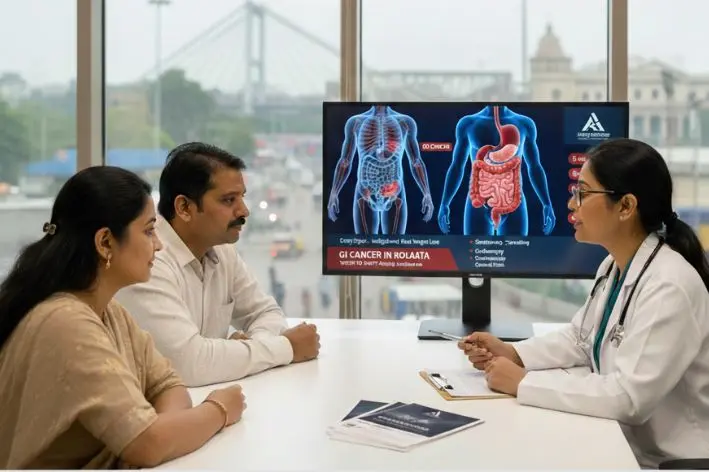
    GI Cancer in Kolkata: Early Signs, Smart Screening & Where to Start (Advitya Healthcares)

    In Kolkata, we often brush off gut symptoms as “gas,” “acidity,” or “something I ate.” A late dinner after work, weekend biryani, extra cha, street food cravings—most of us have been there. But when stomach or bowel symptoms persist, worsen, or come with warning signs, it’s important to think beyond routine indigestion. That’s where GI (gastrointestinal) cancers come into the conversation—not to create fear, but to encourage early action, because early detection can change outcomes dramatically.

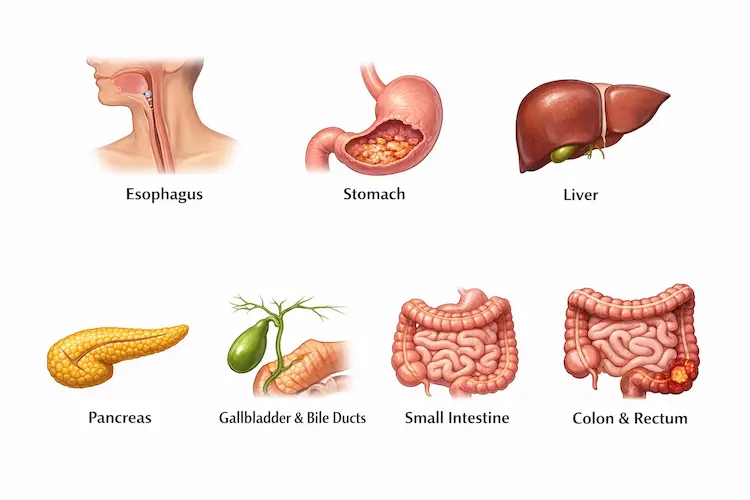
    What is GI cancer?

    “GI cancer” is an umbrella term for cancers that occur anywhere in the digestive system, including:

    • Esophagus (food pipe)
    • Stomach
    • Liver
    • Pancreas
    • Gallbladder and bile ducts
    • Small intestine
    • Colon and rectum (colorectal cancer)
    ChatGPT Image Jan 17, 2026, 02 01 33 PM

    Each has different patterns, risk factors, and treatments—but they often share one common truth: the earlier they’re found, the more treatable they tend to be.

    Why Kolkata families should pay attention

    Kolkata isn’t unique in having GI cancer risk—but some everyday exposures can increase the chances over time. Common contributors include:

    • Smoking and tobacco use (including smokeless forms)
    • Alcohol
    • Long-standing acidity/GERD (reflux symptoms that don’t improve)
    • Obesity, fatty liver, diabetes, and sedentary lifestyle
    • Chronic hepatitis B or C (raises liver cancer risk)
    • High intake of ultra-processed foods, excess oil, low fiber
    • Family history of GI cancers or polyps
    • Certain infections and long-term inflammation in the gut

    This doesn’t mean everyone with acidity or constipation has cancer—most don’t. But it does mean we should learn which symptoms deserve a proper evaluation instead of repeated self-medication.

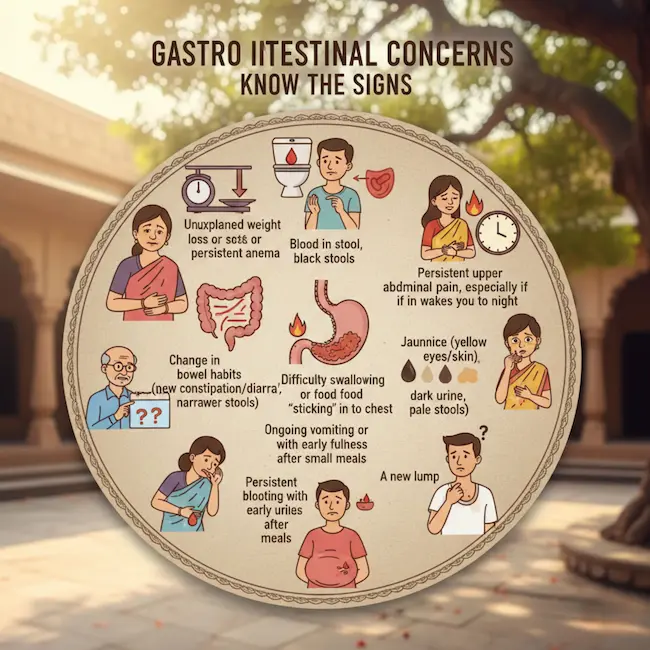
    Symptoms you should never ignore (the “red flag” checklist)

    If you notice any of the following, it’s wise to consult a GI specialist or GI cancer surgeon:

    • Unexplained weight loss or loss of appetite
    • Blood in stool, black stools, or persistent anemia
    • Change in bowel habits (new constipation/diarrhea, narrower stools) lasting weeks
    • Persistent upper abdominal pain, especially if it wakes you at night
    • Difficulty swallowing or food “sticking” in the chest
    • Ongoing vomiting or vomiting blood
    • Persistent bloating with early fullness after small meals
    • Jaundice (yellow eyes/skin), dark urine, pale stools
    • A new lump, fluid in the abdomen, or unexplained fatigue
    1768641314966

    Think of it like this: common symptoms become concerning when they are new, persistent, progressive, or paired with weakness/anemia/weight loss.

    Screening and early detection: the smartest step

    Many GI cancers start quietly. That’s why screening matters—especially for people with age-related risk, family history, or long-standing symptoms.

    Colorectal cancer screening is one of the most effective because many cancers develop from polyps over time. Screening can detect polyps early and remove them. Screening options may include stool-based tests or colonoscopy, depending on risk profile.

    For stomach and esophagus, an upper GI endoscopy helps when reflux is persistent, swallowing becomes difficult, or there’s ongoing pain, vomiting, or unexplained anemia.

    For liver cancer, people with chronic hepatitis or cirrhosis often need regular follow-up and monitoring as advised by their doctor.

    For pancreatic cancer, population-level screening is not routine; however, high-risk individuals (strong family history or certain genetic risks) may need specialized surveillance.

    If you’re unsure whether you need screening, a consultation can help you decide the safest, most practical plan—without unnecessary tests.

    How diagnosis usually happens (simple, step-by-step)

    At Advitya Healthcares, the evaluation typically follows a structured approach:

    1. Detailed history (symptoms timeline, diet, habits, family history)
    2. Clinical examination
    3. Basic blood work (including anemia and liver-related markers when needed)
    4. Imaging such as ultrasound/CT/MRI depending on symptoms
    5. Endoscopy/colonoscopy when indicated
    6. Biopsy to confirm diagnosis if a suspicious lesion is found
    7. Staging to understand how localized or advanced the disease is

    This step-wise approach avoids panic testing while still moving fast when red flags are present.

    Treatment options: not “one-size-fits-all”

    GI cancer treatment depends on the cancer type, stage, and the patient’s overall fitness. Common modalities include:

    • Surgery (often the main curative option for localized cancers)
    • Chemotherapy
    • Radiation therapy (in selected cancers)
    • Targeted therapy / immunotherapy (for specific cancer profiles)
    • Supportive care: nutrition, pain management, gut symptom control, recovery planning

    The goal is always to choose the most effective approach with the least avoidable burden, while preserving quality of life.

    Advitya Healthcares in Kolkata: where care feels structured and human

    When someone hears the word “cancer,” the first need is clarity: What is it? How serious? What do we do next? At Advitya Healthcares, patients in Kolkata benefit from a focused GI pathway that emphasizes:

    • Clear evaluation for suspicious GI symptoms
    • Guidance on the right investigations (not random test shopping)
    • Multidisciplinary planning (surgery + oncology coordination when required)
    • Support with nutrition and recovery planning
    • Focused expertise for complex GI and HPB (liver–pancreas–bile) conditions through PancreaCare by Advitya Healthcares

    Whether your concern is persistent reflux, bowel changes, jaundice, or unexplained weight loss—starting with the right specialist can save critical time.

    Prevention in daily Kolkata life (practical, doable)

    While not all GI cancers are preventable, risk can often be reduced:

    • Quit smoking/tobacco and avoid gutka/betel-nut habits
    • Keep alcohol limited or avoid it
    • Aim for more fiber: vegetables, fruits, whole grains, dal
    • Reduce ultra-processed foods and repeated deep-fried meals
    • Maintain healthy weight and regular walking
    • Manage diabetes and fatty liver early
    • Treat long-standing acidity/GERD instead of living on antacids
    • Take hepatitis vaccination advice seriously (when indicated)

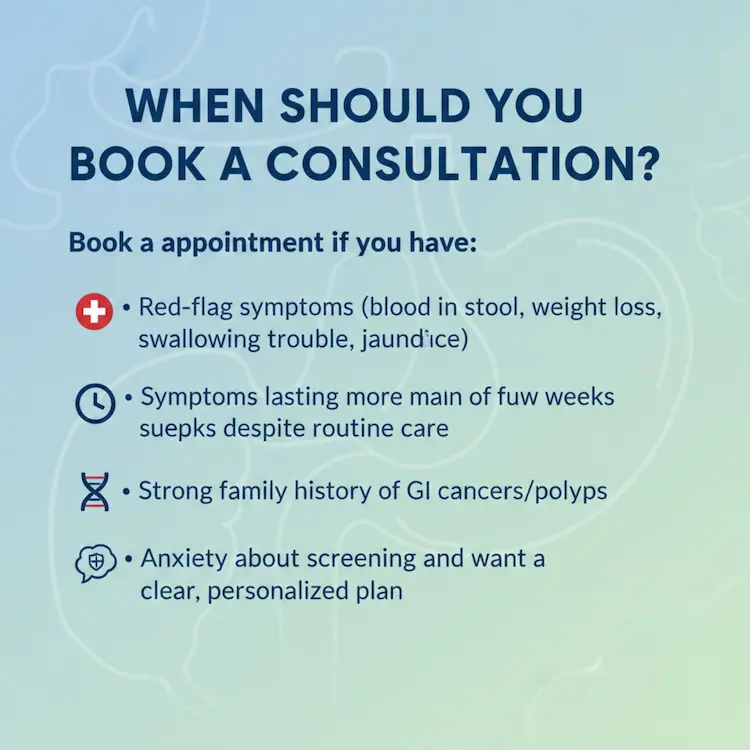
    When should you book a consultation?

    Book an appointment if you have:

    • Red-flag symptoms (blood in stool, weight loss, anemia, swallowing trouble, jaundice)
    • Symptoms lasting more than a few weeks despite routine care
    • Strong family history of GI cancers/polyps
    • Anxiety about screening and want a clear, personalized plan
    1768643379815

    Final thought: In Kolkata, we’re experts at adjusting to discomfort—but GI cancer care rewards the opposite habit: act early, check properly, and move with clarity. If something feels “not normal for me,” that’s reason enough to get evaluated.

    Untitled design

    PancreaCare by Advitya Healthcares supports advanced care for liver–pancreas–bile and complex GI concerns.

    Book a consultation at Advitya Healthcares (Kolkata) for a structured GI evaluation and the right next steps.
    Disclaimer: This content is for awareness only and does not replace medical advice.


    FAQ section

    1. What is the most common early warning sign of GI cancer?
      There isn’t one single sign, but the most important are persistent symptoms—especially blood in stool, unexplained weight loss, anemia/weakness, swallowing difficulty, or jaundice.
    2. Can young adults get GI cancer?
      Yes—though risk increases with age, younger people can also develop GI cancers. In younger adults, red flags (blood in stool, weight loss, anemia) deserve attention, not assumptions.
    3. What does “GI cancer screening” mean?
      Screening means checking for cancer (or pre-cancer) before severe symptoms appear, using tests like stool tests, colonoscopy, and endoscopy, depending on risk and symptoms.
    4. How do I prepare for my first consultation?
      Carry your previous reports, list of medicines, symptom timeline (when it started, what worsens/relieves), family history, and any recent weight change details.
    5. What is PancreaCare by Advitya Healthcares?
      It’s the focused initiative under Advitya Healthcares for pancreas–bile–liver (HPB) and complex GI conditions, helping patients get structured evaluation and coordinated care.