


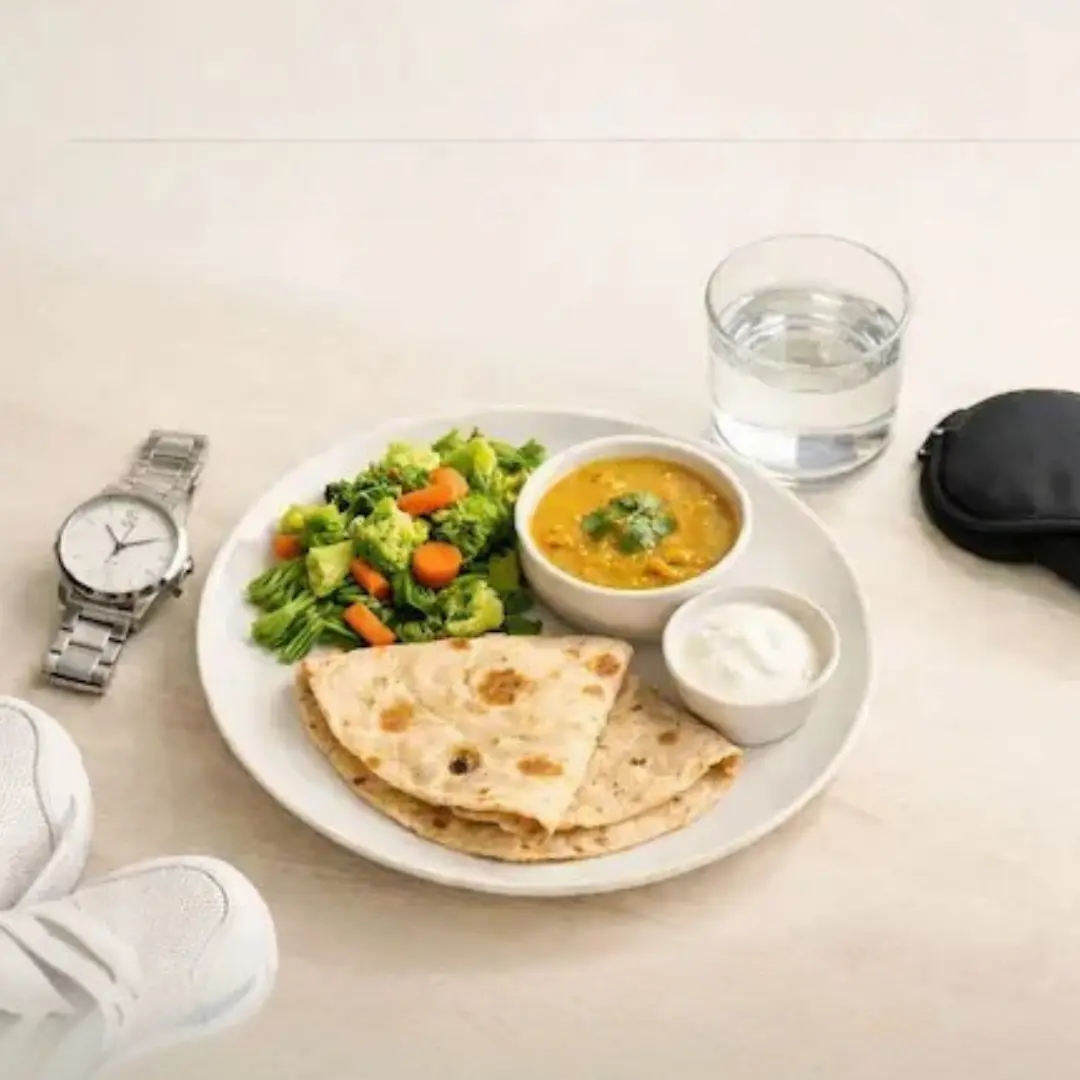
Eating + timing + walking + sleep — no workouts needed.
Most “diet resolutions” fail because they depend on motivation, not routine. From a medical point of view, your hunger, bloating, cravings, energy dips, and bowel regularity are strongly shaped by four daily controls: what you eat, when you eat, what you do after you eat, and how you sleep.
That’s the idea behind Digestive Fitness—a simple 7-day reset that makes digestion calmer and eating decisions easier.
What “Digestive Fitness” means
It means your body handles meals with less digestive stress:
- less heaviness and bloating
- fewer sugar spikes and crashes (so fewer cravings)
- better fullness (satiety)
- smoother bowel routine
- better sleep (late digestion often disrupts rest)
Instead of “eat less,” the goal is reduce digestive load + stabilize post-meal energy.
The 4-part plan
1) Eating: Build a “low-chaos plate”
Simple plate formula (Indian-friendly):
- ½ plate: vegetables (sabzi/salad)
- ¼ plate: protein (dal, eggs, fish/chicken, paneer, curd)
- ¼ plate: carbs (roti/rice)
- + small fat: ghee/mustard oil (improves satisfaction)
Why it works:Fiber + protein usually slow digestion and glucose rise, helping steady energy and fewer cravings.
Micro-rule: stop at 80% full—the last 20% often causes heaviness.
2) Timing: Create a predictable food rhythm
You don’t need extreme fasting—just regularity.
Practical routine:
- breakfast within 90 minutes of waking
- lunch = largest meal
- dinner = lighter + earlier (2–3 hours before sleep)
- “kitchen closed” about 12 hours overnight (example: 8 PM → 8 AM)
Why it works: Your gut and blood sugar respond better to consistency. Late heavy dinners commonly worsen acidity, bloating, sleep quality, and next-day cravings.
3) Walking: Post-meal walking = digestive support
No gym—just 10 minutes easy walking after meals (start with after dinner only).
Why it works: After meals, a short walk helps muscles use glucose, which often reduces heaviness, sleepiness, and post-meal cravings.
4) Sleep: The appetite-control switch
If sleep is poor, hunger and cravings rise, and self-control feels harder.
Simple sleep rules for 7 days:
- keep dinner lighter + earlier
- reduce screens 30 minutes before bed
- fixed bedtime (even on weekends)
Why it works: Better sleep steadies appetite signals and reduces “fast-energy” cravings (sweets, fried snacks, extra chai + biscuits).
Two add-ons that make this easier
- Hydration (steady, not extreme): sip water through the day for smoother digestion and bowel routine.
- Eat slower: your fullness hormones need time—fast eating makes overeating easy.
The 7-day challenge (real-life friendly)
- Day 1: plate formula at 2 meals
- Day 2: 12-hour kitchen closed
- Day 3: 10–15 min walk after dinner
- Day 4: veg/protein first, carbs last
- Day 5: early light dinner (2–3 hrs before sleep)
- Day 6: slow down one meal
- Day 7: repeat your best 2 habits
This works because you’re stacking habits, not changing everything at once.
How you’ll know it’s working (even before weight changes)
Look for:
- less bloating/heaviness
- fewer sudden cravings
- steadier energy
- better morning freshness
- smoother bowel routine
- improved sleep
These are early signs your system is becoming digestively fit.
Safety note
If you have diabetes, GERD/acidity, IBS, fatty liver, or take glucose-lowering medicines, keep changes gradual—especially meal timing—and follow your clinician’s advice.

Leave a Reply
You must be logged in to post a comment.