

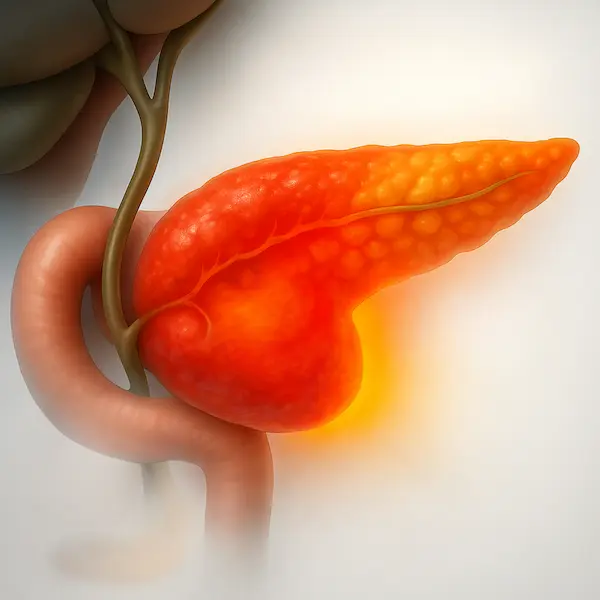
What is Acute Pancreatitis?
Acute pancreatitis is a sudden inflammation of the pancreas that develops within hours to days. It ranges from mild, short-lived discomfort to severe, life-threatening illness.
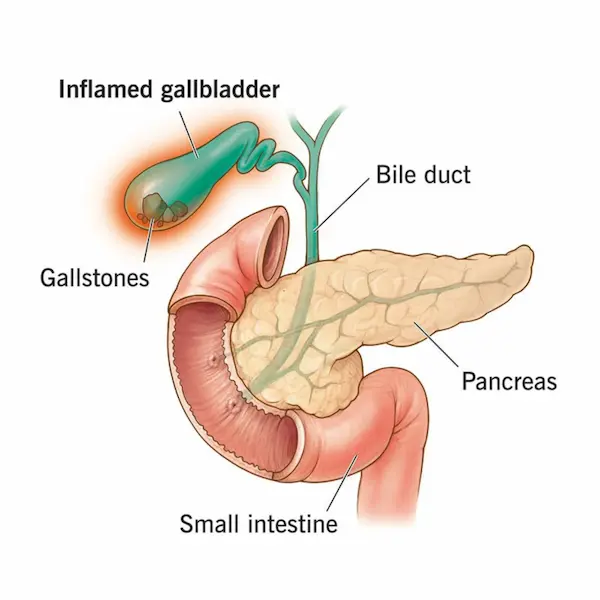
The pancreas normally releases digestive enzymes into the small intestine. In acute pancreatitis, these enzymes become trapped inside and begin digesting the pancreas itself — causing swelling, pain, and sometimes organ failure.
Causes of Acute Pancreatitis
The two most common triggers are:
• Gallstones → Block the duct and trap enzymes inside.
• Alcohol use → Heavy drinking irritates and inflames pancreatic tissue.
Other causes include:
• High triglycerides (>1000 mg/dL)
• Certain medications
• Trauma or post-surgical complications
• Viral infections (mumps, hepatitis)
• Genetic predispositions
Symptoms
• Sudden, severe upper abdominal pain (often radiates to the back)
• Pain worsens after eating, especially fatty meals
• Nausea and repeated vomiting
• Fever, swollen belly, rapid pulse
• Severe cases: difficulty breathing, confusion, low blood pressure

Diagnosis
• Blood tests: Elevated amylase & lipase
• Ultrasound: Looks for gallstones, swelling
• CT/MRI scans: Detects severity and complications
• ERCP/MRCP: Detailed duct imaging

Treatment & Hospital Care
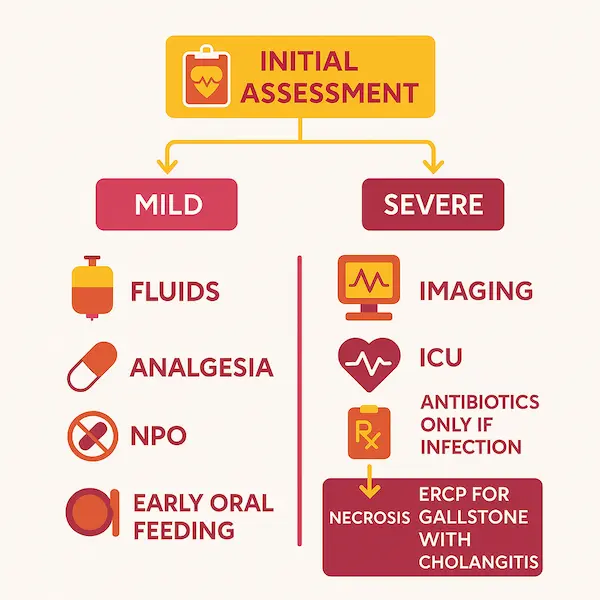
Most patients need hospitalization. Treatment includes:
• IV fluids
• Pain relief
• Bowel rest (no food initially)
• Gallstone removal if needed
• Antibiotics or drainage for infection
• ICU care for severe cases
Complications
• Pancreatic necrosis
• Abscesses or pseudocysts
• Organ failure (lungs, kidneys, heart)
• Sepsis


Leave a Reply
You must be logged in to post a comment.