Author: Team Advitya

  • Gas vs Gastritis vs IBS: How to Identify the Real Cause of Bloating (Simple Kolkata Guide)

    Gas vs Gastritis vs IBS: How to Identify the Real Cause of Bloating (Simple Kolkata Guide)

    Bloating is one of the most common “everyday” problems in Kolkata—especially with irregular meal timings, late-night tea, street food cravings, and stress. The issue is that bloating can mean very different things depending on why it’s happening.

    Most people label everything as “gas,” but the real cause is often one of these three:

    1. Simple Gas / Indigestion (diet + lifestyle related)
    2. Gastritis (stomach lining irritation/inflammation, sometimes due to acid or infection)
    3. IBS (Irritable Bowel Syndrome—gut-brain sensitivity + bowel pattern changes)

    This guide helps you identify which bucket you’re likely in—so you stop guessing and start managing it correctly.


    First: What does “bloating” actually mean?

    People use “bloating” for different sensations:

    • Fullness after eating (stomach feels heavy)
    • Visible abdominal swelling (tight waistband by evening)
    • Burping and upper gas (more in chest/upper belly)
    • Lower belly gas with stool changes (constipation/loose motions)
    • Burning + sour burps (acid-related)

    Where you feel it + when it happens is the biggest clue.


    Quick Kolkata Self-Check (30 seconds)

    Answer these honestly:

    A) Mostly upper belly? (above the navel)

    • More burping than passing gas
    • Burning/acidic sensation
    • Worse with tea/coffee, spicy food, late dinner
      ➡️ Likely Gastritis / Acid-related

    B) Mostly lower belly? (below the navel)

    • Tightness by evening
    • Stool changes (constipation/diarrhea)
    • Worse with stress, anxiety, irregular routine
      ➡️ Likely IBS

    C) Mostly after a specific meal?

    • Happens after heavy meals, oily food, fast eating
    • Gets better with walking, time, simple diet
    • No consistent stool pattern change
      ➡️ Likely Simple Gas / Indigestion

    Now let’s break it down properly.


    1) Simple Gas / Indigestion: The “food + speed + timing” problem
    ChatGPT Image Jan 16, 2026, 05 25 34 PM

    Common Kolkata triggers

    • Fast eating (office lunch in 10 minutes)
    • Overeating at night (biryani/roll + tea)
    • Too much fried food (telebhaja, chop, pakora)
    • Excess carbonated drinks
    • Too much onion/garlic for sensitive stomachs
    • Skipping meals, then heavy dinner

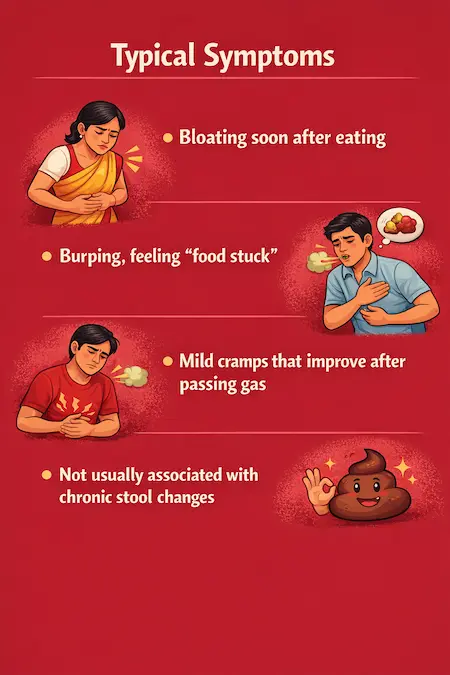
    Typical symptoms

    • Bloating soon after eating
    • Burping, feeling “food stuck”
    • Mild cramps that improve after passing gas
    • Not usually associated with chronic stool changes

    What helps (simple + effective)

    • Eat slower (put spoon down between bites)
    • 10–15 min walk after meals
    • Lighter dinner, earlier dinner
    • Reduce oily + deep-fried foods for 7 days
    • Try smaller portions of known gas-producers (peas, cabbage, cauliflower)

    If this fixes it, you were likely dealing with indigestion-related gas.


    2) Gastritis: When the stomach lining is irritated

    Gastritis is not just “acidity.” It can be triggered by spicy foods and stress—but also by painkillers (NSAIDs), alcohol, smoking, or H. pylori infection in some cases.

    Typical symptoms

    • Burning or discomfort in upper abdomen
    • Nausea, reduced appetite
    • Sour burps, heartburn, chest discomfort
    • Bloating feels like “tightness” in the upper stomach
    • Sometimes worse on an empty stomach (or after very spicy food)

    Red flags that point more toward gastritis than “gas”

    • You feel better temporarily after antacids—but it keeps returning
    • Night-time acidity affecting sleep
    • Frequent burning sensation, not just fullness

    What helps (do this for 7–10 days)

    • Avoid late-night tea/coffee
    • Cut down very spicy gravies, vinegar sauces, heavy tomato at night
    • Don’t lie down immediately after meals (give 2–3 hours)
    • Avoid self-medicating painkillers without guidance
    • If symptoms persist >2–3 weeks, you may need evaluation (sometimes tests for H. pylori, or endoscopy based on symptoms)

    3) IBS: When the gut becomes “extra sensitive” (and stress matters)

    IBS is very common, and many people live with it for years thinking it’s “gas.” IBS is not dangerous like cancer, but it can seriously affect quality of life and needs structured management.

    Typical IBS pattern

    • Bloating that often builds up by evening
    • Lower belly discomfort
    • Symptoms linked to stress, anxiety, irregular sleep
    • Bowel pattern changes, such as:
      • IBS-C: constipation, hard stool, incomplete evacuation
      • IBS-D: loose motions, urgency
      • IBS-M: mix of both

    IBS clue (important)

    If your bloating is consistently tied to stool pattern changes and stress, IBS becomes more likely than simple indigestion.

    What helps IBS (practical Kolkata-friendly steps)

    • Fixed meal times (even on busy workdays)
    • Identify your triggers: milk, excess wheat, legumes, onions, some fruits, spicy oily street food
    • Increase soluble fiber gradually (not sudden raw salads)
    • Hydration + regular movement
    • If constipation is present: don’t ignore it—constipation itself causes major bloating
    • Consider guided dietary approach (like low-FODMAP style guidance) under professional supervision

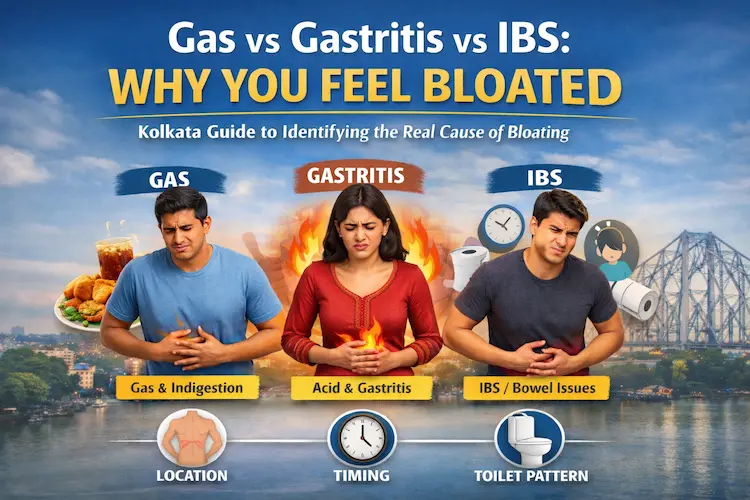
    The easiest way to tell: “Location + Timing + Toilet”

    Use this simple 3-point method:

    1. Location
    • Upper belly → more gastritis/acid
    • Lower belly → more IBS/constipation-related
    1. Timing
    • Immediately after food → more indigestion
    • On empty stomach or late-night burning → more gastritis
    • Builds through the day, stress-related → more IBS
    1. Toilet pattern
    • Normal stool daily, no change → more simple gas
    • Constipation/diarrhea pattern → more IBS

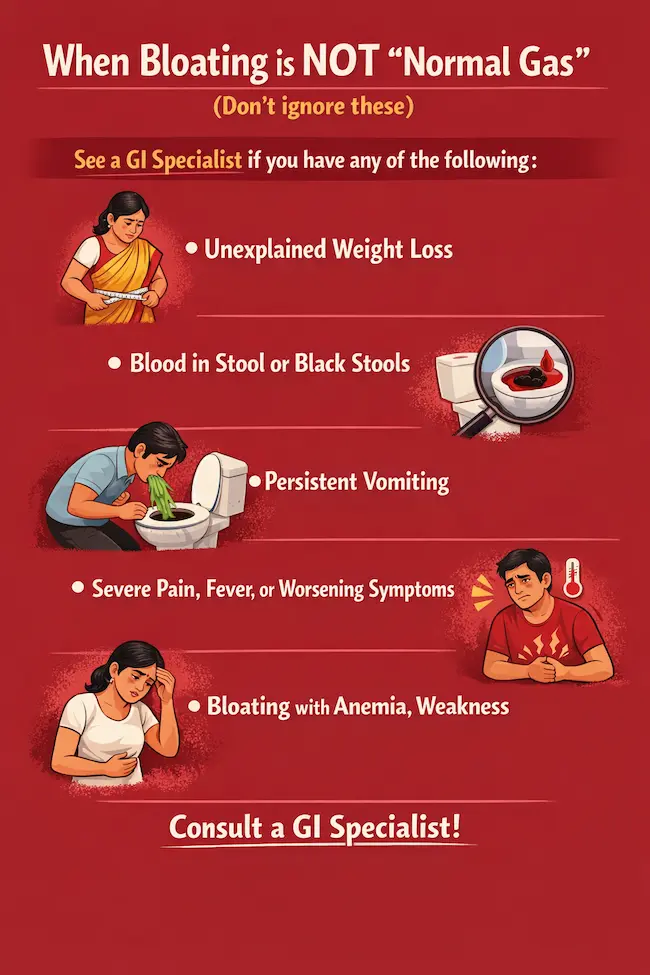
    When bloating is NOT “normal gas” (don’t ignore these)

    See a GI specialist if you have any of the following:
    ChatGPT Image Jan 16, 2026, 04 44 48 PM
    • Unexplained weight loss
    • Blood in stool or black stools
    • Persistent vomiting
    • Severe pain, fever, or worsening symptoms
    • Bloating with anemia, weakness
    • Symptoms waking you at night frequently
    • New symptoms after age 40–45 that persist
    • Family history of GI cancers or inflammatory bowel disease

    These don’t mean something serious is guaranteed—but they do mean you should not self-treat for months.


    What to do next (simple plan)
    Image

    If you suspect simple gas/indigestion:

    Try a 7-day reset: early dinner + low oil + slow eating + walking + reduce trigger veggies in large portions.

    If you suspect gastritis:

    Stop late-night tea/coffee + reduce spicy/oily food + avoid painkiller overuse + get evaluated if it keeps returning.

    If you suspect IBS:

    Track symptoms for 2 weeks (food + stress + stool pattern). IBS improves massively when treated with a structured plan—not random “gas tablets.”


    Consult support (PancreaCare by Advitya Healthcares)
    Untitled design (3)

    If bloating is recurring, affecting your routine, or you’re confused between gas vs gastritis vs IBS, it’s worth getting a proper evaluation rather than trial-and-error.

    PancreaCare by Advitya Healthcares offers GI-focused consultation and structured guidance for digestive symptoms. If you’re in Kolkata, you can consider planned consultation and follow-up guidance (including reports review) so you get clarity and a long-term plan.
  • GI Cancer in Kolkata: Early Signs, Smart Screening & Where to Start (Advitya Healthcares)

    GI Cancer in Kolkata: Early Signs, Smart Screening & Where to Start (Advitya Healthcares)

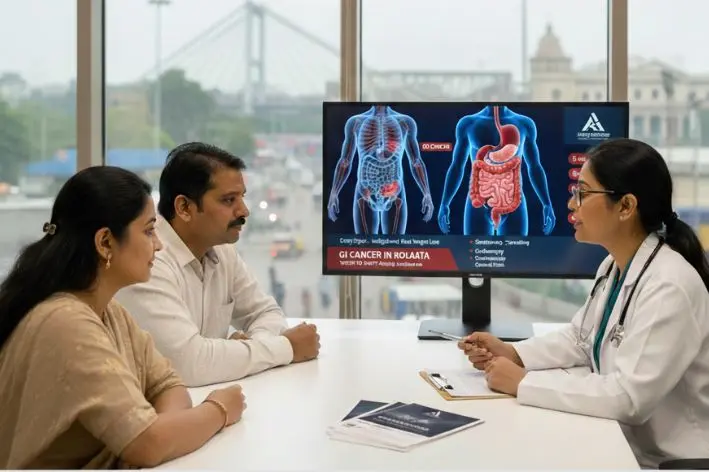
    In Kolkata, we often brush off gut symptoms as “gas,” “acidity,” or “something I ate.” A late dinner after work, weekend biryani, extra cha, street food cravings—most of us have been there. But when stomach or bowel symptoms persist, worsen, or come with warning signs, it’s important to think beyond routine indigestion. That’s where GI (gastrointestinal) cancers come into the conversation—not to create fear, but to encourage early action, because early detection can change outcomes dramatically.

    What is GI cancer?

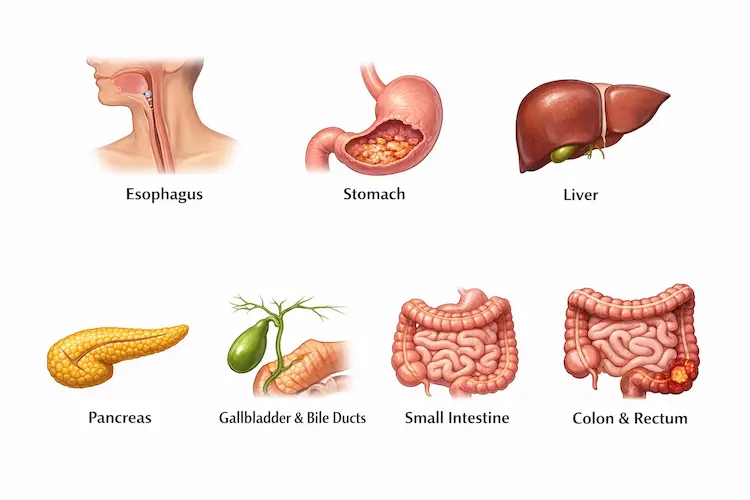
    “GI cancer” is an umbrella term for cancers that occur anywhere in the digestive system, including:

    • Esophagus (food pipe)
    • Stomach
    • Liver
    • Pancreas
    • Gallbladder and bile ducts
    • Small intestine
    • Colon and rectum (colorectal cancer)
    ChatGPT Image Jan 17, 2026, 02 01 33 PM

    Each has different patterns, risk factors, and treatments—but they often share one common truth: the earlier they’re found, the more treatable they tend to be.

    Why Kolkata families should pay attention

    Kolkata isn’t unique in having GI cancer risk—but some everyday exposures can increase the chances over time. Common contributors include:

    • Smoking and tobacco use (including smokeless forms)
    • Alcohol
    • Long-standing acidity/GERD (reflux symptoms that don’t improve)
    • Obesity, fatty liver, diabetes, and sedentary lifestyle
    • Chronic hepatitis B or C (raises liver cancer risk)
    • High intake of ultra-processed foods, excess oil, low fiber
    • Family history of GI cancers or polyps
    • Certain infections and long-term inflammation in the gut

    This doesn’t mean everyone with acidity or constipation has cancer—most don’t. But it does mean we should learn which symptoms deserve a proper evaluation instead of repeated self-medication.

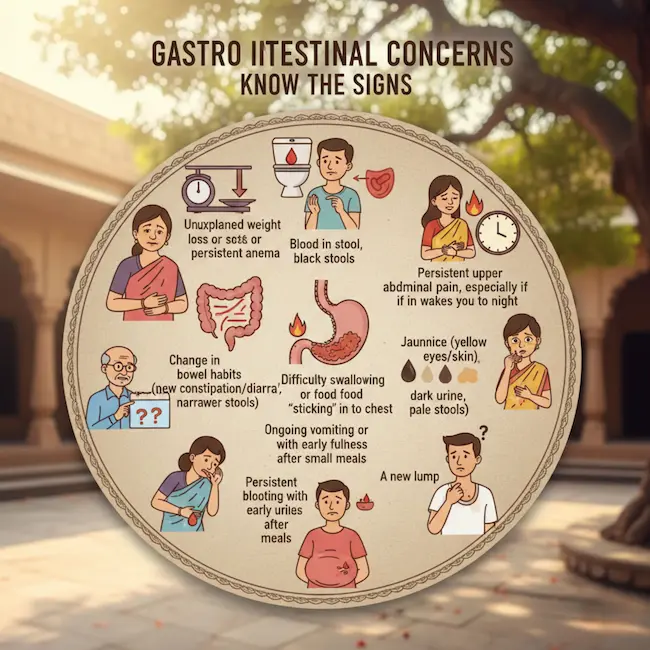
    Symptoms you should never ignore (the “red flag” checklist)

    If you notice any of the following, it’s wise to consult a GI specialist or GI cancer surgeon:

    • Unexplained weight loss or loss of appetite
    • Blood in stool, black stools, or persistent anemia
    • Change in bowel habits (new constipation/diarrhea, narrower stools) lasting weeks
    • Persistent upper abdominal pain, especially if it wakes you at night
    • Difficulty swallowing or food “sticking” in the chest
    • Ongoing vomiting or vomiting blood
    • Persistent bloating with early fullness after small meals
    • Jaundice (yellow eyes/skin), dark urine, pale stools
    • A new lump, fluid in the abdomen, or unexplained fatigue
    1768641314966

    Think of it like this: common symptoms become concerning when they are new, persistent, progressive, or paired with weakness/anemia/weight loss.

    Screening and early detection: the smartest step

    Many GI cancers start quietly. That’s why screening matters—especially for people with age-related risk, family history, or long-standing symptoms.

    Colorectal cancer screening is one of the most effective because many cancers develop from polyps over time. Screening can detect polyps early and remove them. Screening options may include stool-based tests or colonoscopy, depending on risk profile.

    For stomach and esophagus, an upper GI endoscopy helps when reflux is persistent, swallowing becomes difficult, or there’s ongoing pain, vomiting, or unexplained anemia.

    For liver cancer, people with chronic hepatitis or cirrhosis often need regular follow-up and monitoring as advised by their doctor.

    For pancreatic cancer, population-level screening is not routine; however, high-risk individuals (strong family history or certain genetic risks) may need specialized surveillance.

    If you’re unsure whether you need screening, a consultation can help you decide the safest, most practical plan—without unnecessary tests.

    How diagnosis usually happens (simple, step-by-step)

    At Advitya Healthcares, the evaluation typically follows a structured approach:

    1. Detailed history (symptoms timeline, diet, habits, family history)
    2. Clinical examination
    3. Basic blood work (including anemia and liver-related markers when needed)
    4. Imaging such as ultrasound/CT/MRI depending on symptoms
    5. Endoscopy/colonoscopy when indicated
    6. Biopsy to confirm diagnosis if a suspicious lesion is found
    7. Staging to understand how localized or advanced the disease is

    This step-wise approach avoids panic testing while still moving fast when red flags are present.

    Treatment options: not “one-size-fits-all”

    GI cancer treatment depends on the cancer type, stage, and the patient’s overall fitness. Common modalities include:

    • Surgery (often the main curative option for localized cancers)
    • Chemotherapy
    • Radiation therapy (in selected cancers)
    • Targeted therapy / immunotherapy (for specific cancer profiles)
    • Supportive care: nutrition, pain management, gut symptom control, recovery planning

    The goal is always to choose the most effective approach with the least avoidable burden, while preserving quality of life.

    Advitya Healthcares in Kolkata: where care feels structured and human

    When someone hears the word “cancer,” the first need is clarity: What is it? How serious? What do we do next? At Advitya Healthcares, patients in Kolkata benefit from a focused GI pathway that emphasizes:

    • Clear evaluation for suspicious GI symptoms
    • Guidance on the right investigations (not random test shopping)
    • Multidisciplinary planning (surgery + oncology coordination when required)
    • Support with nutrition and recovery planning
    • Focused expertise for complex GI and HPB (liver–pancreas–bile) conditions through PancreaCare by Advitya Healthcares

    Whether your concern is persistent reflux, bowel changes, jaundice, or unexplained weight loss—starting with the right specialist can save critical time.

    Prevention in daily Kolkata life (practical, doable)

    While not all GI cancers are preventable, risk can often be reduced:

    • Quit smoking/tobacco and avoid gutka/betel-nut habits
    • Keep alcohol limited or avoid it
    • Aim for more fiber: vegetables, fruits, whole grains, dal
    • Reduce ultra-processed foods and repeated deep-fried meals
    • Maintain healthy weight and regular walking
    • Manage diabetes and fatty liver early
    • Treat long-standing acidity/GERD instead of living on antacids
    • Take hepatitis vaccination advice seriously (when indicated)

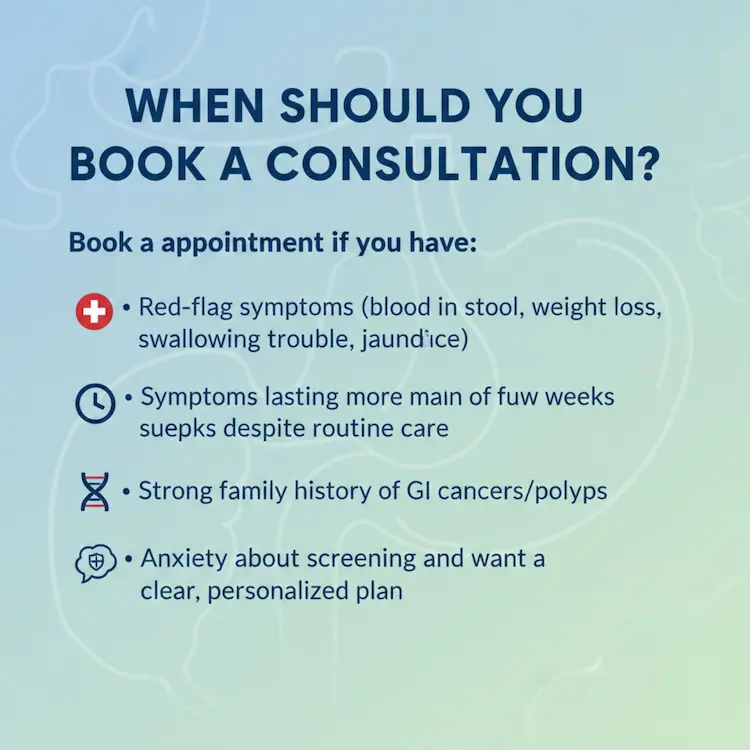
    When should you book a consultation?

    Book an appointment if you have:

    • Red-flag symptoms (blood in stool, weight loss, anemia, swallowing trouble, jaundice)
    • Symptoms lasting more than a few weeks despite routine care
    • Strong family history of GI cancers/polyps
    • Anxiety about screening and want a clear, personalized plan
    1768643379815

    Final thought: In Kolkata, we’re experts at adjusting to discomfort—but GI cancer care rewards the opposite habit: act early, check properly, and move with clarity. If something feels “not normal for me,” that’s reason enough to get evaluated.

    Untitled design

    PancreaCare by Advitya Healthcares supports advanced care for liver–pancreas–bile and complex GI concerns.

    Book a consultation at Advitya Healthcares (Kolkata) for a structured GI evaluation and the right next steps.
    Disclaimer: This content is for awareness only and does not replace medical advice.


    FAQ section

    1. What is the most common early warning sign of GI cancer?
      There isn’t one single sign, but the most important are persistent symptoms—especially blood in stool, unexplained weight loss, anemia/weakness, swallowing difficulty, or jaundice.
    2. Can young adults get GI cancer?
      Yes—though risk increases with age, younger people can also develop GI cancers. In younger adults, red flags (blood in stool, weight loss, anemia) deserve attention, not assumptions.
    3. What does “GI cancer screening” mean?
      Screening means checking for cancer (or pre-cancer) before severe symptoms appear, using tests like stool tests, colonoscopy, and endoscopy, depending on risk and symptoms.
    4. How do I prepare for my first consultation?
      Carry your previous reports, list of medicines, symptom timeline (when it started, what worsens/relieves), family history, and any recent weight change details.
    5. What is PancreaCare by Advitya Healthcares?
      It’s the focused initiative under Advitya Healthcares for pancreas–bile–liver (HPB) and complex GI conditions, helping patients get structured evaluation and coordinated care.
  • Til–Gur, Pithe, Khichuri & Fried Snacks: Sankranti Eating Tips (Kolkata) Without Acidity or Gallbladder Pain

    Til–Gur, Pithe, Khichuri & Fried Snacks: Sankranti Eating Tips (Kolkata) Without Acidity or Gallbladder Pain

    In Kolkata, Makar Sankranti doesn’t feel like a “festival day” only—it feels like a winter emotion. The air is softer, rooftops have kites, the kitchen smells like nolen gur, and there’s always that one auntie saying, আরো একটু পিঠে খেয়ে নাও!” (have a little more pithe).

    But if you’ve ever had night acidity, burning chest, sour burps, or that sharp right-side upper belly pain after fried snacks—Sankranti can feel like a tug-of-war between joy and discomfort.

    This blog is for Kolkata families who want festival food with peace—not fear. You don’t need to “avoid everything.” You just need a smart plate, the right timing, and a little GI wisdom.


    Why Sankranti foods trigger acidity and gallbladder pain (simple Kolkata explanation)

    ChatGPT Image Jan 16, 2026, 02 11 51 PM

    1) Acidity (GERD) gets triggered by:

    • Deep-fried + spicy snacks (telebhaja, chops, singara)
    • Large meals (overfilling the stomach increases reflux)
    • Late eating + lying down early (winter blanket life!)
    • Extra tea/coffee after evening adda

    2) Gallbladder pain (especially gallstones) is often triggered by:

    • Fatty, fried foods (oil + ghee makes the gallbladder squeeze harder)
    • Heavy, greasy meals all at once
    • Sudden “festival binge” after light eating all day

    If you already have gallstones, the gallbladder can protest after a greasy meal with right upper abdominal pain, nausea, bloating, or pain that travels to the back/right shoulder.


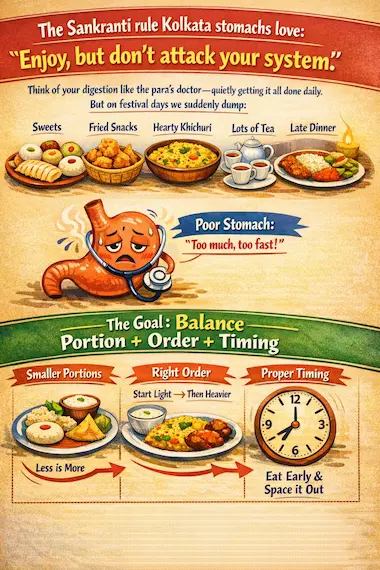
    The Sankranti rule Kolkata stomachs love: “Enjoy, but don’t attack your system”

    Think of your digestion like a quiet, hardworking para’s doctor—it manages everything daily. On festival days we suddenly dump:

    • sweets,
    • fried snacks,
    • heavy khichuri,
    • plus tea,
    • plus late dinner.

    So the goal is balance: portion + order + timing.


    Your Sankranti Eating Plan

    Before you start (the 10-minute protection ritual)

    Do this before pithe or fried snacks:

    • 1 glass warm water (not boiling)
    • If you tolerate it: a small banana or a small bowl of curd (plain)
    • Then eat festival items.

    This “base layer” helps reduce acid irritation and slows binge eating.


    1) Til–Gur (sesame + jaggery): how to eat without acidity spikes

    Til–gur is healthy—but for acidity-prone people, jaggery can feel “heavy,” and sesame can be dense.

    Best tips:

    • Eat small portion (2–3 small bites, not a big serving)
    • Prefer after lunch, not late evening
    • Avoid on an empty stomach if you have GERD
    • Don’t combine with tea/coffee immediately—keep a 45–60 min gap

    If you have gallstones: til–gur is usually okay in small amounts, but don’t combine it with fried snacks + heavy khichuri in the same sitting.


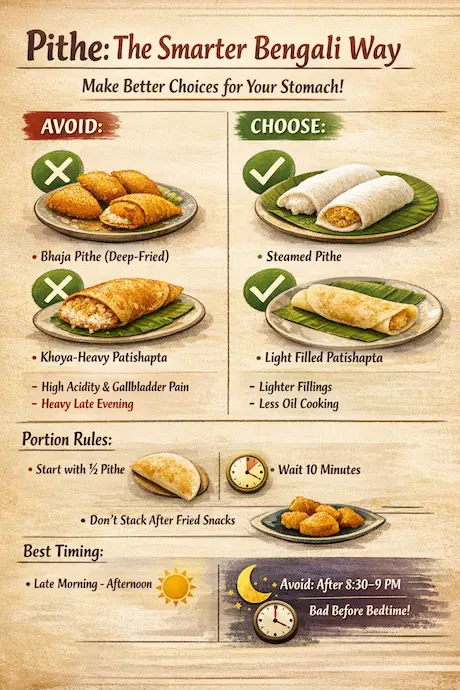
    2) Pithe (especially fried/khoya-heavy): the smarter Bengali way

    ChatGPT Image Jan 16, 2026, 02 09 57 PM

    Pithe is love. But certain types are tougher on the stomach:

    • Bhaja pithe / deep-fried pithe → high trigger for both acidity and gallbladder pain
    • Dudher pithe / patishapta with heavy filling → can be heavy late evening

    Choose better options (still tasty):

    • Prefer steam-based pithe or less-oil pan-cooked versions
    • Keep fillings lighter (less khoya, less coconut-ghee)

    Portion rules that work:

    • Start with ½ pithe, wait 10 minutes, then decide
    • Don’t stack pithe after a fried snack plate

    Timing tip:

    • Best window: late morning to afternoon
    • Worst window: after 8:30–9 pm, especially if you sleep by 11

    3) Khichuri (bhog-style): the “comfort food” that becomes heavy

    Kolkata winter + khichuri + begun bhaja = pure happiness. But a very oily, ghee-heavy khichuri can:

    • worsen reflux (heavy meal pressure)
    • trigger gallbladder contractions

    Eat khichuri like a GI-friendly Bengali:

    • Keep the plate: khichuri 60% + vegetables 40%
    • Choose one fried side, not many (e.g., only begun bhaja OR only papad)
    • Add a little plain curd if you tolerate dairy (cooling effect for reflux)

    If you have gallbladder stones:

    • Avoid ghee overload
    • Skip “double fried” combinations (khichuri + begun bhaja + aloor chop)

    4) Fried snacks (telebhaja, chops, singara): how to enjoy without pain

    Let’s be honest—Kolkata fried snacks are emotion. But for GERD and gallbladder issues, deep-fried foods are the most common triggers.

    Safe enjoyment rules:

    • Eat slowly (10–12 bites, not 2 minutes)
    • Choose one snack item, not a mixed plate
    • Avoid very spicy chutney if reflux is active
    • Don’t drink cold water immediately after (can worsen bloating)

    Best pairings:

    • Fried snack + warm water
    • Fried snack + small plain curd bowl (if suits you)

    Avoid:

    • Fried snack + tea + sweet = triple trigger combo

    The Kolkata Winter Timing Chart (this alone reduces acidity a lot)

    To prevent night acidity:

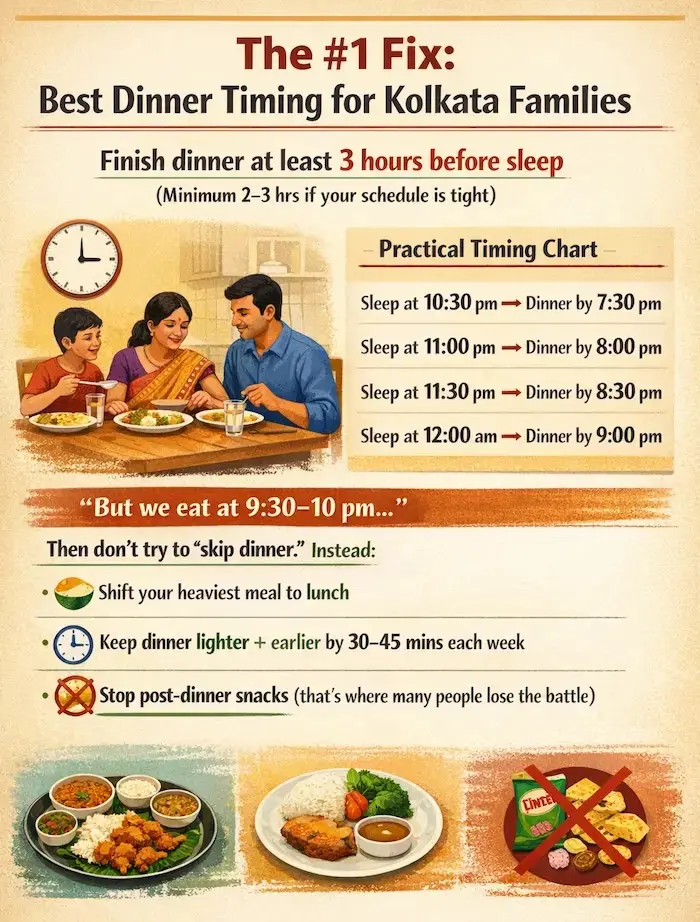
    • Finish your last heavy food at least 3 hours before sleep.

    Examples:

    • Sleep 10:30 pm → finish dinner by 7:30 pm
    • Sleep 11:00 pm → finish dinner by 8:00 pm
    • Sleep 11:30 pm → finish dinner by 8:30 pm

    If your Sankranti plan includes snacks at night, keep it light: warm water + a small portion, and avoid lying down right after.


    “Bengali Adda” habits that silently worsen acidity

    These are very Kolkata-specific:

    • Extra tea after 7 pm
    • Long sofa/blanket sitting right after dinner
    • Late-night “just one more” pithe

    GI-friendly swaps:

    • Replace late tea with warm water or light herbal tea (non-caffeinated)
    • Do a 10-minute slow walk after dinner (even inside the house)
    • Sit upright for 45–60 minutes after eating

    If you already have gallstones: a special Sankranti caution

    You don’t need panic. But if you have known gallstones or repeated gallbladder pain:

    • Keep meals small and low-fat
    • Avoid deep-fried + ghee-heavy foods on the same day
    • Don’t fast all day and then binge at night (big trigger)

    Red-flag symptoms (don’t ignore):

    • Strong right upper belly pain lasting > 1–2 hours
    • Fever, vomiting, yellow eyes/skin
    • Severe pain after oily food repeatedly

    These need medical evaluation—not home trials.


    Where GI healthcare comes

    A good GI system isn’t only for emergencies. Think of it like a “digestive safety net”:

    • If you get frequent acidity, you may need a GERD plan (diet + timing + proper meds when necessary)
    • If you get repeated right-side upper pain, you may need gallbladder evaluation (ultrasound is simple)
    • If you have bloating + gas + discomfort often, you may need targeted guidance (not random antacids)

    If you’re building a GI-focused healthcare journey in Kolkata, it helps to consult a GI–HPB team (gastro + hepatobiliary/surgery) so reflux, gallbladder, liver, and pancreas issues are handled in one connected approach—exactly how the body works.


    Sankranti doesn’t need to hurt

    Kolkata festivals are meant to feel like warmth—kites above, gur in the air, and family at the table. With a few smart tweaks, you can keep the emotion and lose the discomfort.

    Disclaimer: This blog is for awareness and food-timing guidance. If symptoms are frequent, severe, or worsening, please consult a qualified GI specialist.

  • Night Acidity in Winter: Why GERD Gets Worse + Best Dinner Timing for Kolkata Families

    Night Acidity in Winter: Why GERD Gets Worse + Best Dinner Timing for Kolkata Families


    What is night acidity (GERD) — in simple words?


    Why winter makes GERD feel worse (Kolkata reality)

    ChatGPT Image Jan 13, 2026, 06 53 46 PM

    The #1 fix: Best dinner timing for Kolkata families

    ChatGPT Image Jan 13, 2026, 06 46 24 PM (1)

    What your dinner should look like (GERD-safe Kolkata plate)


    Night posture tricks that actually work


    A 7-night “Winter GERD Reset” (simple home plan)


    When to stop self-treating and see a GI specialist (important)


    PancreaCare by Advitya Healthcares: how we can help

    At PancreaCare by Advitya Healthcares, we regularly see patients who think they have “simple acidity,” but actually have persistent GERD that needs a structured plan—sometimes lifestyle-focused, sometimes medicine-based, sometimes evaluation (like endoscopy) when symptoms are frequent or there are red flags.

  • Good vs Bad Winter Vegetables for Gut Health. What Helps Gas/Acidity & What Triggers It

    Good vs Bad Winter Vegetables for Gut Health. What Helps Gas/Acidity & What Triggers It


    Why some vegetables cause gas or acidity

    ChatGPT Image Jan 10, 2026, 05 38 50 PM

    What does “cruciferous” mean?


    The Kolkata winter rule for gut-friendly vegetables


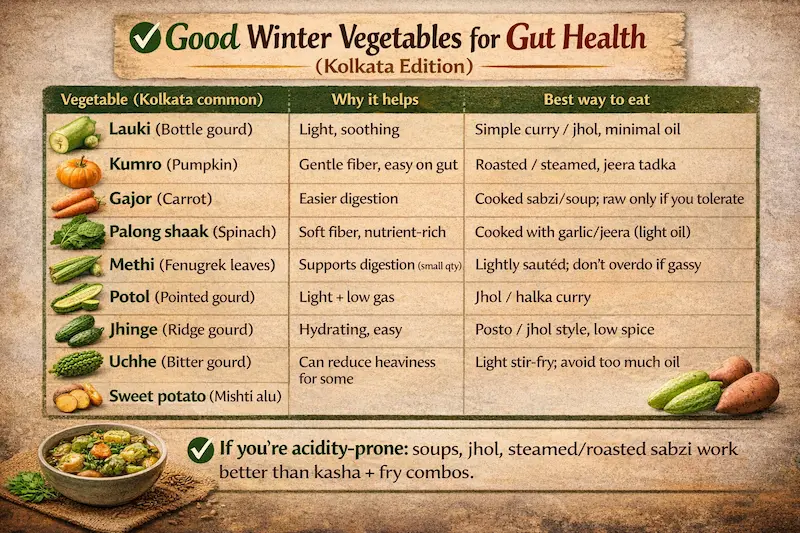
    Quick Guide: Good vs Trigger Veggies (and how to eat them)


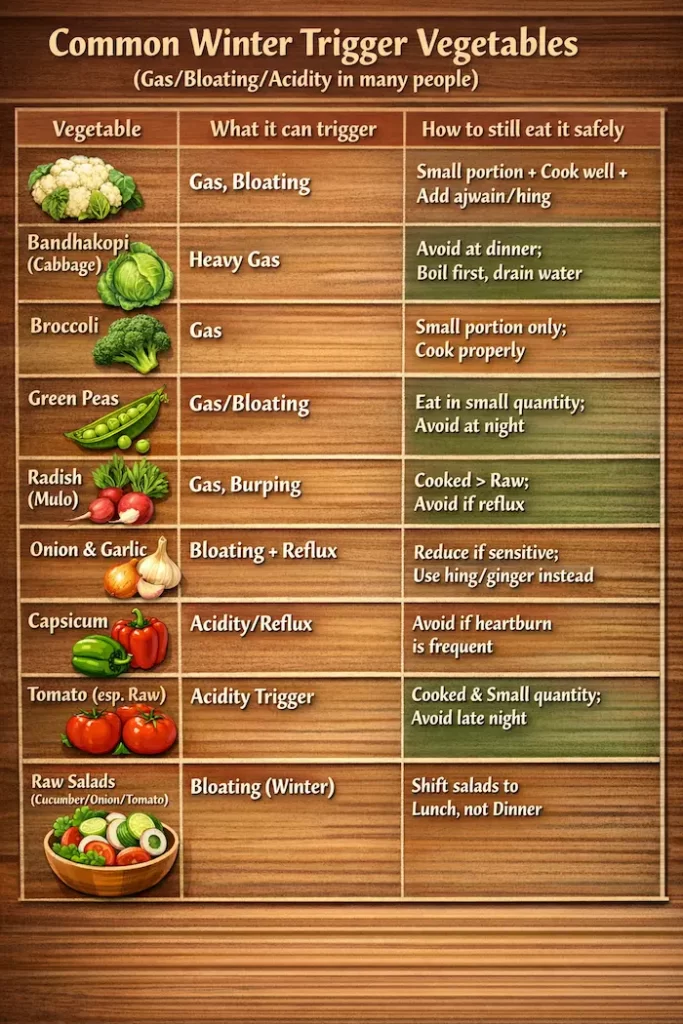
    Common winter trigger vegetables (gas/bloating/acidity in many people)

    ChatGPT Image Jan 10, 2026, 05 44 31 PM

    Best winter vegetables for GAS (bloating/flatulence)

    ChatGPT Image Jan 10, 2026, 06 01 04 PM

    Best winter vegetables for ACIDITY (heartburn/reflux)

    ChatGPT Image Jan 10, 2026, 06 03 43 PM

    “But Kolkata food needs flavor” — yes, you can still eat tasty and gut-safe


    Portion guide (simple and practical)


    1-day sample winter plate (Indian Bengali-style Thali – Kolkata-friendly)


    Mini “Kolkata winter gut” upgrades
    • Hing + cumin in most sabzi
    • Ajwain when eating cauliflower/cabbage
    • Ginger in light gravies/sabzi
    • Mustard oil is fine—just use less (too much oil = acidity trigger)


    When gas/acidity is NOT normal (see a doctor)


    FAQs


    Quick takeaway
    • For gas: choose bottle gourd/pumpkin/gourds + cook cruciferous veggies well + use hing/ajwain
    • For acidity: keep dinner light, avoid tomato-heavy spicy food, reduce tea/fried combos
    • Cooked vegetables + small portions + warm meals = winter gut win

  • Kolkata Winter Gut Guide: How Cold Weather Triggers Acidity, Constipation, Bloating & Appetite Swings

    Kolkata Winter Gut Guide: How Cold Weather Triggers Acidity, Constipation, Bloating & Appetite Swings


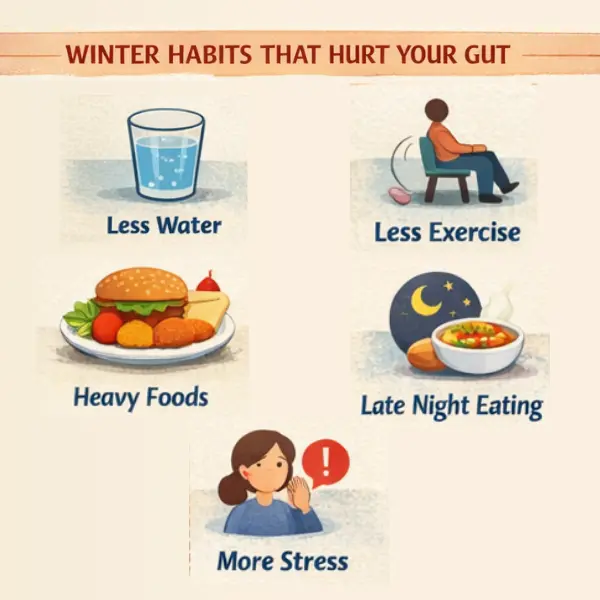
    Why winter messes with digestion (the real reasons)

    2

    Winter Acidity (Heartburn/GERD): why it spikes in Kolkata


    Winter Constipation: the Kolkata pattern


    Winter Bloating & Gas: why your belly feels tight


    3

    Appetite swings in winter: why you crave more (and then feel worse)


    4

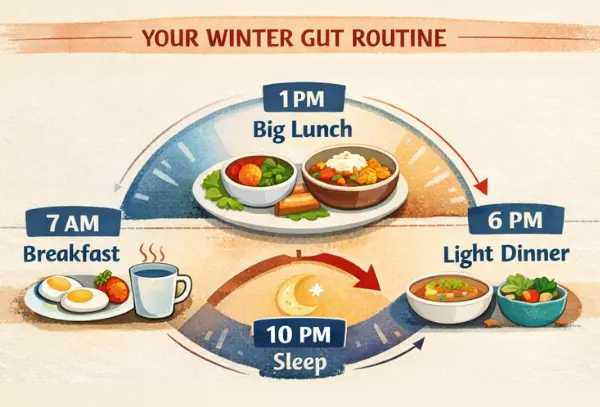
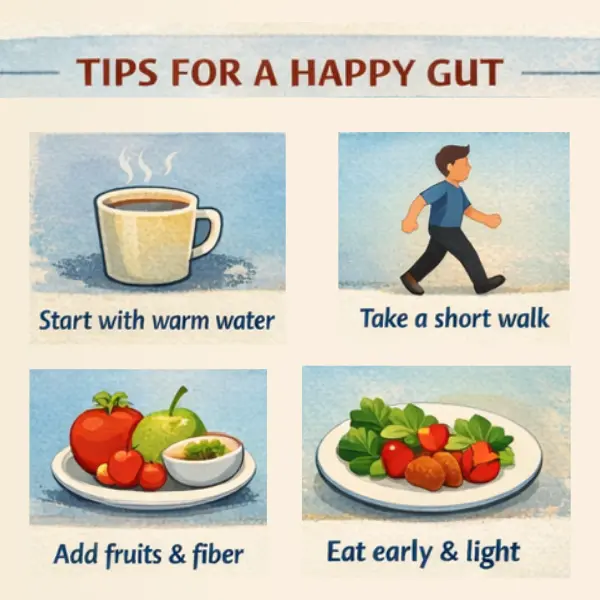
    A 1-day Kolkata Winter Gut Routine (easy template)


    When to NOT self-manage (see a GI specialist)


    Closing note

  • Care That Endures Beyond Seasons: Christmas & New Year Reflections from Advitya Healthcares by PancreaCare, Kolkata

    Care That Endures Beyond Seasons: Christmas & New Year Reflections from Advitya Healthcares by PancreaCare, Kolkata

    As the year draws to a close, Kolkata enters one of its most thoughtful seasons.
    Christmas lights brighten Park Street, the air feels lighter, and the New Year quietly invites reflection.

    It is a time when the city pauses — not just to celebrate, but to look inward.

    At Advitya Healthcares by PancreaCare, this season holds special meaning. It reminds us that healthcare, much like life, is not about urgency alone — it is about continuity, trust, and timely care.


    The Festive Pause Kolkata Rarely Takes

    Kolkata is a city that works hard, thinks deeply, and often delays itself.

    Throughout the year, people push health concerns aside:

    • Digestive discomfort that becomes routine
    • Fatigue explained away as stress
    • Symptoms postponed with “let the year end first”

    The festive season offers a rare pause — a moment when families sit together, conversations slow down, and health concerns finally surface.

    This pause matters.
    Because many serious gastrointestinal and pancreatic conditions do not begin suddenly — they begin quietly.


    Why the End of the Year Is Often the Beginning of Awareness

    In clinical practice, one pattern is consistent:
    patients often seek clarity at the turn of the year.

    1767097038679

    Not because symptoms are new — but because the silence around them has ended.

    Digestive health, liver function, pancreatic balance — these systems respond slowly to neglect and powerfully to early care. When addressed on time, outcomes change dramatically.

    The New Year, therefore, is not just a calendar change.
    It is a medical opportunity.


    Pancreatic & Digestive Health: The Quiet Core of Well-Being

    The pancreas is one of the most misunderstood organs in the body.
    It works silently — regulating digestion, metabolism, and blood sugar — until imbalance demands attention.

    Conditions related to the pancreas and digestive system often present as:

    • Recurrent acidity or bloating
    • Unexplained weight changes
    • Digestive fatigue
    • New-onset diabetes after 40
    • Pain that comes and goes
    1767180338595

    These are not inconveniences. They are early conversations the body is trying to have.

    At PancreaCare, we believe that listening early prevents escalation later.


    A Kolkata-Centric Approach to Advanced Care

    Healthcare must respect context.
    Kolkata’s lifestyle — long commutes, late meals, work stress, seasonal changes — plays a decisive role in digestive and pancreatic health.

    Our approach at Advitya Healthcares by PancreaCare is built on:

    • Understanding lifestyle before diagnosis
    • Precision evaluation rather than blanket treatment
    • Clear communication without fear
    • Ethical decisions that prioritise long-term outcomes

    Advanced care should never feel distant or overwhelming.
    It should feel thoughtful, local, and humane.


    The True Meaning of Care During Festive Seasons

    Festivals remind us of responsibility — to family, to time, to ourselves.

    True care is not reactive. It is prepared.

    Choosing to understand symptoms, seeking clarity instead of postponement, and valuing early evaluation are acts of responsibility — not anxiety.

    This festive season, care is not about doing more.
    It is about doing what matters, at the right time.


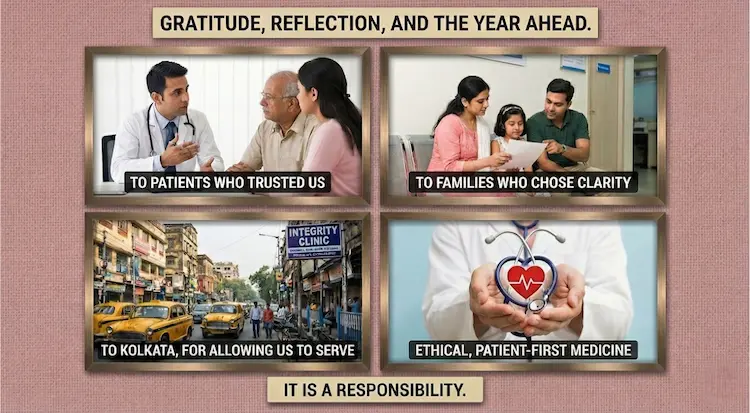
    Gratitude, Reflection, and the Year Ahead

    As Christmas passes and the New Year approaches, we express gratitude:

    • To patients who trusted us with difficult questions
    • To families who chose clarity over delay
    • To Kolkata, for allowing us to serve with integrity
    1767268831872

    Every consultation reinforces our belief that ethical, patient-first medicine is not a trend — it is a responsibility.


    Looking Forward: Care That Continues Into the New Year

    The coming year will bring progress, innovation, and new challenges.
    But one principle will remain unchanged:

    Healthcare must always place understanding before intervention.

    At Advitya Healthcares by PancreaCare, we remain committed to delivering advanced digestive and pancreatic care that is grounded in trust, early action, and respect for every individual’s journey.


    Advitya Healthcares by PancreaCare, Kolkata

    Specialised care for digestive, liver, gallbladder, and pancreatic health —
    designed around early diagnosis, ethical practice, and long-term well-being.

    48d7448f 8ddd 48ae b898 714af4c3b918

    📍 Kolkata Consultations

    🌐 Website: https://advityahealthcares.com

    This Christmas and New Year, may health be quiet, care be timely, and the year ahead be guided by clarity.

    Warm wishes from Advitya Healthcares by PancreaCare.

  • Office, Traffic, Late Dinners: Why Digestive Problems Are Rising in Working Kolkata

    Office, Traffic, Late Dinners: Why Digestive Problems Are Rising in Working Kolkata

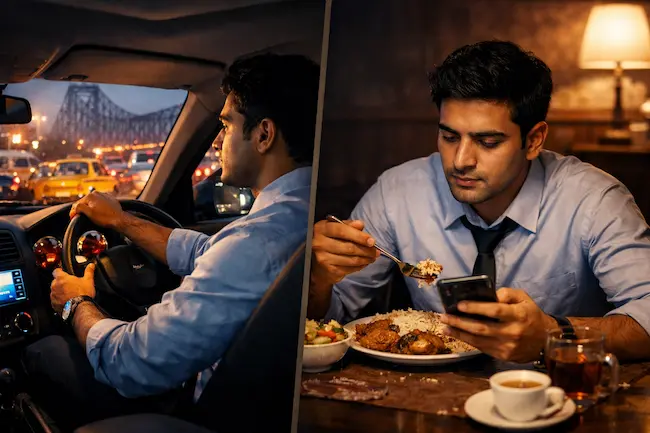
    Kolkata has always been known for its rich culture, food, and intellectual work environment. But over the past decade, a silent health issue has been steadily rising among working professionals in the city — digestive problems.

    From Salt Lake Sector V to New Town and Eastern Kolkata Township offices to long daily commutes through EM Bypass, Park Street, Howrah Bridge, and Garia, the modern work routine in Kolkata has changed dramatically. Late office hours, traffic stress, skipped meals, and late-night dinners are quietly affecting the gut health of thousands of working men and women.

    Many people dismiss symptoms as “normal acidity” or “pet kharap”, but doctors are now seeing increasing cases of chronic acidity, IBS, fatty liver, gallbladder issues, pancreatitis, and even late-diagnosed GI cancers linked to lifestyle patterns.

    This blog explains why digestive problems are rising in working Kolkata, what symptoms should not be ignored, and when medical evaluation becomes important.


    The Changing Work-Life Pattern in Kolkata

    Traditionally, Kolkata followed a relatively balanced routine — early dinners, home-cooked meals, and slower-paced workdays. That pattern has changed.

    Today’s working Kolkata faces:

    • Long office hours in IT, corporate, healthcare, sales, and service sectors
    • Heavy traffic delays during peak hours
    • Skipped breakfasts or rushed lunches
    • Late dinners, often after 10 PM
    • Increased dependence on outside food and food delivery apps
    • Chronic stress and poor sleep

    These factors may seem harmless individually, but together they disrupt the digestive system over time.


    How Traffic & Stress Directly Affect Digestion

    Traffic stress is not just a mental issue — it has a physical impact on the gut.

    When you are stressed:

    • The body releases cortisol and adrenaline
    • Blood flow shifts away from digestion
    • Acid production increases
    • Gut movement becomes irregular
    1766469383617

    For people commuting daily through congested areas like Sector V, New Town, Ruby, Gariahat, or Howrah, this stress becomes chronic.

    Over time, this leads to:

    • Acid reflux (GERD)
    • Bloating and gas
    • Irritable Bowel Syndrome (IBS)
    • Appetite disturbances
    • Constipation or loose motions

    Many patients are surprised to learn that stress alone can trigger long-term digestive disorders, even without poor food habits.


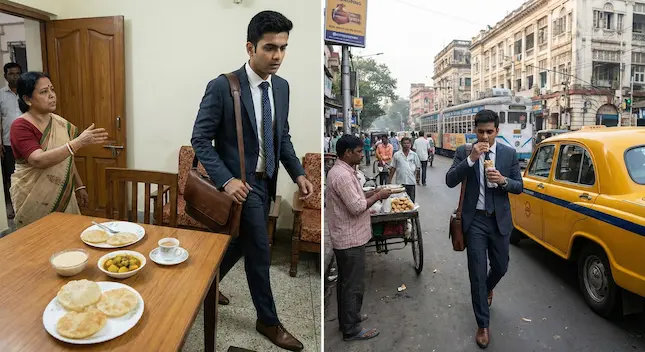
    Late Dinners: A Major Digestive Trigger

    One of the biggest changes in working Kolkata is late-night eating.

    Digestive organs — especially the stomach, liver, gallbladder, and pancreas — follow a natural rhythm. Late dinners disrupt this rhythm.

    1766470298805

    What late dinners cause:

    • Increased acid reflux at night
    • Poor digestion due to slowed metabolism
    • Fat accumulation in the liver (fatty liver)
    • Gallbladder stress leading to gallstones
    • Night-time bloating and disturbed sleep

    Eating heavy meals after 9:30–10 PM and then sleeping soon after is a common pattern seen in working professionals across Kolkata — and a major contributor to rising GI complaints.


    Skipped Meals & Irregular Eating

    Many working individuals:

    • Skip breakfast due to early office hours
    • Eat lunch late or hurriedly
    • Compensate with heavy dinners
    1766474749164

    This irregular eating pattern confuses digestive enzyme release and bile flow, leading to:

    • Acidity
    • Indigestion
    • Weak appetite signals
    • Nutritional deficiencies

    Over time, this can contribute to chronic gastritis, ulcers, and metabolic issues.


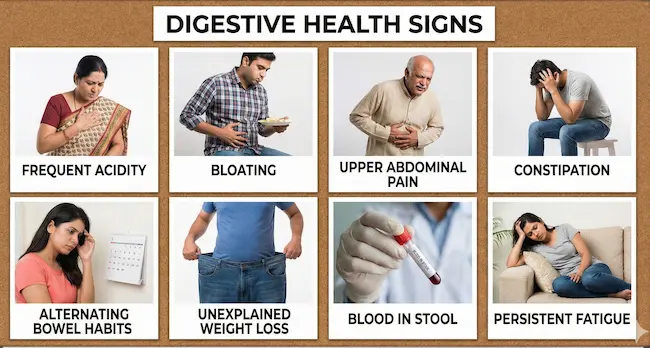
    Common Digestive Symptoms Kolkata’s Working Population Ignores

    Doctors often hear patients say:

    “এটা তো সাধারণ গ্যাস”
    “অ্যাসিডিটি তো সবারই হয়”
    “অফিসের চাপের জন্য হচ্ছে”

    But some symptoms should never be ignored.

    Warning signs include:

    • Frequent acidity or heartburn
    • Bloating after small meals
    • Upper abdominal pain or burning
    • Constipation lasting weeks
    • Alternating constipation and loose stools
    • Unexplained weight loss
    • Blood in stool
    • Persistent fatigue with digestive issues
    1766472788842

    These may indicate conditions like GERD, IBS, fatty liver, gallbladder disease, pancreatitis, or early GI cancers.


    Why Digestive Diseases Are Diagnosed Late in Kolkata

    Despite good medical infrastructure, many digestive diseases in Kolkata are diagnosed late because:

    • Symptoms are normalized
    • Fear of tests like endoscopy or colonoscopy
    • Dependence on over-the-counter antacids
    • Busy work schedules delaying doctor visits

    Unfortunately, delay often leads to complications that could have been prevented with early evaluation.


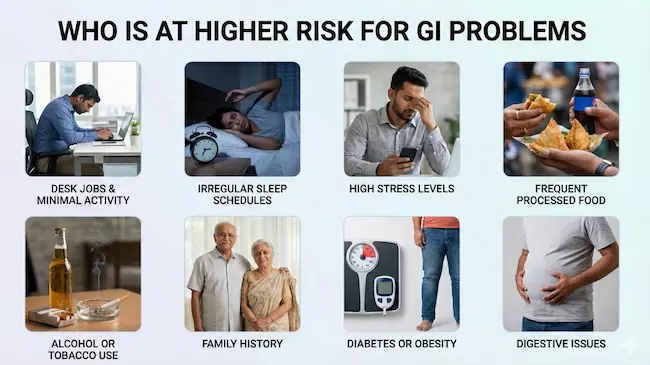
    Who Is at Higher Risk?

    Working professionals in Kolkata should be extra cautious if they have:

    • Desk jobs with minimal physical activity
    • Irregular sleep schedules
    • High stress levels
    • Frequent outside or processed food intake
    • Alcohol or tobacco use
    • Family history of digestive or liver diseases
    • Diabetes or obesity
    1766472178262

    After the age of 40–45, the risk of serious digestive disorders increases further.


    When Should You See a Gastro Specialist?

    You should consult a gastroenterologist if:

    • Symptoms persist beyond 2–3 weeks
    • Painkillers or antacids are used regularly
    • Symptoms wake you up at night
    • You notice weight loss or blood in stool
    • There is a family history of GI cancer

    Early consultation does not always mean surgery. In most cases, timely diagnosis allows treatment with medicines, lifestyle changes, or endoscopic procedures.


    Protecting Your Digestive Health in a Busy Kolkata Lifestyle

    Simple steps can make a big difference:

    • Avoid late-night heavy meals
    • Eat dinner at least 2–3 hours before sleep
    • Manage work stress actively
    • Stay hydrated throughout the day
    • Avoid excessive painkiller use
    • Don’t self-medicate chronic acidity

    Most importantly, listen to your gut. Persistent symptoms are signals — not inconveniences.


    Advitya Healthcares, Kolkata – Expert Care for Digestive Health

    999

    At Advitya Healthcares (Kolkata), we specialize in comprehensive evaluation and treatment of digestive disorders, liver diseases, gallbladder conditions, pancreas problems, and GI cancers.

    Our approach focuses on:

    • Early diagnosis
    • Ethical, step-wise treatment
    • Advanced diagnostics
    • Patient education and long-term care

    If you are a working professional in Kolkata struggling with ongoing digestive issues, timely consultation can prevent serious complications.

    📍 Book a Consultation – Kolkata

    🌐 Website: https://advityahealthcares.com
    📞 Call / WhatsApp: +91-9211221553

    Your gut health matters — especially in today’s fast-paced Kolkata.

  • Extra Weight, Extra Risk: How Overweight ,(BMI ≥25) Fuels GI Cancers – The Hidden Risk in Our Diet and Daily Habits

    Extra Weight, Extra Risk: How Overweight ,(BMI ≥25) Fuels GI Cancers – The Hidden Risk in Our Diet and Daily Habits

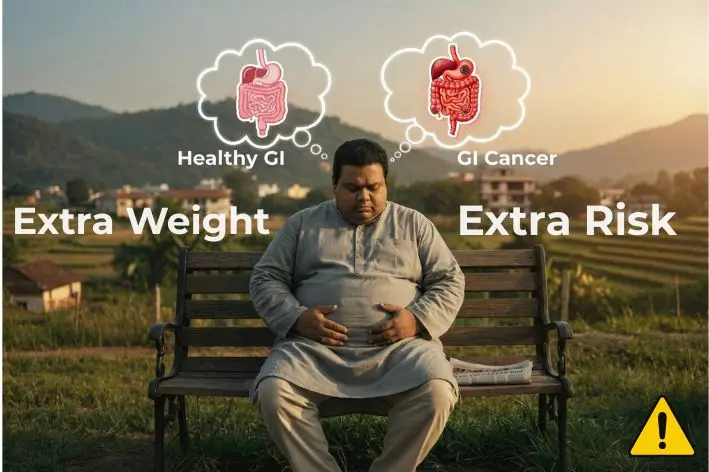
    In Jharkhand – especially in growing urban pockets like Ranchi, Bokaro and nearby towns – lifestyle is changing fast. More sitting, less walking, easy access to oily snacks, sweets, sugary drinks and late-night meals are quietly increasing one serious risk:Gastrointestinal (GI) cancers linked to overweight and obesity.

    For many people, a BMI above 25 kg/m² feels like “thoda sa mota ho gaya hoon, it’s okay.” But medically, a BMI ≥25 (overweight/obese) means higher risk of cancers of the food pipe, stomach, liver, gallbladder, pancreas and colon/rectum over the next 10–20 years.

    At PancreaCare (by Advitya Healthcares) in Ranchi, we see both sides of this story:

    • Patients who never knew their weight and diet were increasing their cancer risk
    • And patients who ask, “If I reduce my weight now, can I still protect my gut?”

    This blog explains, in simple language:

    • What BMI ≥25 really means
    • How overweight and diet together damage your GI system
    • Which GI cancers are strongly linked to excess weight
    • What people in Jharkhand / Ranchi / Bokaro can do to protect themselves
    • How PancreaCare is working to bridge gaps in healthcare, building trust in GI and cancer care

    1. BMI ≥25 : More Than Just a Number on Your Report

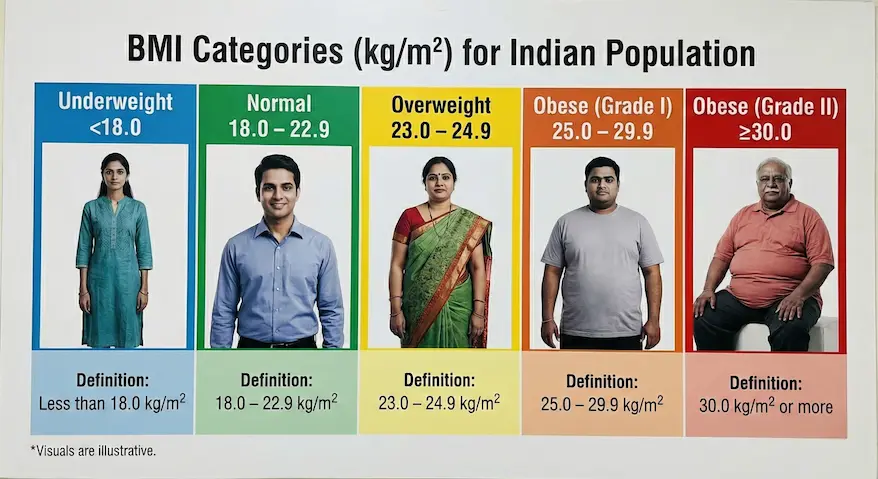
    BMI (Body Mass Index) For Indian Population = weight (kg) ÷ height (m²)

    • Underweight : <18.0 kg/m²
    • Healthy : 18.0–22.9 kg/m²
    • Overweight : 23.0–24.9 kg/m²
    • Obese (Grade I) : 25.0-29.9 kg/m²
    • Obese (Grade II) : ≥ 30 kg/m²
      6y6t

      For many Indian and Jharkhandi bodies (shorter height, more central fat), risk can start even earlier, but your blog focus is BMI ≥25 – the point where the risk becomes clearly higher.
      Think of BMI like blood pressure:

      • Higher for one day is not good,
      • But high for years is what really causes damage.

      In the same way, spending years at BMI ≥25 loads your GI system with hormonal, inflammatory and metabolic stress that silently increases cancer risk.


      2. How Extra Body Fat Damages Your Gut From Inside

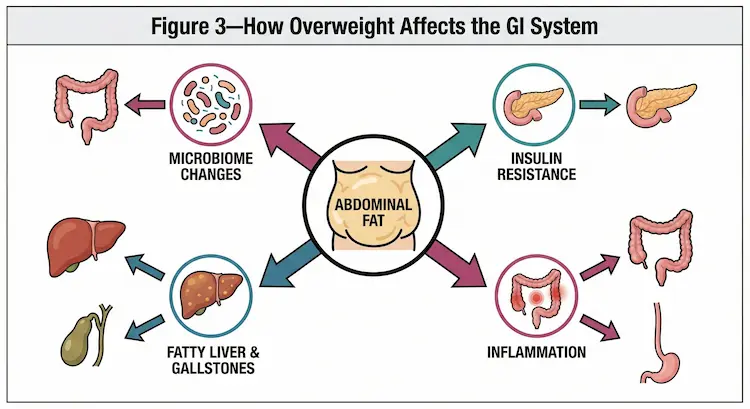
      Overweight/obesity is not just “stored fat”. Especially around the waist, fat acts like a hormone factory and a slow poison for the gut.

      a) Insulin Resistance & Growth Signals

      When we gain excess weight, especially from refined carbs and sugary foods (white rice in large amounts, sweets, cold drinks, biscuits, bakery items), our body becomes insulin resistant.

      • The pancreas has to produce more insulin.
      • High insulin and IGF-1 (insulin-like growth factor) tell cells to divide more and die less.

      This constant “grow, grow, grow” message affects cells in the liver, pancreas, stomach, colon and rectum, making it easier for cancer to develop over time.

      b) Silent Inflammation

      Excess fat tissue releases inflammatory chemicals. This chronic low-grade inflammation:

      • Damages DNA
      • Changes the way cells communicate
      • Helps pre-cancerous cells survive and grow

      For the GI tract, this inflammation can affect the liver (fatty liver), intestines, pancreas and stomach.

      c) Fatty Liver and Toxic Bile

      Many people in Ranchi and Bokaro who come to clinics for “gas/acidity” or “weakness” actually have fatty liver on ultrasound.

      • Over years, fatty liver (NAFLD) can progress to more serious disease and increase the risk of liver cancer.
      • Extra weight also changes bile composition, leading to gallstones, which raise the risk of gallbladder cancer – a cancer more common in parts of North and Eastern India.

      d) Gut Microbiome Disturbance

      Diets high in fried snacks (kachori, samosa, pakoda, bhujia), processed meats, sugary drinks and low in fiber (sabzi, dal, fruits, salads, whole grains) disturb the gut bacteria balance.
      The wrong kind of bacteria can:

      • Produce more harmful metabolites
      • Increase local inflammation in the colon
      • Contribute to colorectal cancer

        3. GI Cancers Linked to Overweight/Obesity

        3.1 Esophagus & Stomach

        In many city areas, spicy, oily food + late dinner + lying down soon after eating are now normal habits.

        • Central obesity (big waist) increases pressure inside the abdomen → more acid reflux.
        • Long-standing reflux can lead to changes in the lower food pipe and raise the risk of esophageal adenocarcinoma.
        • High salt, smoked and pickled foods, combined with H. pylori infection, increase the risk of stomach cancer, and excess weight adds to that risk.

        In simple words:
        Big waist + reflux + poor diet = higher risk for food pipe and upper stomach cancers.


          3.2 Liver & Gallbladder

          For Jharkhand, this is a very important area.

          • Overweight individuals often have fatty liver.
          • If not controlled, this can progress to serious liver disease and liver cancer.
          • Overweight also increases the chance of gallstones, which is a risk factor for gallbladder cancer – seen relatively more in Eastern India.

          Add risk factors like alcohol intake, viral hepatitis, very oily food, and the danger multiplies.


          3.3 Pancreas

          The pancreas sits deep in the abdomen and is crucial for digestion and sugar control.

          • Excess weight, especially around the belly, worsens insulin resistance and causes a constant high-insulin state.
          • This environment promotes pancreatic cell changes and over years can contribute to pancreatic cancer.

          Because symptoms of pancreatic cancer appear late, prevention through a healthy weight and better diet is extremely important.


          3.4 Colon & Rectum

          Colorectal cancer risk goes up clearly with:

          • Higher BMI (especially above 25–27)
          • Low fiber intake (little sabzi, salad, fruits, whole grains)
          • High red and processed meat (sausages, processed kebabs, preserved meat)
          • Alcohol and smoking

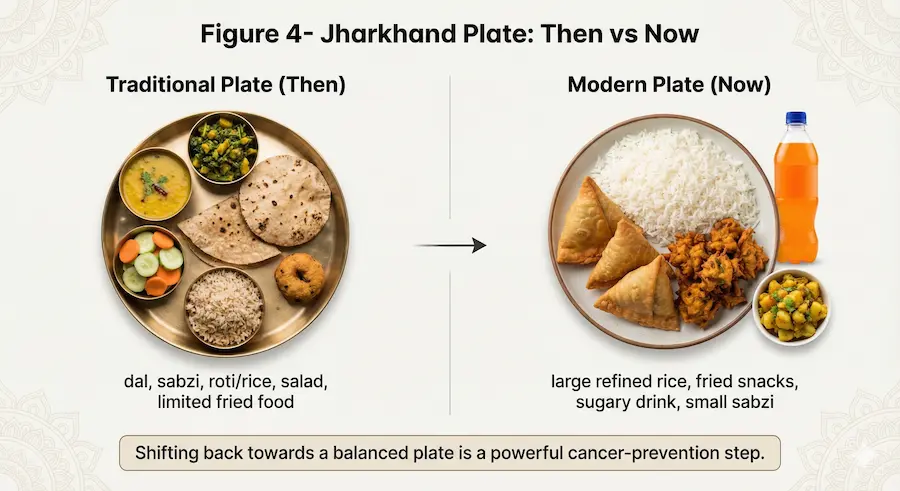
          In Jharkhand, a plate that regularly has:

          • A lot of refined rice or roti,
          • Very little salad or fruit,
          • Deep-fried sides,
          • And low physical activity

          creates a perfect environment for colorectal cancer over time.


          4. Intensity and Duration: Why “How Much” and “How Long” Both Matter

          Two questions decide your true risk :

          1. Intensity – How high is your BMI?

          • BMI 25–27: risk begins to increase
          • BMI 30 and above: risk rises more sharply

          2. Duration – How many years have you stayed above BMI 25?

          • 1–2 years of slight overweight is concerning but still modifiable
          • 10–20 years of being overweight/obese works like a chronic exposure, similar to how long-term smoking harms lungs

            Someone who has been around BMI 27–30 from their 20s to 50s may carry a much higher GI cancer risk than someone who gained weight only recently.
            Central obesity (large waist, “pot belly”) is especially dangerous, even if BMI is only slightly high.


              5.What People in Jharkhand / Ranchi / Bokaro Can Do

              You cannot change your genes, but you can change weight, diet and habits.

              a) Aim for Healthy BMI and Waist

              • Work with a doctor/dietitian to gradually reduce 5–10% of body weight over months.
              • Track waist circumference, not just weight. Reducing belly fat is key.

              b) Change the Pattern of Your Plate
              Try to make at least half your plate:

              • Vegetables and salads (cooked sabzi + raw salad)
              • Dal/legumes (dal, chana, rajma, etc.)
              • Choose whole grains when possible: mix some brown rice, millets, multi-grain atta.
              • Cut down on:
              1. Daily fried snacks (samosa, kachori, chips)
              2. Sugary drinks (cola, packaged juices, energy drinks)
              3. Excess sweets (halwa, rasgulla, gulab jamun, everyday biscuits)

              c) Move More, Sit Less

              • At least 30–45 minutes of brisk walk or equivalent most days of the week.
              • In offices in Ranchi/Bokaro, break long sitting with short walking breaks.

              d) Avoid Tobacco and Limit Alcohol

              • Tobacco (smoked or smokeless) and alcohol combine with obesity to multiply GI cancer risk.
              • If you drink, keep it occasional and in very small amounts – or best, avoid.

              e) Listen to Warning Signs

              Consult a specialist if you have:

              • Persistent acidity or reflux
              • Difficulty swallowing, unexplained weight loss
              • Long-standing change in bowel habits, blood in stool
              • Persistent abdominal pain or jaundice
              • Strong family history of GI cancers

              Early check-up can save life.


                6. How PancreaCare (by Advitya Healthcares) Helps

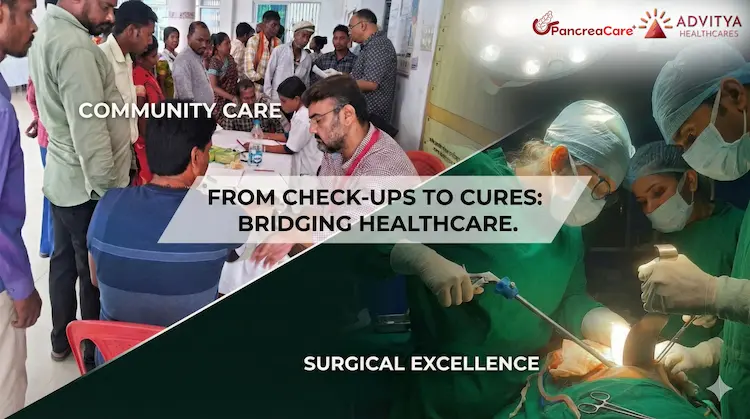
                Advitya Healthcares is dedicated to “Bridging Gaps in Healthcare. Building Trust.”

                PancreaCare (by Advitya Healthcares) is a centre of excellence for surgical, medical and cancer care of the pancreas, liver, gallbladder and luminal GI diseases, serving patients from Ranchi, Bokaro, Dhanbad, Jamshedpur and across Jharkhand.
                At PancreaCare, we focus on:

                • Early evaluation of high-risk individuals (overweight/obese with GI symptoms or family history)
                • Advanced diagnostics for liver, pancreas, gallbladder and colorectal diseases
                • Multidisciplinary treatment for GI and hepatobiliary cancers
                • Lifestyle and diet counselling to reduce future risk

                For many families in Jharkhand who earlier had to travel to metros for GI cancer care, our goal is to bring specialised, ethical, evidence-based care closer to home.


                  7. Suggested Figures & Diagrams

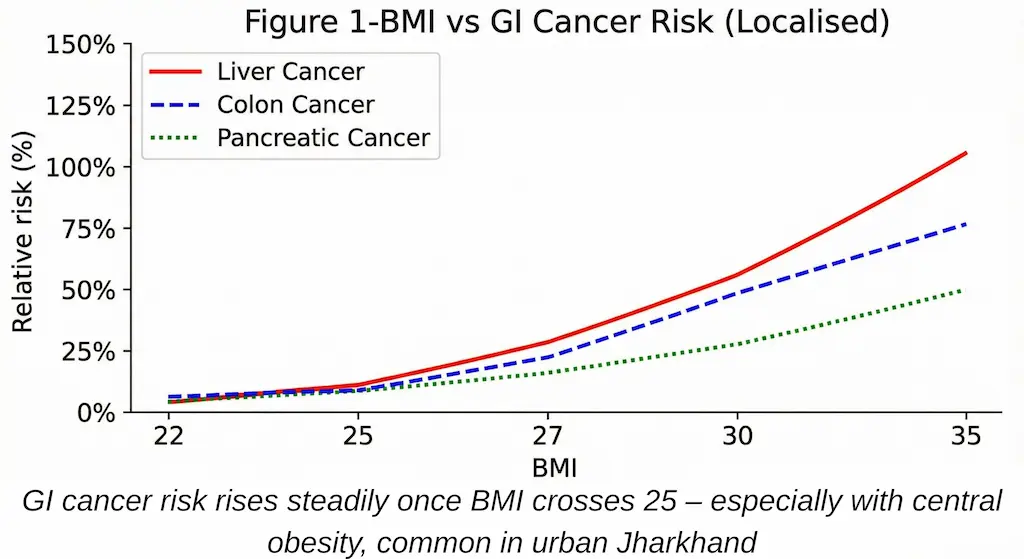
                  Figure 1 – BMI vs GI Cancer Risk (Localised)

                  • X-axis: BMI (22, 25, 27, 30, 35)
                  • Y-axis: Relative risk (%)
                  • Curves for: liver, colon, pancreatic cancer
                  Your paragraph text

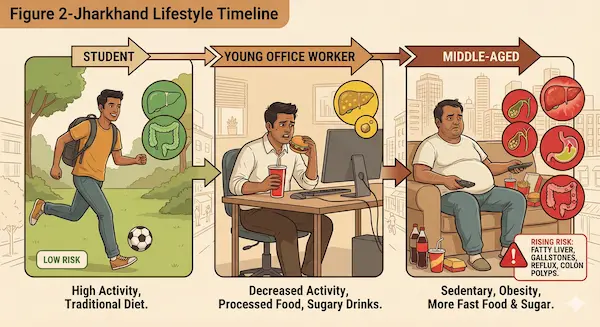
                  Figure 2 – Jharkhand Lifestyle Timeline

                  Panel showing a typical person from student → young office worker → middle-aged with:

                  1766131493175
                  • Increasing weight
                  • Decreasing activity
                  • More fast food and sugary drinks

                  Figure 3 – How Overweight Affects the GI System

                  Central icon: abdominal fat

                  1766131730007

                  Arrows to:

                  • Insulin resistance
                  • Inflammation
                  • Fatty liver & gallstones
                  • Microbiome changes

                  Figure 4 – “Jharkhand Plate: Then vs Now”

                  1766135631270
                  • Left: Traditional plate – dal, sabzi, roti/rice, salad, limited fried food.
                  • Right: Modern plate – large refined rice, fried snacks, sugary drink, small sabzi.

                  “If you’re living with excess weight, acidity, fatty liver or unexplained gut symptoms, don’t wait for them to ‘settle on their own’. Early evaluation can save your life. Book your GI risk assessment at PancreaCare by Advitya Healthcares today and let us help you protect your liver, pancreas and gut – right here in Jharkhand

                  T

                  At PancreaCare by Advitya Healthcares, we recognize that being overweight can silently damage your liver, pancreas, and digestive system. Our approach goes beyond treatment—we offer a complete care pathway that combines medical expertise, lifestyle intervention, and compassionate support to manage obesity-related GI conditions and restore long-term digestive health.

                  Advitya Healthcares Pvt. Ltd.
                  Ranchi, Jharkhand, Bokaro & Kolkata

                  +91 9211221551
                  +91 9211221552
                  +91 9211221553
                  +91 9211221554

                  www.advityahealthcares.com | info@advityahealthcares.com

                1. From Weekend Drinks to GI Cancer: What Alcohol Really Does Inside

                  From Weekend Drinks to GI Cancer: What Alcohol Really Does Inside

                  Alcohol is woven into social life – from weekend drinks to daily “stress relief.” But the digestive system (gastrointestinal or GI tract) sees every sip first. Over time, even “moderate” regular drinking can damage the gut, liver and pancreas and raise the risk of several GI cancers. This article explains how dose, mode and frequency of alcohol use affect GI health, with a focus on cancers.


                  In Jharkhand – especially in cities like Ranchi, Bokaro and Dhanbad – alcohol is often part of social life, celebrations and stress relief. But our digestive system (gut or GI tract) “sees” every sip first. Over months and years, even regular “social drinking” can quietly damage the gut, liver and pancreas and increase the risk of several gastrointestinal (GI) cancers.

                  At PancreaCare by Advitya Healthcares, we see this impact every week in patients coming with acidity, pancreatitis, fatty liver, cirrhosis and late-diagnosed GI cancers. This blog explains, in simple language, how dose, mode and frequency of alcohol use affect GI health, with a special focus on cancers.


                  What is “regular” drinking?

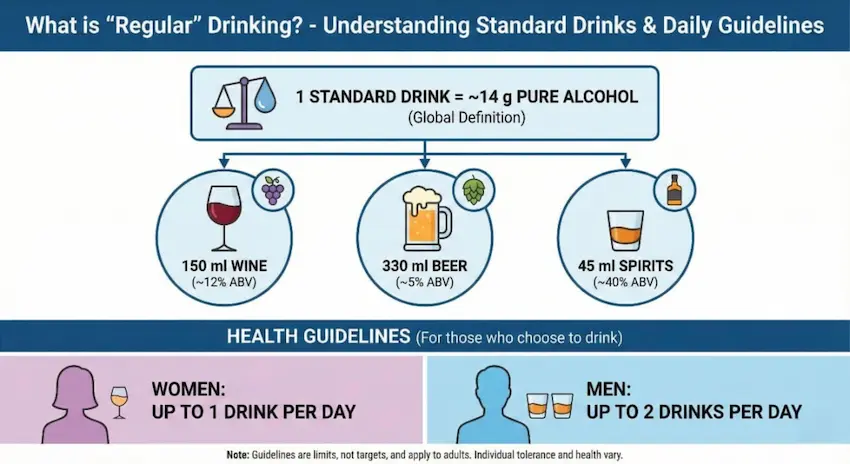
                  Globally, one standard drink is defined as about 14 g of pure alcohol (for example ~150 ml wine, 330 ml beer, or 45 ml spirits).

                  Health guidelines often suggest that, for those who choose to drink:

                  • Women: up to 1 drink per day
                  • Men: up to 2 drinks per day

                  This level is sometimes called “low–risk” for short-term harms – but for cancer, no level is completely safe. Alcoholic drinks are classified as a Group 1 carcinogen (same category as tobacco) and are linked to at least seven types of cancer, including several GI cancers.

                  From a practical perspective in Jharkhand, we can think of:

                  • Mild Drinking /Occasional – 1–2 drinks on some weekends
                  • Moderate Drinking / Irregular – 1–2 drinks on most days
                  • Severe Drinking / high Intensity – 3 or more drinks daily, or frequent binges (4–5+ drinks in one sitting)
                  Untitled design (2)

                  The more you drink per day, the more often you drink, and the more years you drink, the higher the cumulative damage.


                  How alcohol harms the GI system

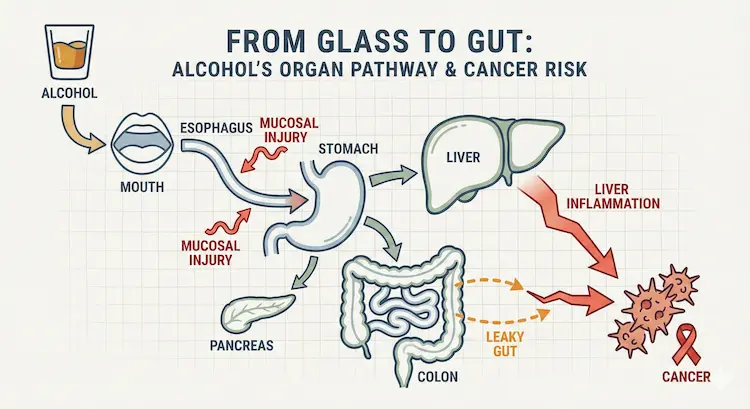
                  Every drink travels through the mouth → oesophagus → stomach → small intestine → liver → pancreas → colon. The body breaks alcohol down into a toxic chemical called acetaldehyde, which can directly damage cells and DNA.

                  Key mechanisms:

                  1. Direct lining (mucosal) injury
                    • Even one heavy episode can cause inflammation and small erosions in the stomach and upper intestine, leading to gastritis, pain and sometimes bleeding.
                  2. “Leaky gut” and microbiome disturbance
                    • Alcohol damages tight junctions (proteins that hold gut cells together), making the intestine more permeable or “leaky”.
                    • Bacterial toxins cross into the blood and reach the liver, increasing inflammation, fatty liver and cirrhosis risk.
                  3. Liver injury
                    • Regular use causes a spectrum from fatty liver → alcoholic hepatitis → cirrhosis, and cirrhosis is a major driver of liver cancer (hepatocellular carcinoma).
                  4. Pancreatic injury
                    • Heavy long-term alcohol is a leading cause of acute and chronic pancreatitis. Repeated inflammation damages the pancreas and raises the risk of pancreatic cancer over time.

                  Dose, frequency & GI cancer: what studies show

                  Large international studies, including recent data up to 2025, show a dose–response relationship between alcohol and several GI cancers – meaning, as dose and frequency increase, so does risk.

                  Esophageal cancer (especially squamous cell)

                  • Even modest regular use increases risk, especially when combined with smoking, which is still common in Jharkhand.
                  • Strong spirits taken neat, very hot drinks, and daily drinking further irritate the oesophageal lining.

                  Stomach (gastric) cancer

                  • Evidence suggests that frequent drinking – even if each sitting is not huge – raises the risk of stomach cancer, especially above roughly 3+ drinks per day.

                  Liver cancer

                  • For liver, stomach and pancreas, major cancer-prevention reports conclude that risks become clearly higher when average intake is above ~45 g alcohol/day (around 3 drinks).
                  • When alcohol-related cirrhosis is combined with hepatitis B/C, obesity or diabetes, liver cancer risk multiplies further – a pattern we often see in Eastern India.

                  Colorectal (colon & rectum) cancer

                  • A large meta-analysis shows that drinking more than 1 drink per day is associated with increased colorectal cancer risk.
                  • Mechanisms include acetaldehyde exposure in the colon, changes in gut bacteria, and low folate levels.

                  Pancreatic cancer – emerging evidence

                  • Chronic heavy alcohol use is a well-known cause of chronic pancreatitis, which itself increases pancreatic cancer risk.
                  • New pooled data from 30 international studies show a modest but significant increase in pancreatic cancer risk in people drinking from about 15–30 g/day upwards, with higher risk at higher doses, independent of smoking.

                  For people in Ranchi and Bokaro who drink daily or binge on weekends, this means that “regular but not very heavy” drinking is not risk-free, especially when combined with smoking, central obesity and high processed-food intake.


                  Why frequency matters as much as quantity

                  A large study on GI cancers found that drinking frequently (many days per week), even with small amounts, may be more dangerous than occasional heavier sessions for long-term cancer risk.

                  So two men in Ranchi who both consume the same total alcohol per week may have different risks:

                  • Person A: drinks a little every day → higher GI cancer risk
                  • Person B: drinks once a week but similar total weekly units → comparatively lower (though still not zero) risk

                  This is important because in Jharkhand many people feel “I only take 1–2 pegs daily, that is safe”. For cancer risk, regular exposure is the concern, not only visible drunkenness.


                  Mode of drinking: beer vs whisky vs local liquor

                  From a cancer perspective, the main villain is ethanol itself, not the brand:

                  • 2 large beers ≈ multiple small pegs of whisky in terms of pure alcohol.
                  • Locally brewed or unregulated liquor can add extra risk due to impurities and very high strength, but even “branded” drinks are risky when used regularly.

                  Drinks taken on an empty stomach, very fast, or in repeated shots cause more sudden spikes in alcohol level, which our pancreas and liver struggle to handle.


                  Suggested figures and diagrams (for your designers)

                  To visually communicate the intensity of use vs disease spectrum, you can include:

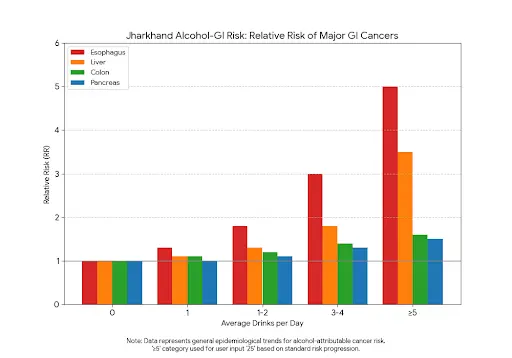
                  1. Jharkhand alcohol–GI risk bar chart
                    • X-axis: average drinks/day (0, <1, 1–2, 3–4, ≥5)
                    • Y-axis: relative risk of major GI cancers (oesophagus, liver, colon, pancreas)
                    • Separate coloured bars for each organ.
                  1765870038327
                  1. “From glass to gut” organ pathway diagram
                    • Simple outline of mouth, oesophagus, stomach, liver, pancreas, colon.
                    • Arrows showing: alcohol → mucosal injury → leaky gut → liver inflammation → cancer.
                  1765869766408 (1)
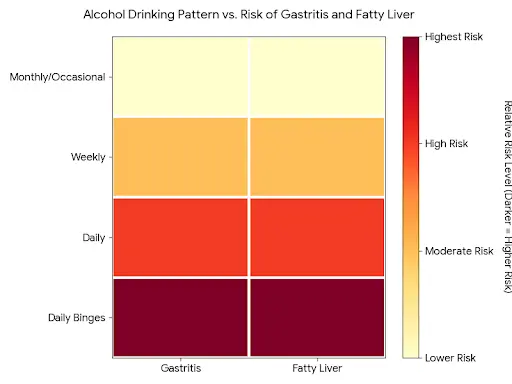
                  1. Frequency vs risk heat map
                    • Rows: drinking pattern (monthly/occasional, weekly, daily, daily + binges).
                    • Columns: conditions (gastritis, fatty liver, pancreatitis, cirrhosis, GI cancers).
                    • Darker colours = higher risk.
                  1765869126891
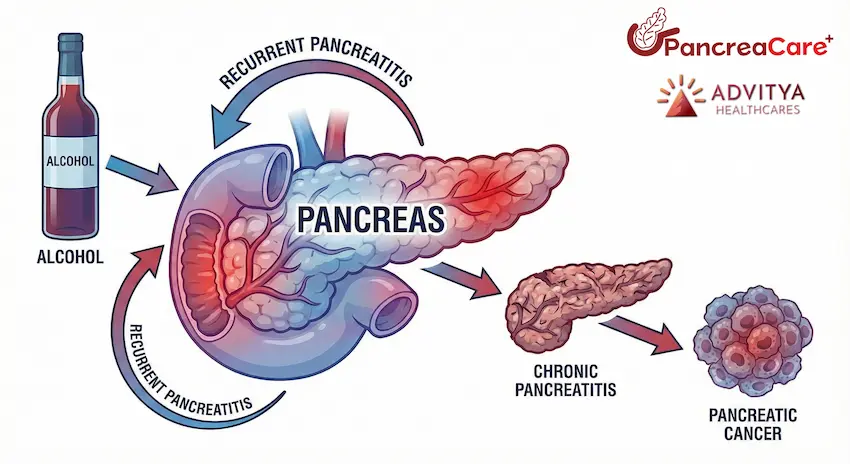
                  1. Pancreas spotlight figure branded as “PancreaCare”
                    • Pancreas in the centre with arrows: alcohol → recurrent pancreatitis → chronic pancreatitis → pancreatic cancer risk.
                    • PancreaCare logo and tagline near the figure to reinforce your specialty.
                  Picsart 25 12 16 12 46 52

                  What people in Ranchi & Bokaro should watch for

                  People who drink regularly should be alert for red-flag symptoms and seek medical help early, especially if they notice:

                  • Persistent heartburn, difficulty swallowing, or vomiting
                  • Ongoing upper abdominal pain or pain radiating to the back
                  • Unintentional weight loss, low appetite or early fullness
                  • Black stools, blood in stools or vomiting blood
                  • Yellow eyes / skin (jaundice), dark urine or very pale stools
                  • Repeated attacks of severe upper abdominal pain with vomiting (suggestive of pancreatitis)

                  Residents of Jharkhand with family history of GI cancers, chronic liver disease, pancreatitis, diabetes or obesity have even more reason to reduce or stop alcohol.

                  Untitled design (3)

                  Comprehensive Care: From Diagnosis to Recovery

                  At PancreaCare by Advitya Healthcares,  we understand that a diagnosis of a liver or pancreatic condition can be overwhelming. Our mission is to provide not just treatment, but a complete care pathway that supports you at every step.Your digestive health demands expert attention. At PancreaCare, we combine medical expertise with compassionate care to treat the full spectrum of GI disorders.

                  We are equipped for:

                  GI Cancer Surgeries (Liver, Pancreas, GI Tract)

                  Advanced Laparoscopic Procedures

                  Management of Chronic Pancreatitis & Liver Disease

                  Preventive Screening & Oncology Care

                  Don’t wait for symptoms to worsen. Trust the specialists of gut. Visit us in Ranchi for a consultation today.

                  Book an in-person or video consult with PancreaCare By Advitya Healthcares in Ranchi, Jharkhand, Bokaro. 

                  We’ll map your sequence—diagnostics → treatment → rehab → surveillance—and walk with you through every milestone.