Liver Care by Advitya

Advanced Liver Care

Expert diagnosis, resection surgery and long-term liver care — delivered by a dedicated hepato-pancreato-biliary team. From the first scan to recovery and surveillance, you are treated by the same specialists, without travelling to a distant city.

HPB & GI surgical oncology
Triple-phase CT · MRI · Elastography
Multidisciplinary tumour board
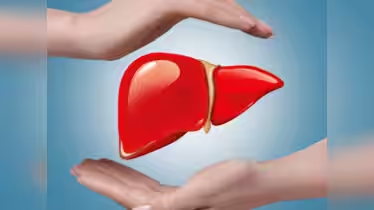
Illustration of a liver held between two open hands, representing liver care
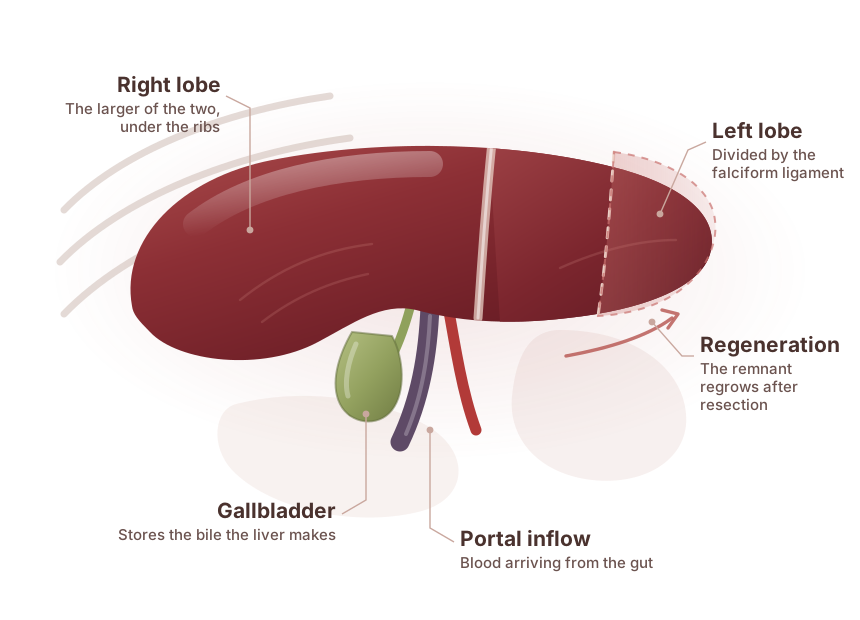
Anatomical illustration of the liver: the larger right lobe and smaller left lobe divided by the falciform ligament, the gallbladder beneath the right lobe, portal inflow arriving from the gut, and a dashed resection plane showing the remnant regenerating
The Programme

The one solid organ that grows back

The liver sits under the right ribs and runs the body's chemistry. It processes everything absorbed from the gut, manufactures bile and clotting factors, stores energy and clears drugs and toxins. It also holds enormous reserve — which is why disease can advance a long way before it produces a single symptom.

It is also the only solid organ that regenerates. Remove a substantial portion and the remainder regrows within weeks. That single property is what makes major liver resection possible, and it governs how every operation is planned: not simply whether the lesion can come out, but whether enough healthy liver will be left behind to carry you through.

Advitya's liver programme brings hepato-pancreato-biliary surgeons, gastroenterologists, radiologists, oncologists and dietitians around a single table, so that lesions are characterised precisely, resections are planned on volumetry rather than guesswork, and surveillance does not depend on which department you happen to reach.

8Segments — each with its own blood and bile supply
70%Of a healthy liver can be safely resected
1Team, from first scan to follow-up
Conditions We Treat

The full spectrum of liver disease

From an incidental cyst found on a routine scan to a major resection for cancer — each condition is managed by the same specialist team, using one shared treatment plan.

Fatty Liver Disease

Fat accumulating in liver cells alongside obesity, insulin resistance or type 2 diabetes. Now the commonest liver condition worldwide, and reversible in its earlier stages with sustained weight reduction and metabolic control.

Metabolic

Steatohepatitis & Fibrosis

The more advanced form, where fat is joined by inflammation and scarring. Assessed with elastography rather than biopsy in most patients, and halted — sometimes reversed — before it reaches cirrhosis.

Progressive

Cirrhosis & Portal Hypertension

Irreversible scarring that stiffens the liver and raises pressure in the portal vein, leading to varices, ascites and encephalopathy. Managed to slow progression, prevent bleeding and maintain nutrition.

Long-term care

Liver Cysts & Abscess

Simple cysts, polycystic liver disease, hydatid cysts and pyogenic or amoebic abscess. Most simple cysts need only monitoring; infected or symptomatic collections need drainage or deroofing.

Benign

Benign Liver Tumours

Haemangioma, focal nodular hyperplasia and hepatic adenoma. Most are found by chance and left alone; adenomas are watched more closely because they can bleed and, rarely, transform.

Surveillance

Hepatocellular Carcinoma

The commonest primary liver cancer, usually arising in a cirrhotic liver. Treatment depends as much on remaining liver function as on the tumour, which is why staging assesses both together.

Surgical oncology

Liver Metastases

Secondary deposits spreading from colorectal, pancreatic or neuroendocrine primaries. Resection of colorectal liver metastases, often after chemotherapy, offers a genuine prospect of long-term survival.

Multidisciplinary
Warning Signs

Six symptoms worth a specialist opinion

Individually these are common and often harmless. Together, or persisting beyond a couple of weeks, they deserve a proper liver assessment.

Persistent fatigue

Tiredness out of proportion to your activity, which rest does not resolve.

Jaundice

Yellowing of the eyes or skin, with dark urine and pale stools.

Right upper abdominal ache

A dull, dragging discomfort under the right ribs from a stretched liver capsule.

Abdominal swelling

Fluid collecting in the abdomen, or new swelling of the ankles and legs.

Itching without a rash

A generalised itch, characteristically worse at night, from bile salts in the skin.

Easy bruising or bleeding

Bruising from minor knocks, or bleeding gums — a sign clotting factors are low.

Advanced Diagnosis

A clear pathway from first visit to a firm answer

Most liver lesions can be characterised confidently on imaging alone. Each step below narrows the possibilities before anyone reaches for a needle.

01

Consultation

History, examination and a review of every previous report, scan and prescription.

02

Bloods & Serology

Liver function, albumin, clotting, alpha-fetoprotein and hepatitis B and C screening.

03

Ultrasound & Elastography

Detects lesions and measures liver stiffness — fibrosis assessed without a biopsy.

04

Triple-Phase CT / MRI

Timed contrast imaging characterises lesions by blood supply and provides volumetry.

05

Diagnosis

Findings taken to a multidisciplinary board so stage, function and plan are agreed once.

06

Personalised Treatment

A written plan covering procedure, nutrition, recovery and surveillance schedule.

Treatment & Surgery

Every option, under one team

Open, laparoscopic and ablative approaches, alongside the medical and nutritional care that determines how well the liver recovers.

Liver Resection

Anatomical and non-anatomical resections, from segmentectomy to extended hepatectomy, planned on volumetry so enough functional liver remains.

Laparoscopic Liver Surgery

Keyhole removal of peripheral lesions, with less pain, shorter stay and a faster return to work than open surgery in suitable cases.

Ablation Therapy

Radiofrequency or microwave energy to destroy small tumours, used where resection would cost more liver than the patient can spare.

Portal Vein Embolisation

Deliberately growing the future liver remnant before major resection, so an operation that was unsafe becomes safe.

Chemotherapy

Given before resection to shrink colorectal liver metastases, or afterwards to reduce the risk of recurrence.

Cyst & Abscess Drainage

Image-guided drainage or laparoscopic deroofing for symptomatic cysts, hydatid disease and liver abscess.

Cirrhosis Management

Variceal surveillance, ascites control, encephalopathy management and six-monthly cancer screening for patients with established cirrhosis.

Nutritional Support

Protein and calorie planning, vitamin monitoring and a structured weight-reduction programme for metabolic liver disease.

Why Advitya

Specialist depth, without the distance

Liver outcomes depend heavily on how often a team does this work. Ours does it as its primary focus — and brings that expertise to where patients actually live.

Advanced HPB Expertise

Fellowship-trained hepato-pancreato-biliary and GI surgical oncology, with liver resection as core practice rather than occasional work.

Multidisciplinary Care

Surgeons, hepatologists, radiologists, oncologists and dietitians working from one shared plan rather than parallel opinions.

Advanced Diagnostics

Triple-phase CT, contrast MRI, elastography and CT volumetry — so remnant volume is measured, not estimated.

Personalised Treatment

A written plan for your stage, your liver function and your circumstances — with a cost estimate before admission.

Comprehensive Follow-up

Scheduled surveillance imaging, liver function review and phone follow-up once you are home — with the same faces throughout.

Treatment Journey

What the road ahead actually looks like

Six stages, from your first appointment to long-term surveillance — so you always know where you are and what comes next.

01

Consultation

Your history and existing reports reviewed by a specialist, in person or by video.

02

Diagnosis

Imaging and blood work to characterise the lesion and measure how well the liver works.

03

Treatment Planning

The board agrees the plan and the remnant volume, and it is explained to you in writing.

04

Treatment

Resection, ablation, drainage or medical management — as planned, by the same team.

05

Recovery

Pain control, graded diet, early mobilisation and monitoring while the liver regenerates.

06

Follow-up

Scheduled review, surveillance imaging and nutrition support once you are home.

Frequently Asked

Questions patients ask us most

What are the earliest warning signs of liver disease?

Frequently there are none. The liver holds substantial reserve and can be significantly affected before producing symptoms, which is why abnormal liver function tests on a routine blood panel matter. When symptoms do appear they tend to be non-specific — fatigue, a dull ache under the right ribs, reduced appetite. Jaundice, abdominal swelling and confusion are features of advanced disease rather than early disease.

Does a liver lesion found on a scan mean cancer?

Usually not. Simple cysts and haemangiomas are common incidental findings and are entirely benign. What matters is how the lesion behaves on contrast imaging rather than how large it is. A triple-phase CT or contrast MRI characterises most lesions confidently without any need for a biopsy.

Can fatty liver disease be reversed?

Yes, particularly in its earlier stages. The evidence is consistent on what works:

  • Sustained weight reduction of around ten percent clears liver fat and can reverse early fibrosis
  • Improved glycaemic control in diabetes slows progression measurably
  • Eliminating alcohol removes a second, compounding injury
  • Regular physical activity helps independently of weight lost

Established cirrhosis cannot be reversed, but its progression can be halted.

How much of the liver can safely be removed?

Up to about seventy percent of a healthy liver, because the remnant regenerates within weeks. In a liver damaged by cirrhosis or previous chemotherapy the safe margin is considerably smaller. This is why we measure remnant volume with CT volumetry and assess function before deciding, rather than discovering the limit during surgery.

Is liver surgery very risky?

Liver surgery is major surgery, and the organ's rich blood supply means bleeding is the principal concern. In specialist units with careful preoperative planning, modern parenchymal transection technique and enhanced recovery protocols, outcomes have improved substantially over the past two decades. As with pancreatic surgery, how often the team performs the operation matters more than almost any other single factor.

How long is recovery after liver resection?

Most patients stay in hospital five to ten days after a major open resection, and two to four days after a laparoscopic one. Light activity resumes within two to three weeks and full recovery takes six to eight weeks. Liver volume typically returns to near-normal within about three months.

Who needs six-monthly liver cancer screening?

Anyone with established cirrhosis, from any cause, and selected patients with chronic hepatitis B without cirrhosis. Screening is an ultrasound with or without alpha-fetoprotein every six months. It is the single most effective thing available in liver oncology, because it shifts diagnosis to a stage where resection or ablation is still possible.

Do you review reports before I travel for an appointment?

Yes. For outstation patients, a video review of your existing scans and reports is usually the first step, so the trip is made only when it will change something. Bring the actual films or CD rather than only the printed report — liver lesions are judged on the images, not the summary — along with previous prescriptions, discharge summaries and blood work from the last three months.

Send us your liver scans.

A specialist reviews your imaging and blood work before you travel, so the first visit starts with a plan rather than a repeat test.

+91 9211221551 · info@advityahealthcares.com · Reports reviewed before you travel

Call Book Appointment