Persistent Fatigue
Disproportionate tiredness that rest does not resolve, often the earliest and most easily dismissed sign of impaired liver function.

From fatty liver and benign lesions to complex resection — evaluation, monitoring and advanced surgical treatment planned around how well your liver actually works.
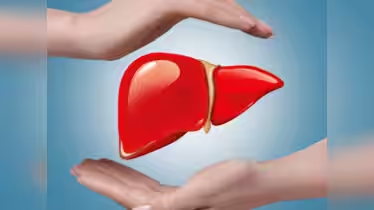
The liver is the body's chemical plant. It processes everything absorbed from the gut, manufactures bile and clotting factors, stores energy, and clears drugs and toxins. It also has a property no other solid organ shares: it regenerates. Remove a substantial portion and the remainder grows to compensate within weeks.
That regenerative capacity is what makes major liver surgery possible, and it shapes how every operation is planned. Before a resection we measure the volume of liver that will remain and assess how well it functions. The question is never simply whether the lesion can be removed — it is whether enough healthy liver will be left behind to carry the patient through.
Many liver findings need no treatment at all. Simple cysts and haemangiomas are discovered by chance on scans done for other reasons and are entirely harmless. The clinical skill lies in distinguishing these confidently from the lesions that do require action, which is done on imaging characteristics rather than size alone.
Discuss Your ReportsNone of these confirms a diagnosis on its own. Each is a reason to be examined rather than to wait and see how things develop.
Disproportionate tiredness that rest does not resolve, often the earliest and most easily dismissed sign of impaired liver function.
A dull ache or dragging sensation under the right ribs, typical of a stretched liver capsule from an enlarging lesion or fatty infiltration.
Yellowing of the eyes and skin indicating that the liver is failing to clear bilirubin, or that the biliary drainage is obstructed.
Fluid accumulating in the abdomen, a sign of advanced disease with portal hypertension that requires prompt specialist assessment.
Bile salts in the skin producing a generalised itch, characteristically worse at night and unresponsive to ordinary treatments.
Steady weight loss with reduced appetite, warranting imaging to exclude a malignant cause.
Understanding what drives the condition is what makes prevention and early detection practical rather than theoretical.
Only the investigations that will change a decision are ordered, and they are sequenced so results build on one another rather than repeating.
Transaminases, alkaline phosphatase, albumin and clotting together indicate both the pattern of injury and the reserve remaining.
Detects fat, lesions and duct dilatation, and measures liver stiffness as a non-invasive surrogate for fibrosis.
Timed contrast imaging characterises lesions by their blood supply and provides the volumetry that surgical planning depends on.
The most accurate way to characterise indeterminate lesions and to distinguish benign from malignant without biopsy.
Reserved for lesions that imaging cannot resolve, since biopsy carries a small risk of bleeding and of seeding along the needle track.
Treatment is matched to the stage and to the individual. Not every option below applies to every patient, and the right choice is made together.
Structured weight reduction, glycaemic control and alcohol cessation, which can reverse fatty liver disease and early fibrosis entirely.
Interval imaging for benign lesions and six-monthly surveillance for patients with cirrhosis, where early detection changes what treatment is possible.
Keyhole removal of peripheral lesions, with less pain, shorter stay and faster return to work than open surgery in suitable cases.
Anatomical resection of a lobe or extended segments, planned on volumetry so that sufficient functional liver remains after surgery.
Specialist surgical care, delivered close to home, without asking families to relocate for months of treatment.
A dedicated hepato-pancreato-biliary and gastrointestinal surgical team, operating on these conditions as their principal practice rather than occasionally.
Endoscopy, endoscopic ultrasound, MRCP and protocol-specific cross-sectional imaging interpreted by clinicians who treat the disease themselves.
Fully equipped theatres, high-dependency support and endoscopy suites, delivered in partnership with hospitals close to where patients live.
Laparoscopic and endoscopic approaches wherever they are the right choice, with shorter stays, less pain and a faster return to ordinary life.
Reports reviewed before you travel, decisions explained in your own language, and a plan built around your circumstances rather than a protocol.
Acute pancreatitis, cholangitis and obstructive jaundice do not keep office hours. Our team is reachable when they present.

Dr. Kapoor leads Advitya's gastrointestinal and hepato-pancreato-biliary practice, with a focus on complex pancreatic, biliary and liver surgery. Her work centres on bringing specialist-level surgical care to regional hospitals, so that patients can receive the operation they need without leaving their families behind.
Pancreato-Biliary-Liver Surgery · Gastrointestinal Surgery · Surgical Oncology
Four steps, explained before they happen, so you always know what comes next.
We begin with your history and your existing reports. Bring every scan and biopsy — they shape the plan more than the symptoms do.
Only the investigations that will change a decision are ordered, sequenced so that you are not sent back and forth between departments.
Complex cases are discussed jointly by surgery, oncology and radiology, and the plan is explained to you and your family in full before anything begins.
Structured recovery with nutritional and physiotherapy support, and a defined follow-up schedule so nothing is left to chance.
Straight answers to the questions patients ask most often in clinic.
Usually not. Simple cysts and haemangiomas are common incidental findings and are entirely benign. What matters is the lesion's appearance on contrast imaging rather than its size. A triple-phase CT or MRI can characterise most lesions confidently without any need for biopsy.
Frequently none at all. The liver has substantial reserve and can be significantly affected before producing symptoms. When symptoms do appear they tend to be non-specific — fatigue, right upper abdominal discomfort, reduced appetite. Jaundice, swelling and confusion are features of advanced disease.
Yes, particularly in its earlier stages. Sustained weight reduction of around ten percent, improved glycaemic control and elimination of alcohol can clear liver fat and reverse early fibrosis. Established cirrhosis cannot be reversed, but its progression can be halted.
Up to about seventy percent of a healthy liver can be resected, because the remnant regenerates within weeks. In a liver damaged by cirrhosis or chemotherapy the safe margin is considerably smaller, which is why we measure remnant volume and function before deciding rather than during surgery.
Liver surgery is major surgery, and the liver's rich blood supply means bleeding is the principal concern. In specialist units with careful preoperative planning, modern parenchymal transection techniques and enhanced recovery protocols, outcomes have improved substantially over the past two decades.
Most patients stay in hospital five to ten days after a major resection, and two to four days after a laparoscopic one. Light activity resumes within two to three weeks and full recovery takes six to eight weeks. Liver volume typically returns to near-normal within three months.
Connect with our experienced specialists for personalised diagnosis and treatment.
+91 9211221551 · info@advityahealthcares.com · Reports reviewed before you travel