Gastritis
Inflammation of the stomach lining, most often from H. pylori infection, but also from regular anti-inflammatory medication, alcohol or bile reflux. Diagnosed on endoscopy with biopsy rather than on symptoms alone.
Common
Accurate endoscopic diagnosis and expert treatment for gastritis, peptic ulcers and gastric cancer — because persistent indigestion deserves a look, not another prescription.
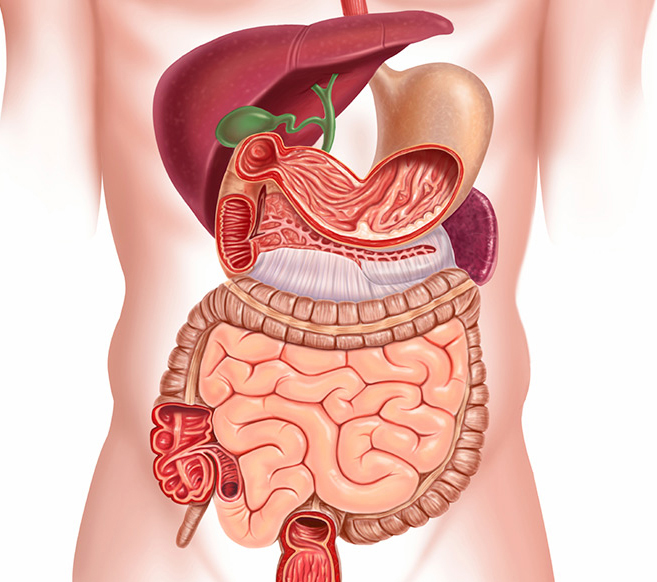
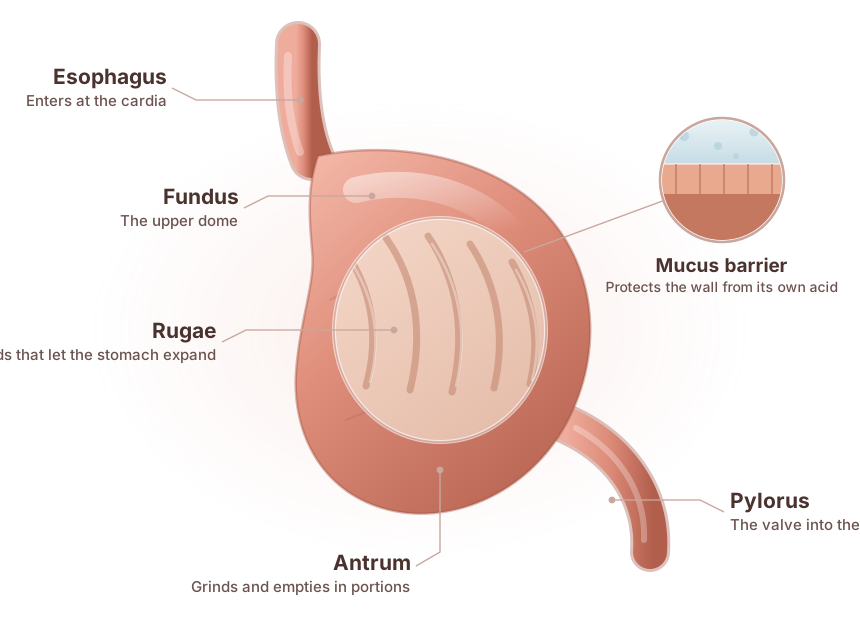
The stomach is a muscular reservoir that mixes food with acid strong enough to dissolve metal, then releases it in controlled portions into the small intestine. It survives its own acid through a mucus barrier that renews continuously. Almost all common stomach disease comes down to a failure of that barrier — through infection, medication or reflux.
Helicobacter pylori is the single most important cause. It colonises the lining, provokes chronic inflammation, and accounts for the great majority of peptic ulcers. It is also a recognised risk factor for gastric cancer. It is detectable by a simple breath, stool or biopsy test — and curable with a two-week course.
The clinical difficulty is that early gastric cancer produces exactly the same symptoms as ordinary indigestion. Nothing in the history reliably separates them. That is why persistent dyspepsia — particularly with weight loss, anaemia, vomiting or difficulty swallowing — is scoped rather than treated empirically for months.
From an H. pylori infection cured in a fortnight to a total gastrectomy — each condition is managed by the same specialist team, using one shared treatment plan.
Inflammation of the stomach lining, most often from H. pylori infection, but also from regular anti-inflammatory medication, alcohol or bile reflux. Diagnosed on endoscopy with biopsy rather than on symptoms alone.
CommonOpen sores in the stomach or duodenal lining. Curable in the great majority of cases by eradicating H. pylori and withdrawing the responsible medication — provided eradication is confirmed afterwards rather than assumed.
CurableA bacterial colonisation carried by a large share of the population. Detected by breath, stool or biopsy testing, and cleared with combination antibiotic and acid-suppression therapy over ten to fourteen days.
InfectionGrowths on the stomach lining, usually harmless. Fundic gland and hyperplastic polyps are typically observed; adenomatous polyps and any lesion over a centimetre are removed endoscopically and examined.
SurveillanceDelayed stomach emptying, most often from long-standing diabetes affecting the vagus nerve. Causes nausea, early fullness and vomiting of food eaten hours before. Managed with diet, prokinetics and glycaemic control.
FunctionalUsually adenocarcinoma of the lining. Early disease is silent or mimics indigestion exactly, which is why endoscopy in the right patients matters more here than almost any other investigation.
Surgical oncologyGastrointestinal stromal tumours, lymphoma and neuroendocrine tumours. They behave quite differently from adenocarcinoma and need distinct treatment, including targeted therapy rather than conventional chemotherapy.
SpecialistIndigestion is common and usually benign. These are the features that turn it into a reason for endoscopy rather than another course of antacids.
A gnawing pain below the breastbone, relieved or provoked by eating.
Feeling full after a few mouthfuls — rarely reported unless specifically asked.
Digested blood from a bleeding ulcer. An emergency, not something to monitor at home.
Weight loss with dyspepsia is an indication for endoscopy regardless of age.
Vomiting food eaten hours earlier suggests delayed emptying or outlet obstruction.
Slow blood loss found on a routine blood test, often before anything else appears.
Endoscopy answers most questions directly and treats what it finds in the same sitting. Everything else exists to stage what it discovers.
History, examination and a review of every previous report, scan and prescription.
Urea breath, stool antigen or biopsy testing — accurate only off acid suppression.
Direct view of the lining, with biopsy of anything abnormal in the same sitting.
Endoscopic ultrasound for depth of invasion, CT for nodal and distant spread.
Findings taken to a multidisciplinary board so the stage and plan are agreed once.
A written plan covering procedure, nutrition, recovery and follow-up schedule.
Medical, endoscopic and surgical care, alongside the nutritional support that determines how well you eat afterwards.
Two antibiotics with acid suppression for ten to fourteen days, followed by confirmatory testing to prove the infection has actually cleared.
Proton pump inhibitors to heal ulcers and control reflux, with a review of any NSAID or aspirin that contributed to the problem.
Removal of polyps and early-stage lesions through the endoscope, avoiding open surgery entirely where depth of invasion permits.
Clipping, injection or thermal control of a bleeding ulcer at the same endoscopy that diagnoses it — the reason most bleeds never reach theatre.
Removal of the affected portion with a systematic D2 lymph node clearance, for tumours of the lower or middle stomach.
Complete removal with reconstruction, for proximal or diffuse disease, planned alongside lifelong B12 and iron replacement from the outset.
Perioperative treatment for most locally advanced tumours, with targeted therapy such as trastuzumab where the tumour is HER2-positive.
Smaller, more frequent meals, dumping syndrome management, and monitoring of iron, B12 and fat-soluble vitamins after gastric surgery.
Gastric cancer outcomes depend on the quality of the nodal clearance and on the nutritional care that follows. Both are done properly here, close to where patients live.
Fellowship-trained gastrointestinal and surgical oncology, with D2 gastrectomy as routine rather than occasional practice.
Surgeons, gastroenterologists, radiologists, oncologists and dietitians working from one shared plan.
High-definition endoscopy with narrow-band imaging, endoscopic ultrasound, CT staging and HER2 testing where it changes treatment.
A written plan for your stage, your fitness and your circumstances — with a cost estimate before admission.
Eating changes permanently after gastric surgery. Our dietetic team stays involved long after the wound has healed.
Six stages, from your first appointment to long-term follow-up — so you always know where you are and what comes next.
Your history and existing reports reviewed by a specialist, in person or by video.
Direct examination with biopsy, under sedation, usually as a day case.
EUS and CT, then a board decision on the sequence of chemotherapy and surgery.
Medical therapy, endoscopic resection or gastrectomy — as planned, by the same team.
Graded diet from liquids to soft food, with dietetic review before you go home.
Surveillance endoscopy, imaging and nutritional bloods on a defined schedule.
Detailed, plain-language guides written by our team — so the conversation in clinic starts from a better place.
What the stomach does, the conditions that affect it, and why endoscopy is the test that settles the question.
Read the guide BenignGastritis, peptic ulcers, gastric polyps and gastroparesis — diagnosis, treatment and when surgery becomes necessary.
Read the guide OncologyRisk factors including H. pylori, the warning symptoms, how it is staged, and the treatment options at each stage.
Read the guide SurgerySubtotal and total gastrectomy, endoscopic resection and palliative surgery — risks, recovery and eating afterwards.
Read the guideWhen it persists beyond a few weeks despite treatment, or when any alarm feature is present:
New dyspepsia beginning after 45 also warrants endoscopy rather than empirical treatment.
A urea breath test, stool antigen test or biopsy taken at endoscopy will all detect it accurately. The important caveat is preparation: acid-suppressing medication must be stopped for two weeks and antibiotics for four weeks beforehand, otherwise the test can come back falsely negative and the infection is missed.
Yes. Eradicating H. pylori and withdrawing the responsible medication cures the great majority permanently. Confirming eradication afterwards matters, because ulcers recur in exactly those patients where treatment failed but was assumed to have worked.
Rarely. Almost all ulcers heal with medical treatment. Surgery is reserved for complications — perforation, bleeding that endoscopy cannot control, or scarring that obstructs the gastric outlet.
It is curable when caught early. Tumours confined to the mucosa can sometimes be removed endoscopically with excellent long-term outcomes. The difficulty is that early disease is either symptomless or indistinguishable from indigestion, which is why endoscopy in the right patients matters so much.
Eating changes permanently. The reduced reservoir means smaller, more frequent meals, and some patients experience dumping syndrome, where food passes into the intestine too rapidly and causes nausea, sweating or diarrhoea. Vitamin B12 and iron need monitoring and usually supplementation. With dietetic support most patients adapt well within a few months.
Test for and treat H. pylori if you have persistent dyspepsia or a family history. Beyond that: limit salted, smoked and preserved foods, eat fresh produce and whole grains, avoid smoking, moderate alcohol, and use anti-inflammatory medication only as prescribed.
Yes. For outstation patients, a video review of your endoscopy report, biopsy and scans is usually the first step, so the trip is made only when it will change something. Bring the actual films or CD rather than only the printed report, along with previous prescriptions, discharge summaries and blood work from the last three months.
If symptoms have persisted for weeks, or come with weight loss or anaemia, a single day-case endoscopy settles the question.
+91 9211221551 · info@advityahealthcares.com · Reports reviewed before you travel