Progressive Jaundice
Yellowing of the eyes and skin that deepens over days to weeks, usually painless when the cause is a stricture or tumour rather than a stone.

Precise diagnosis and expert management of bile duct stones, strictures, cholangitis and post-surgical bile duct injury — with endoscopic and reconstructive options.
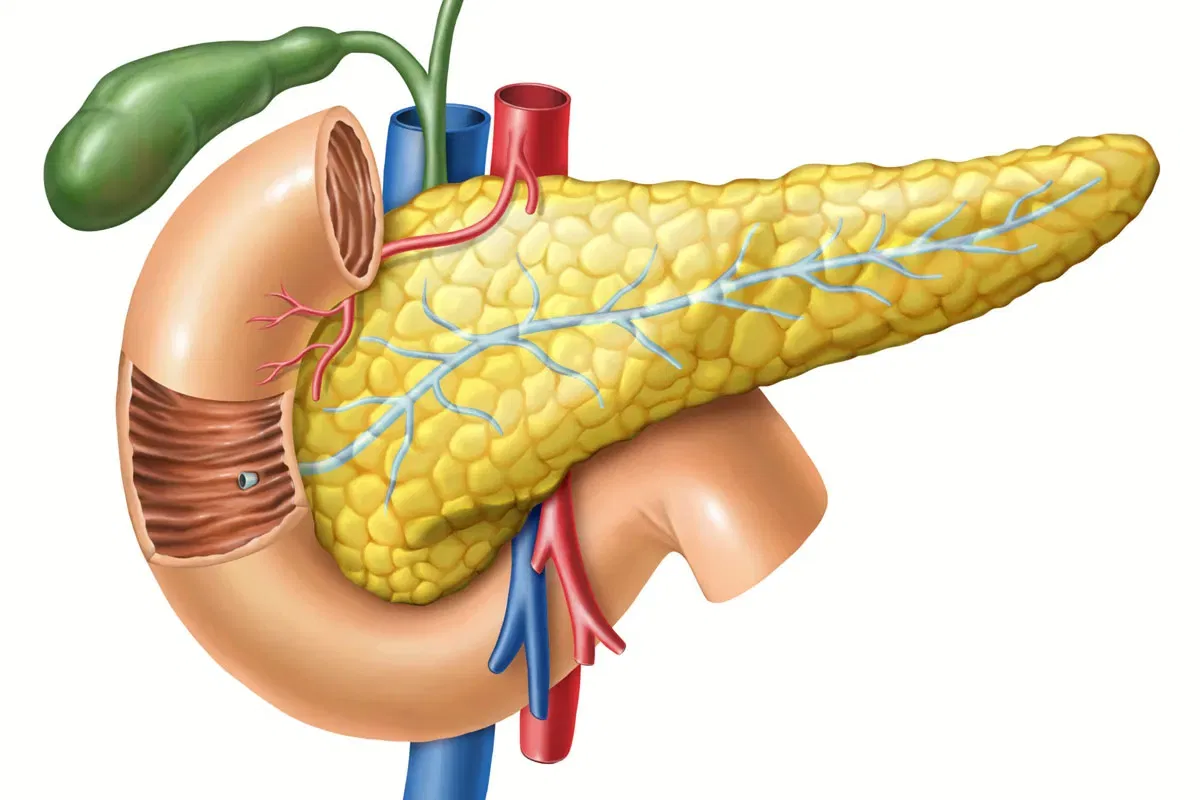

The biliary tree is the plumbing between liver, gallbladder, pancreas and intestine. Bile made in the liver drains through progressively larger ducts into the common bile duct, joins the pancreatic duct, and enters the duodenum. It is a low-pressure system, and it tolerates obstruction badly.
When flow is blocked — by a stone, a stricture or a tumour — bile backs up. Bilirubin spills into the blood and the eyes yellow, urine darkens, stools pale, and the skin itches. If bacteria colonise the stagnant bile above the blockage, cholangitis follows: fever, rigors and jaundice together, which is a medical emergency rather than an outpatient problem.
Bile duct injury deserves separate mention. It is an uncommon but serious complication of gallbladder surgery, and it is one of the few conditions where the outcome depends less on the injury itself than on who repairs it and when. Reconstruction is specialist work, and results are markedly better when it is done once, correctly, in a unit that performs it regularly.
Discuss Your ReportsNone of these confirms a diagnosis on its own. Each is a reason to be examined rather than to wait and see how things develop.
Yellowing of the eyes and skin that deepens over days to weeks, usually painless when the cause is a stricture or tumour rather than a stone.
Bile pigment diverted into the urine darkens it, while its absence from the intestine leaves stools putty-coloured — a specific and often overlooked pair of signs.
Bile salts deposited in the skin cause an unrelenting itch that worsens at night and does not respond to ordinary antihistamines.
Shaking chills with jaundice and right upper abdominal pain form Charcot's triad and indicate acute cholangitis — an emergency needing urgent drainage.
Colicky pain when a stone is moving through the duct; a duller, more constant ache when the obstruction is fixed.
Steady weight loss with painless jaundice raises the possibility of a malignant rather than benign cause and warrants prompt imaging.
Understanding what drives the condition is what makes prevention and early detection practical rather than theoretical.
Only the investigations that will change a decision are ordered, and they are sequenced so results build on one another rather than repeating.
An obstructive pattern — raised alkaline phosphatase and GGT with bilirubin — points to the biliary tree rather than the liver itself.
Establishes whether the ducts are dilated, which distinguishes obstruction from liver disease and directs everything that follows.
The reference non-invasive study. It maps the entire biliary tree, showing the level and nature of the blockage before any instrument is passed.
Detects small duct stones and early tumours that MRCP can miss, and allows tissue sampling in the same sitting.
Both diagnostic and therapeutic — stones are extracted, strictures brushed for cytology and stents placed to restore drainage.
Treatment is matched to the stage and to the individual. Not every option below applies to every patient, and the right choice is made together.
Duct stones are removed and drainage restored endoscopically, avoiding open surgery in the great majority of cases.
Balloon dilation with temporary stenting reshapes benign strictures over months, with a graded programme of stent exchanges.
The definitive repair for bile duct injury and complex strictures — the duct is joined directly to a Roux limb of jejunum, bypassing the damaged segment.
Prompt antibiotics with urgent biliary decompression. In acute cholangitis, drainage is the treatment and antibiotics alone are not enough.
Specialist surgical care, delivered close to home, without asking families to relocate for months of treatment.
A dedicated hepato-pancreato-biliary and gastrointestinal surgical team, operating on these conditions as their principal practice rather than occasionally.
Endoscopy, endoscopic ultrasound, MRCP and protocol-specific cross-sectional imaging interpreted by clinicians who treat the disease themselves.
Fully equipped theatres, high-dependency support and endoscopy suites, delivered in partnership with hospitals close to where patients live.
Laparoscopic and endoscopic approaches wherever they are the right choice, with shorter stays, less pain and a faster return to ordinary life.
Reports reviewed before you travel, decisions explained in your own language, and a plan built around your circumstances rather than a protocol.
Acute pancreatitis, cholangitis and obstructive jaundice do not keep office hours. Our team is reachable when they present.

Dr. Kapoor leads Advitya's gastrointestinal and hepato-pancreato-biliary practice, with a focus on complex pancreatic, biliary and liver surgery. Her work centres on bringing specialist-level surgical care to regional hospitals, so that patients can receive the operation they need without leaving their families behind.
Pancreato-Biliary-Liver Surgery · Gastrointestinal Surgery · Surgical Oncology
Four steps, explained before they happen, so you always know what comes next.
We begin with your history and your existing reports. Bring every scan and biopsy — they shape the plan more than the symptoms do.
Only the investigations that will change a decision are ordered, sequenced so that you are not sent back and forth between departments.
Complex cases are discussed jointly by surgery, oncology and radiology, and the plan is explained to you and your family in full before anything begins.
Structured recovery with nutritional and physiotherapy support, and a defined follow-up schedule so nothing is left to chance.
Straight answers to the questions patients ask most often in clinic.
Yellowing of the eyes and skin, dark urine, pale stools and persistent itching are the classic four. Pain may or may not be present — its absence is not reassuring, since painless jaundice is more often the pattern with strictures and tumours. Fever and shaking chills alongside jaundice indicate infection and require emergency care.
Blood tests first establish an obstructive pattern, then ultrasound determines whether the ducts are dilated. MRCP maps the biliary tree in detail without instrumentation and is the reference study. ERCP is reserved for when treatment is intended, since it carries its own small risk and is no longer used for diagnosis alone.
It is performed under sedation or general anaesthesia, so it is not painful at the time. Mild throat discomfort and bloating for a day afterwards are common. The main risk is post-ERCP pancreatitis, which occurs in a small minority and is minimised by careful technique and appropriate patient selection.
Poorly performed repair leads to recurrent strictures, persistent bile leaks, repeated cholangitis and, over years, secondary biliary cirrhosis. Success rates in specialist high-volume units are substantially better than in centres that see these injuries rarely, which is why referral matters more here than in almost any other biliary condition.
Any new jaundice in an adult should be assessed within days, not weeks. Fever with jaundice needs same-day emergency care. Persistent itching, pale stools, or abnormal liver function tests found on routine screening also warrant specialist review even when you feel well.
Many can. Benign strictures often respond to a planned programme of endoscopic balloon dilation and stenting over six to twelve months. Surgery is reserved for strictures that fail to respond, injuries involving loss of duct continuity, and cases where malignancy cannot be excluded.
Connect with our experienced specialists for personalised diagnosis and treatment.
+91 9211221551 · info@advityahealthcares.com · Reports reviewed before you travel