Persistent Heartburn
A burning sensation rising behind the breastbone, typically worse lying flat, after large meals or on bending forward.

Precise diagnosis and lasting treatment for reflux disease, achalasia, hiatal hernia and swallowing disorders — because difficulty swallowing is never normal.
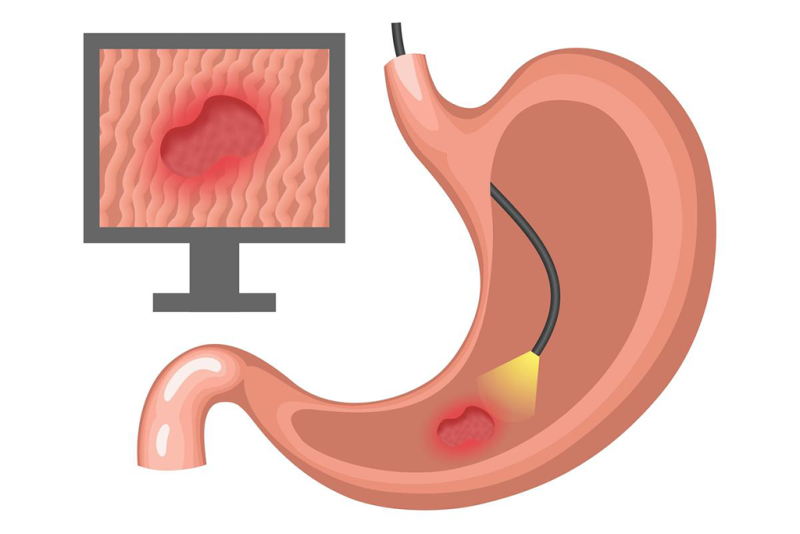

The oesophagus is a muscular tube that moves food from throat to stomach by coordinated waves of contraction. A valve at its lower end opens to let food through and closes to keep acid out. Almost all oesophageal disease is a failure of one of those two functions — the muscle or the valve.
When the valve fails, acid refluxes upward and causes heartburn. Persistent reflux over years can change the lining of the lower oesophagus into an intestinal-type epithelium, a condition called Barrett's oesophagus. Barrett's is not cancer, but it is the recognised precursor to adenocarcinoma, which is why it is kept under surveillance.
When the muscle fails, swallowing itself becomes difficult. Achalasia — where the lower valve does not relax — produces a slow, progressive obstruction that patients often adapt to for years before seeking help. Any difficulty swallowing that is getting worse, particularly progressing from solids to liquids, needs an endoscopy promptly.
Discuss Your ReportsNone of these confirms a diagnosis on its own. Each is a reason to be examined rather than to wait and see how things develop.
A burning sensation rising behind the breastbone, typically worse lying flat, after large meals or on bending forward.
A sensation of food sticking. Progression from solids to liquids over months is the pattern that most demands prompt investigation.
Undigested food or sour fluid returning to the mouth without nausea, particularly at night, sometimes staining the pillow.
Reflux reaching the larynx causing a persistent dry cough, throat clearing or voice change, often mistaken for a respiratory problem.
Squeezing central chest pain from oesophageal spasm that can closely mimic cardiac pain and must be distinguished from it first.
Losing weight because swallowing has become difficult is a red-flag combination requiring urgent endoscopy.
Understanding what drives the condition is what makes prevention and early detection practical rather than theoretical.
Only the investigations that will change a decision are ordered, and they are sequenced so results build on one another rather than repeating.
Direct visualisation of the lining to identify oesophagitis, stricture, hernia or Barrett's change, with biopsy where indicated.
Measures the pressure and coordination of the muscular contractions, and is the definitive test for achalasia and motility disorders.
Quantifies actual acid exposure over a full day, distinguishing true reflux disease from symptoms with another cause.
A dynamic study showing the shape of the oesophagus and how a bolus travels, particularly useful for strictures and large hernias.
Assesses depth of invasion when a tumour is found, which determines whether endoscopic resection is adequate.
Treatment is matched to the stage and to the individual. Not every option below applies to every patient, and the right choice is made together.
Weight reduction, smaller earlier meals, head-of-bed elevation and trigger avoidance, which control symptoms in a substantial proportion of patients.
Proton pump inhibitors to heal oesophagitis and control symptoms, reviewed periodically rather than continued indefinitely without reassessment.
Balloon dilation for strictures and achalasia, and radiofrequency ablation for dysplastic Barrett's segments, both performed without incisions.
Keyhole reconstruction of the valve for refractory reflux, or division of the lower sphincter muscle for achalasia, with a partial wrap to prevent reflux.
Specialist surgical care, delivered close to home, without asking families to relocate for months of treatment.
A dedicated hepato-pancreato-biliary and gastrointestinal surgical team, operating on these conditions as their principal practice rather than occasionally.
Endoscopy, endoscopic ultrasound, MRCP and protocol-specific cross-sectional imaging interpreted by clinicians who treat the disease themselves.
Fully equipped theatres, high-dependency support and endoscopy suites, delivered in partnership with hospitals close to where patients live.
Laparoscopic and endoscopic approaches wherever they are the right choice, with shorter stays, less pain and a faster return to ordinary life.
Reports reviewed before you travel, decisions explained in your own language, and a plan built around your circumstances rather than a protocol.
Acute pancreatitis, cholangitis and obstructive jaundice do not keep office hours. Our team is reachable when they present.

Dr. Kapoor leads Advitya's gastrointestinal and hepato-pancreato-biliary practice, with a focus on complex pancreatic, biliary and liver surgery. Her work centres on bringing specialist-level surgical care to regional hospitals, so that patients can receive the operation they need without leaving their families behind.
Pancreato-Biliary-Liver Surgery · Gastrointestinal Surgery · Surgical Oncology
Four steps, explained before they happen, so you always know what comes next.
We begin with your history and your existing reports. Bring every scan and biopsy — they shape the plan more than the symptoms do.
Only the investigations that will change a decision are ordered, sequenced so that you are not sent back and forth between departments.
Complex cases are discussed jointly by surgery, oncology and radiology, and the plan is explained to you and your family in full before anything begins.
Structured recovery with nutritional and physiotherapy support, and a defined follow-up schedule so nothing is left to chance.
Straight answers to the questions patients ask most often in clinic.
It can be. Reflux that persists for years exposes the lower oesophagus to repeated acid injury and can lead to Barrett's oesophagus, which carries a small but real risk of progressing to cancer. Symptoms present for more than five years, or requiring continuous medication, are grounds for at least one endoscopy.
It always warrants investigation. Progressive difficulty that begins with solids and later involves liquids suggests a mechanical narrowing — a stricture or tumour. Difficulty with both solids and liquids from the outset is more typical of a motility disorder such as achalasia.
For many patients, yes. Weight reduction and dietary change alone control symptoms in a substantial proportion. For those with a hiatal hernia or a genuinely incompetent valve, laparoscopic fundoplication offers a durable mechanical solution and frees most patients from daily medication.
It is a change in the lining of the lower oesophagus, where normal squamous cells are replaced by intestinal-type cells in response to chronic acid exposure. It is not cancer and most patients with it never develop cancer, but it is monitored by periodic endoscopy because it is the recognised precursor lesion.
The aim is to relieve the obstruction at the lower sphincter. Options include pneumatic balloon dilation, botulinum toxin injection for patients unfit for other treatment, and laparoscopic Heller myotomy, which divides the muscle and provides the most durable long-term result.
Laparoscopic fundoplication is performed through five small incisions, usually with a one to two night stay. A soft diet is needed for the first two weeks while swelling settles, and normal activity resumes within two to three weeks.
Connect with our experienced specialists for personalised diagnosis and treatment.
+91 9211221551 · info@advityahealthcares.com · Reports reviewed before you travel